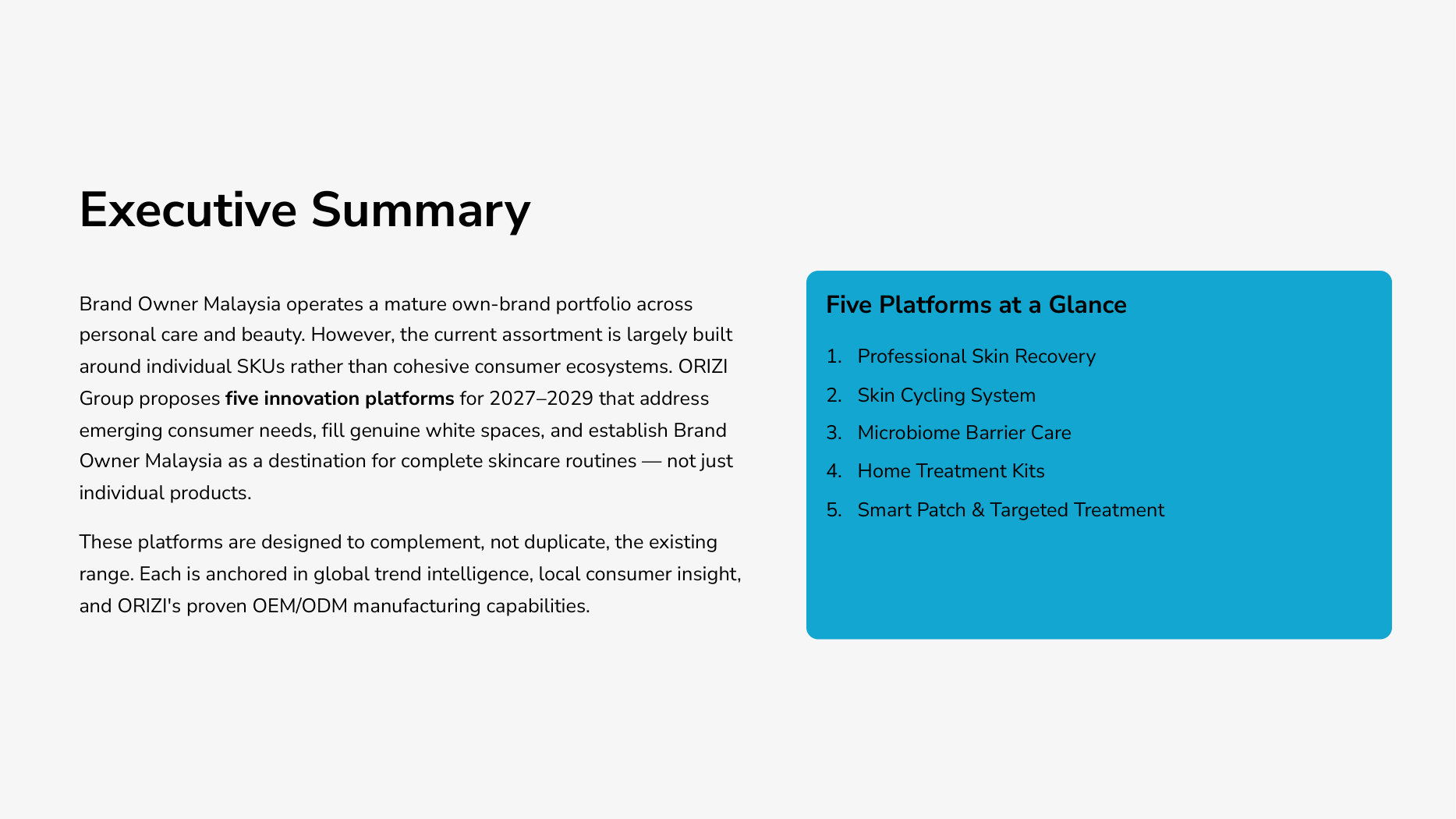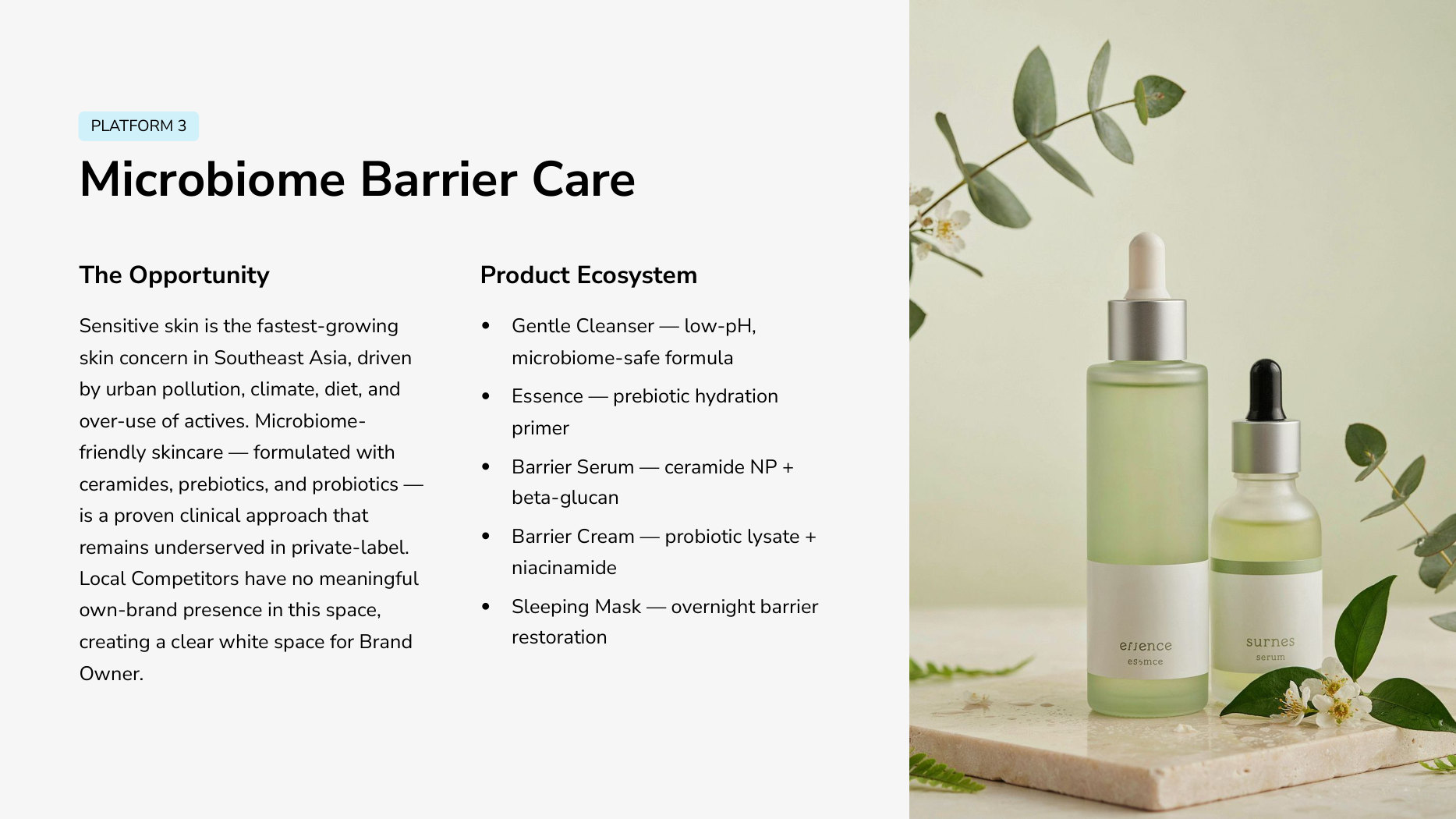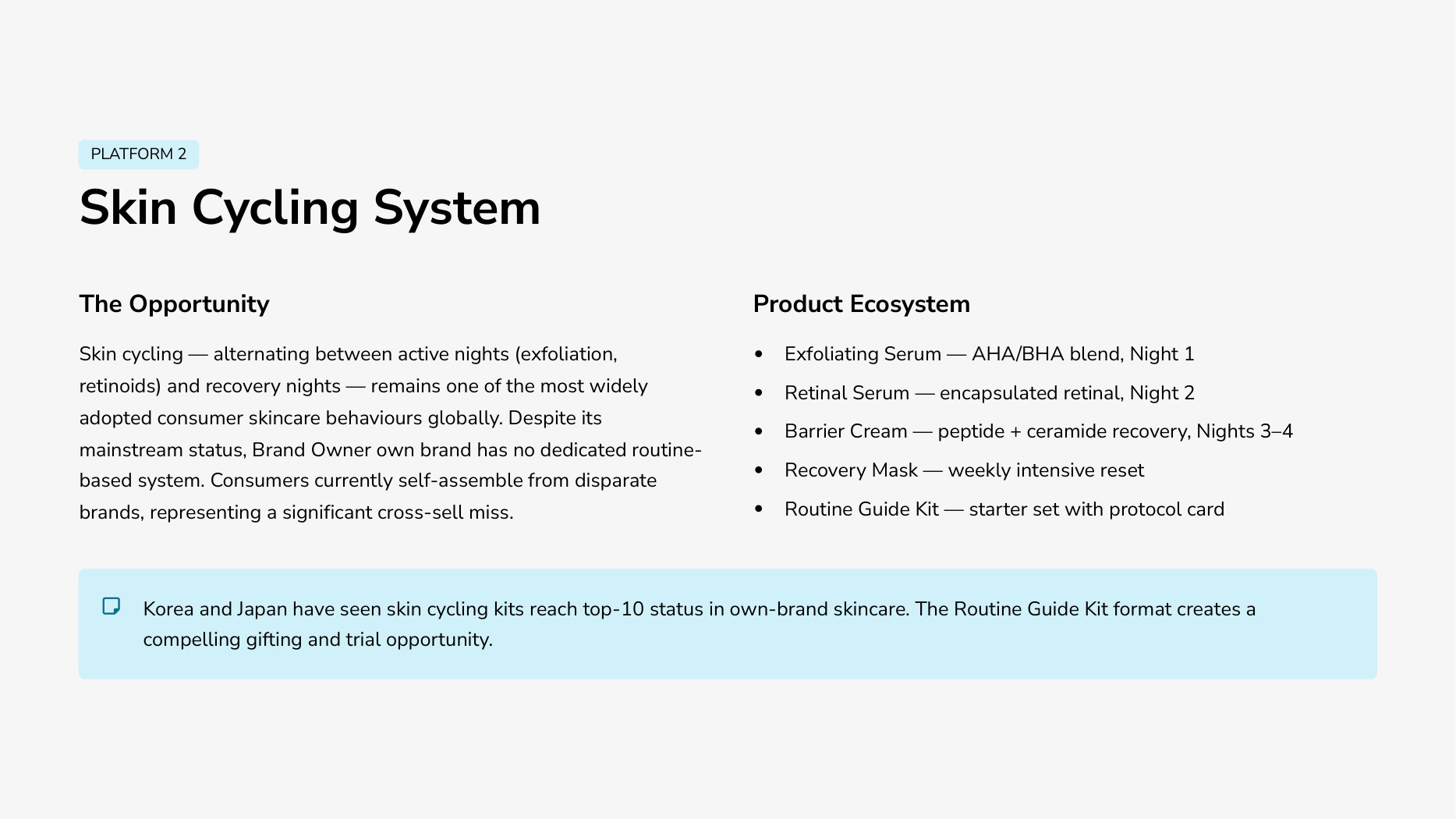
Patches stopped being an acne product several years ago. They are now a full treatment format — and one of the few skincare categories that behaves like an impulse purchase and a subscription at the same time.
Written & researched by Creaton Poh, industry researcher · Technical input by ORIZI Group R&D Team · Fact-checked by ORIZI Group Editorial · Published by ORIZI Group · Last reviewed September 2026
Disclosure: This article is published by ORIZI Group and refers to our own manufacturing experience and capabilities.
Quick answer: why are skincare patches a category rather than a product?
A patch delivers an active to one spot for a fixed period, which makes it a format rather than a single product: hydrocolloid for blemishes, infused patches for dark spots, hydrogel for eyes, biocellulose for neck and silicone or hydrogel for wrinkles. Packs typically contain 24 to 60 units, so they are consumed and repurchased like a staple while being priced like an impulse buy. In Malaysian retail, patches are stocked mainly as third-party brands — own-brand presence is minimal.
Key takeaways
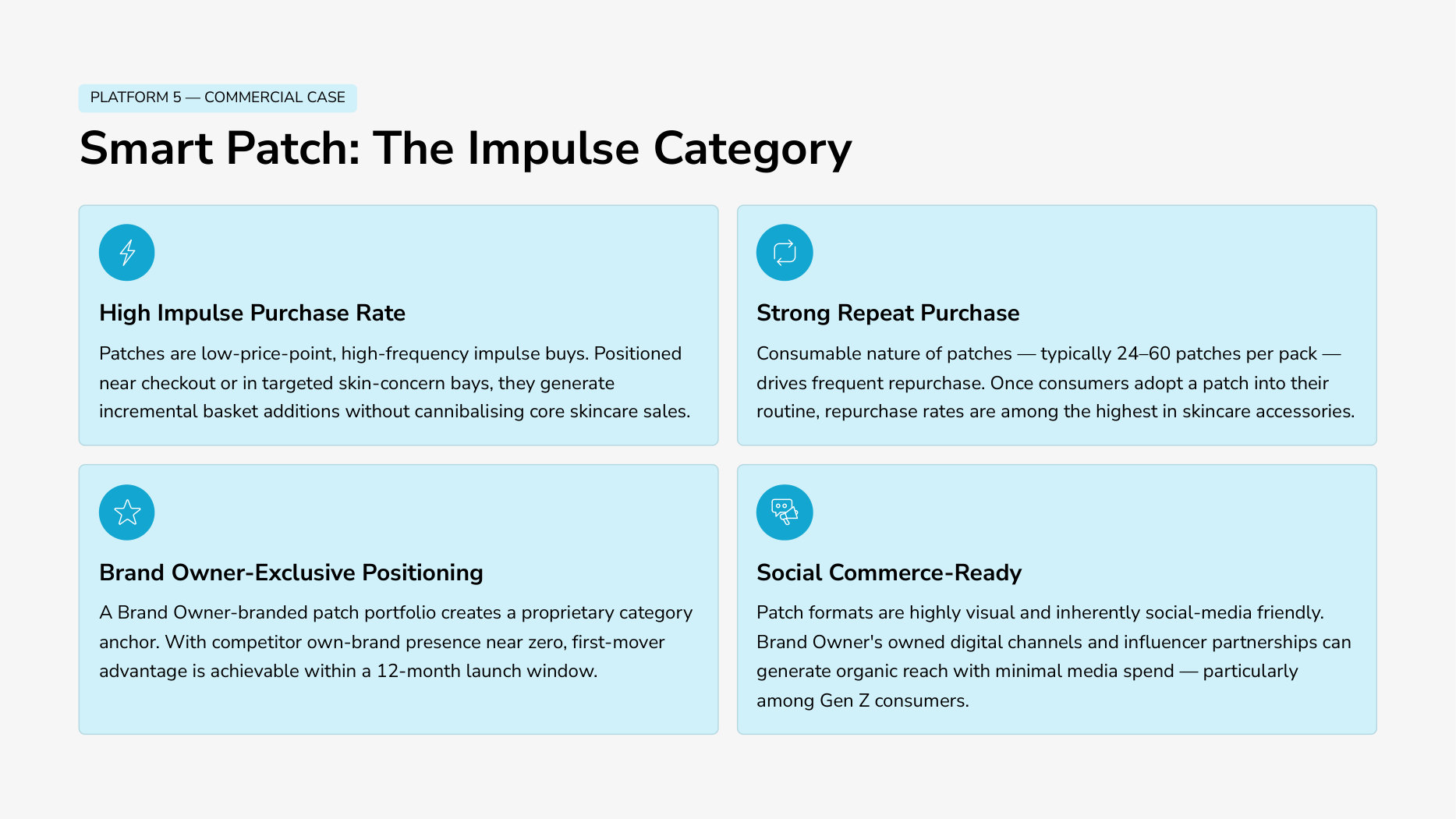
- Low price, high frequency. Patches add to the basket without cannibalising core skincare.
- Consumable by design. A 24–60 patch pack creates one of the highest repurchase rates in skincare.
- Visually native to short-form video — the product demonstrates itself, which few skincare formats do.
- It is a specialist manufacturing category. Hydrocolloid, microneedle and biocellulose are different processes, not variations of one line.
- Microneedle formats raise regulatory questions that standard cosmetic patches do not.
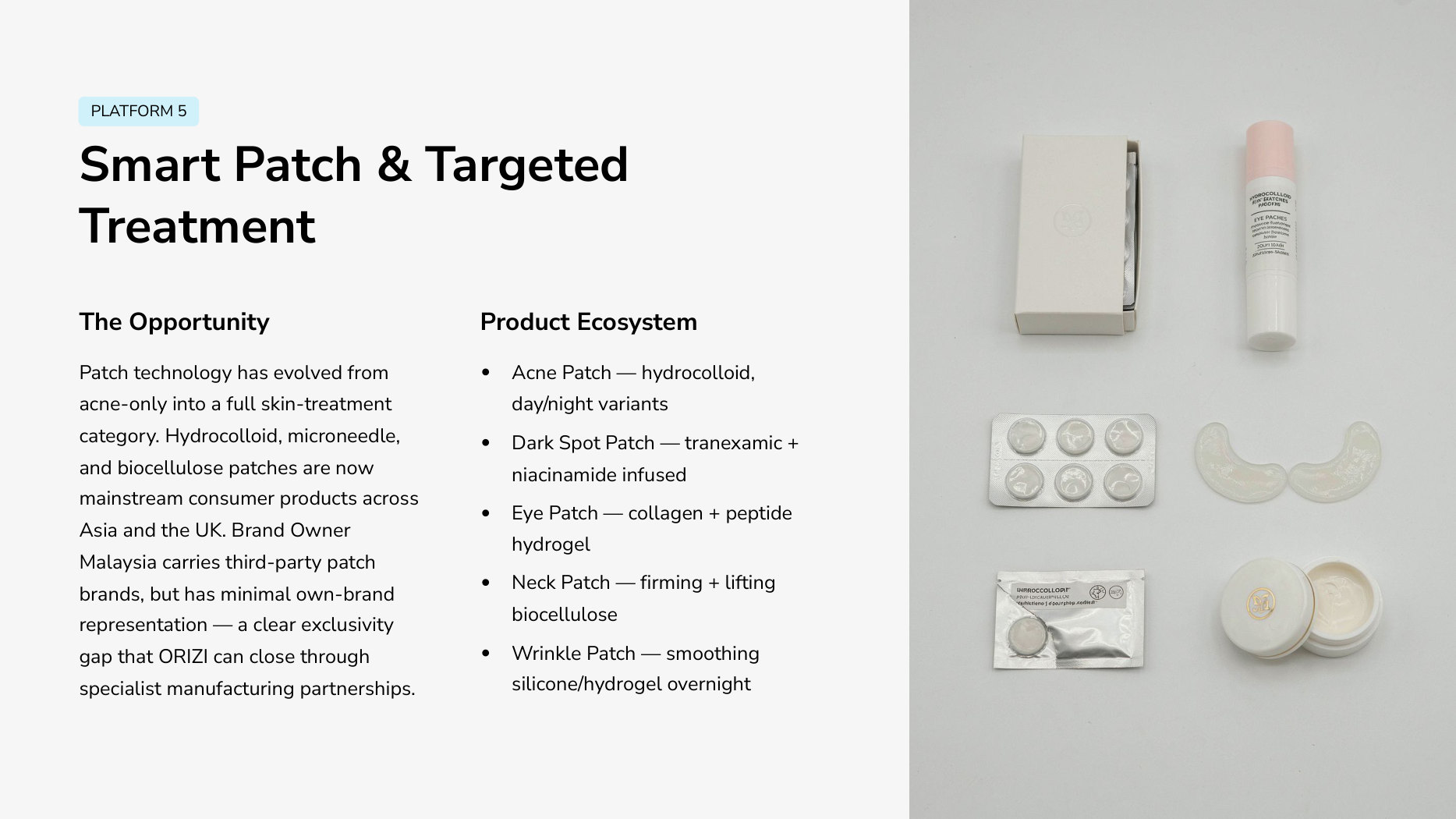
The five patch concepts
| Patch | Format | Development note |
|---|---|---|
| Blemish patch | Hydrocolloid, day and night variants | The entry product; thinness and edge adhesion decide repeat purchase |
| Dark spot patch | Infused with tranexamic acid and niacinamide | Active loading and release are the technical work; claims must match the evidence |
| Eye patch | Collagen and peptide hydrogel | High gifting and social value; slippage on the under-eye is the usual complaint |
| Neck patch | Firming biocellulose | Premium positioning, specialist substrate, lower volume |
| Wrinkle patch | Silicone or hydrogel, overnight | Reusable versus single-use changes the whole pack economics |
Why patches behave differently at retail
Most skincare is bought deliberately, in the skincare aisle, after comparison. Patches are bought on the way past — near the checkout, or in a skin-concern bay — and then rebought because the pack empties. That combination is unusual: impulse acquisition with staple-like repurchase.
The social dimension compounds it. A patch is visible, has a before-and-after built into its use, and photographs well, which is why the format travels on short-form video without a media budget behind it.
What brand owners underestimate
- Substrate is the product. Consumers judge a patch on adhesion, thinness and whether it stays on overnight — not on the ingredient list.
- Each format is a different production process. A supplier strong in hydrocolloid is not automatically capable in biocellulose or microneedle.
- Microneedle patches need a regulatory decision early. Depending on design and claims, a microneedle product may not sit comfortably on the cosmetic route in Malaysia; that question belongs at concept stage, not at notification.
- Pack count sets the price ladder. Deciding between 24 and 60 units changes positioning, margin and repurchase cycle at once.
The ORIZI perspective
Based on ORIZI Group’s manufacturing experience, patches are the platform where partner selection matters more than formulation skill. We develop patch ranges through specialist manufacturing partners for the substrate work while keeping the actives, claim set and regulatory routing in-house — because the failure mode is almost always mechanical (adhesion, edge lift, backing film) rather than chemical.
The practical entry point for most brands is a two-SKU start: a blemish patch to establish the format and one differentiated patch — usually eye or dark spot — to create a reason to trade up. Ranges that launch with all five at once tend to tie up capital in the slowest-moving format. Patch and mask-format development runs through our OEM face mask and patch manufacturing capability.
Patches carry the highest differentiation score in our five-platform own-brand analysis, and the highest manufacturing barrier.
Limitations
- Patch manufacturing is specialised; lead times and minimums differ substantially from creams and serums.
- Claims for infused patches must be supported by the actual active loading, not by the ingredient’s general reputation.
- Microneedle formats carry regulatory classification questions that should be resolved before development spend.
Frequently asked questions
Are skincare patches regulated as cosmetics in Malaysia?
Conventional hydrocolloid and hydrogel cosmetic patches are generally handled on the cosmetic notification route with the NPRA. Products that penetrate the skin barrier by design, such as some microneedle formats, or that carry medical claims may fall under a different classification — confirm before development.
What pack count should a first patch product use?
Blemish patches commonly sit between 24 and 60 units. Smaller packs buy a lower entry price and faster repurchase; larger packs read as better value. Pick the one that matches the shelf you are targeting.
Can patches be produced at low MOQ for a new brand?
Patch minimums are typically higher than cream or serum minimums because of substrate runs and die tooling. A ready-format patch with custom printing is usually the lowest-commitment entry.
Which patch sells first?
The blemish patch, almost always. It has the clearest job, the lowest price point and the most obvious demonstration — then the eye patch follows as the trade-up.
Sources
- National Pharmaceutical Regulatory Agency (NPRA), Ministry of Health Malaysia — cosmetic notification scope.
- Medical Device Authority (MDA), Ministry of Health Malaysia — classification questions for products acting by physical means.
- ORIZI Group internal product-platform analysis, 2026.
Related reading: choosing content-friendly product formats for TikTok brands.
Update history
16 September 2026 — first publication.
Adding a patch line?
Tell us the format and the shelf price you are targeting, and we will come back on substrate options, minimums and the regulatory route. Talk to ORIZI Group.