Home / Our Focus / OEM2YOU | Custom OEM & Product Innovation
OEM2YOU | Custom OEM Manufacturing and Product Innovation in Malaysia
Best for your own custom formula: our in-house lab develops it from scratch, with free sampling until you’re satisfied. One brand, one formula — unique to you, owned by you.
Direct answer
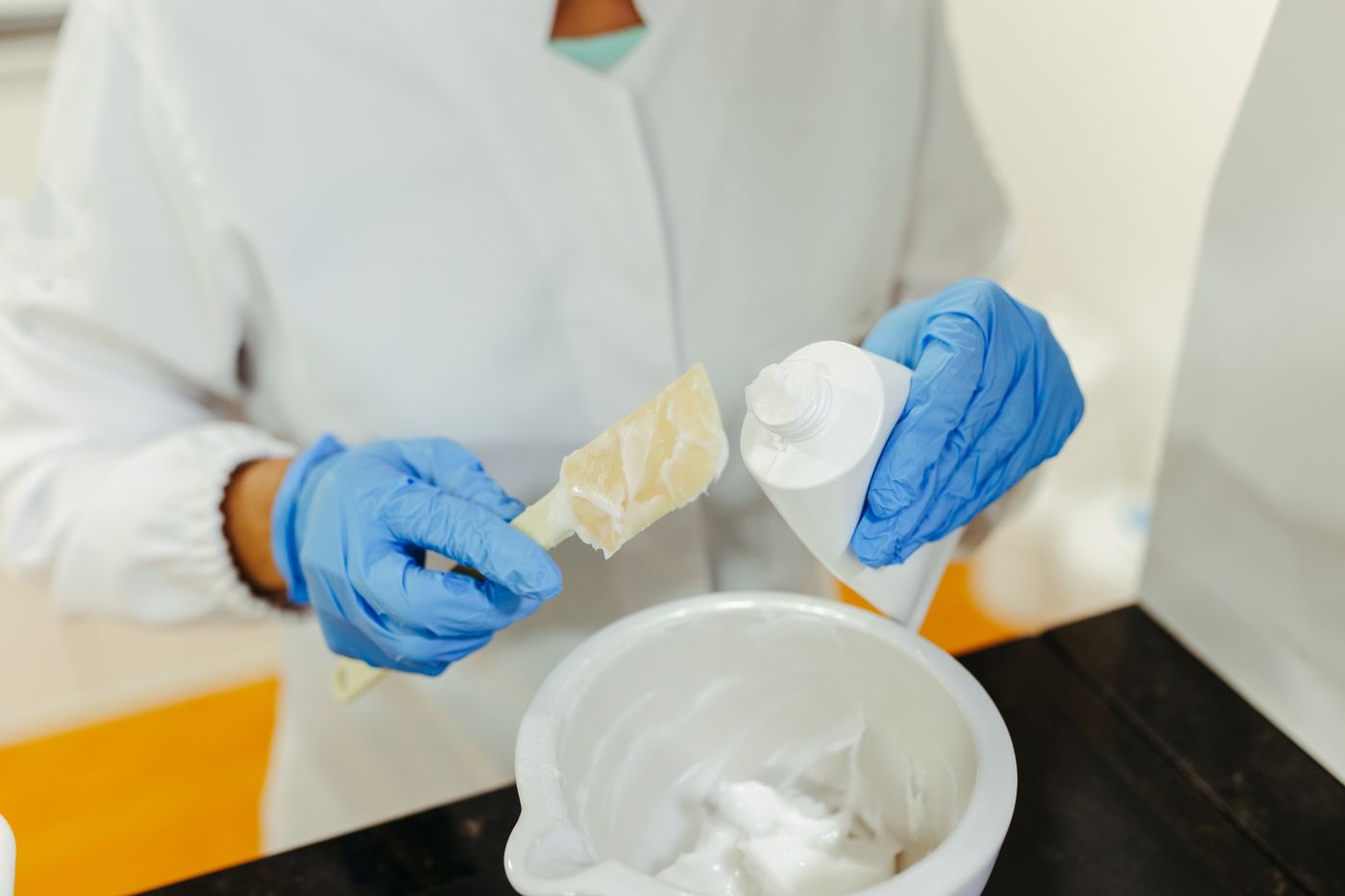
OEM2YOU is ORIZI Group’s specialised division for fully customised OEM product development, taking a brand’s original idea through formulation, packaging and commercial manufacturing. The OEM2YOU pathway covers product concepts, formulations, active ingredients, fragrances, textures, packaging, testing, regulatory support and commercial production, and is intended for brands that require a distinctive product rather than a standard ready-made formula.
Who this pathway is for
- A brand owner who wants a manufacturer that can develop a custom formula from an idea, not just put a label on an existing product
- A founder asking how to create their own skincare or supplement formula — and own it afterwards
- An established brand that needs formulation R&D, ingredient sourcing, testing and scale-up under one roof
- A product team comparing formulation development partners in Malaysia against off-the-shelf private label catalogues
Custom Manufacturing Begins with the Commercial Objective
A successful custom product is not created by adding fashionable ingredients to a standard base. It begins with a clear understanding of the target customer, market position, selling channel, price point, intended claims, sensory expectations and production quantity.
ORIZI Group brings these commercial factors into the development discussion from the beginning. Our role is to help translate an idea into a product brief that can be formulated, tested, manufactured and supplied consistently. This reduces the risk of developing an attractive laboratory sample that cannot meet the final cost, packaging, stability or regulatory requirements.
Who Is Custom OEM Suitable For?
- Established brands developing a new category or signature product
- Retailers and distributors requiring differentiated private-label ranges
- Founders with a clear product concept that is not available as a standard formula
- Professional or expert-led brands requiring purposeful active-ingredient strategies
- Corporate teams seeking exclusivity, defined specifications and structured documentation
- International brands adapting an existing concept for ASEAN or Halal-oriented markets
- Digital-first brands moving from a validated product into a more defensible custom formulation
What Can Be Customised?
| Development area | Possible customisation |
|---|---|
| Formula architecture | Base system, product format, ingredient combination and performance direction |
| Active ingredients | Selection and purposeful use based on positioning, compatibility, documentation and regulations |
| Sensory profile | Texture, absorption, after-feel, viscosity, foam, colour, flavour or fragrance where relevant |
| Target user | Skin type, age group, lifestyle, usage environment, professional channel or mass market |
| Packaging | Container type, material, size, dispensing system, decoration and secondary packaging |
| Brand presentation | Product naming, visual direction, label hierarchy, claim language and usage instructions |
| Testing plan | Stability, compatibility, microbiological, safety, performance or other category-appropriate testing |
| Commercial model | Pilot quantity, initial launch, repeat production and future scale-up planning |
From Idea to Approved Formula
- Discovery and product brief — define the target customer, product function, market, channel, price and launch objective.
- Feasibility review — assess the proposed formula, active ingredients, packaging, claims, MOQ, target cost and regulatory route.
- Development direction — agree on the formula strategy, benchmark references, sensory profile and required documentation.
- Prototype and sampling — prepare laboratory samples, collect structured feedback and refine the formula.
- Packaging and compatibility — select components and evaluate whether the formula and packaging system work together.
- Testing and documentation — complete the appropriate stability, quality, safety and regulatory work for the product category.
- Pilot or first commercial batch — transfer the approved specification into controlled production.
- Scale-up and continuity — monitor repeat performance, improve supply planning and develop extensions when the market is ready.
Innovation That Has a Commercial Purpose
Product innovation can come from a new active system, an unusual format, improved user experience, a better delivery method, stronger portability, more sustainable packaging, a distinctive fragrance or a simpler routine. The most valuable innovation solves a real consumer or channel problem.
ORIZI Group evaluates innovation from several perspectives: whether consumers can understand it, whether sales teams can explain it, whether the formula can remain stable, whether packaging can deliver it correctly, whether the claim is supportable and whether the product can be manufactured at an acceptable cost.
| Innovation principle A product does not need to be complicated to be innovative. It needs to deliver a meaningful difference that the intended customer can recognise and the brand can defend. |
|---|
Product Categories Supported
Depending on the selected category and responsible manufacturing facility, ORIZI Group can support custom development across cosmetics and personal care, functional food, fragrance and aromatherapy, medical and healthcare products, home care and selected pet-care products.
- Skincare, body care, hair care, personal care and selected colour cosmetics
- Beauty, wellness and nutrition products in selected powder and liquid formats
- Perfume, fragrance and aromatherapy products
- Selected medical and healthcare products within the appropriate manufacturing scope
- Home-care products and selected pet-care applications
- Packaging, labelling and presentation systems matched to the product and channel
Custom OEM, ODM or Ready2Brand?
| Model | Best suited to | Customisation | Typical consideration |
|---|---|---|---|
| Custom OEM | Brands seeking a distinctive product or formula | Highest | More development decisions, testing and lead time |
| ODM / adapted formula | Brands wanting a proven development base with selected changes | Moderate | Faster than full custom development |
| Ready2Brand | New entrepreneurs prioritising simplicity and manageable entry quantity | Selected options | Product choices and MOQ depend on the programme range |
Packaging Is Part of Product Performance
The package protects the formula, controls how it is dispensed and shapes the consumer’s first impression. A premium appearance is not enough if the component leaks, reacts with the formula, delivers an unsuitable dose or cannot be sourced consistently.
Packaging selection should therefore be considered during development rather than after the formula is complete. ORIZI Group can coordinate container sourcing, size and dispensing options, decoration, labels, cartons and compatibility considerations according to the project scope.
Quality and Regulatory Planning
Every product category follows a different regulatory and quality pathway. The development team should identify the intended market, claim direction and responsible manufacturing facility early so that the formula, label and documentation can be planned correctly.
No manufacturer can legitimately guarantee that a product is approved for every country. Export and market-entry requirements must be reviewed for the intended destination, and certain claims or ingredients may require adjustment.
Protecting the Brand’s Product Knowledge
Custom projects may involve confidential concepts, target costs, formulas, packaging plans and launch strategies. Confidentiality, formula ownership, exclusivity and use of development work should be defined in the applicable quotation, development terms or manufacturing agreement. Clients should review these commercial terms before approving the project.
Begin the Conversation
A strong custom product begins with a strong brief. Share the problem you want the product to solve, the customer you want to reach and the market position you want to build. ORIZI Group will assess the most practical route from concept to commercial production.
| Submit Your Product Idea Tell us your product category, desired benefits, target customer, market, quantity and launch timeline. Our team will review the concept and recommend the appropriate development pathway. |
|---|
Questions people ask about this
Can a manufacturer develop a product from just an idea?
Yes. A concept can be converted into a development brief, but the client should still define the target customer, market, price, sales channel and desired outcome as clearly as possible.
How customised can an OEM product be?
A custom project may adjust the formula, active system, texture, fragrance, colour, packaging, size and presentation. The final scope depends on feasibility, regulations, MOQ, target cost and timing.
How long does custom product development take?
There is no single standard timeline. Formula complexity, sample revisions, packaging, testing, documentation and client approval speed all affect the development period.
Does a custom formula require a higher MOQ?
Usually, full customisation requires a more suitable commercial quantity than a ready-formula programme. The actual MOQ depends on the product format, ingredients, packaging and manufacturing process.
Can I provide my own formula?
Potentially. ORIZI Group must review the formula, ingredient documentation, manufacturing feasibility, regulatory status, testing history and intellectual-property conditions before accepting it for production.
Can a factory match a benchmark product I like?
A benchmark can guide texture, fragrance, appearance, usage experience and market position. A responsible manufacturer should not promise an unauthorised exact copy of another company’s proprietary formula.
Who owns the formula?
Formula ownership and exclusivity depend on the agreed development and manufacturing terms. These conditions should be confirmed in writing for each project.
Does an OEM project include packaging and branding support?
Yes. Support may include component sourcing, label and carton coordination, product naming, artwork direction and regulatory label review according to the agreed scope.
Can a custom product later be manufactured in larger quantities?
Yes. Scale-up should be planned from the development stage so that the approved formula, packaging and quality specifications can move into repeat commercial production.
What should I include in my first product brief?
Include the category, target customer, market, price point, benchmark, desired benefits, preferred format, packaging direction, quantity, launch date and budget range.
Submit Your Product Idea
Tell us your product category, target market, preferred quantity and launch objective, and the enquiry goes to the team that runs this pathway.
Explore further: our services · product categories · certifications by company · manufacturing FAQ · who writes our content