Brand owners building a European supply chain usually think of France, Italy or Germany first. The Netherlands is a quieter option, and for certain product types it is a better one. This guide maps the Dutch OEM and ODM cosmetics landscape as it stood in August 2026 — who the active contract manufacturers are, what the European regulatory framework requires of you before a product can be sold, and how to compare a Dutch quotation against a Malaysian one on equal terms.
Written & researched by the named author below · Technical input by ORIZI Group R&D Team · Fact-checked by ORIZI Group Editorial · Published by ORIZI Group · Last reviewed August 2026
Disclosure: This article is published by ORIZI Group and may refer to our own manufacturing experience, services and capabilities. External factual claims are supported by cited sources. Company details below are taken from each manufacturer’s own website and were not independently audited.
Quick answer: who makes cosmetics on contract in the Netherlands?
Ten Dutch companies with live, verified corporate websites accepted third-party cosmetics manufacturing as of August 2026: Cosmetize, Delarange Cosmetics, Frisson, Girasol Natural Products, Hegron Cosmetics, Mondial Cosmetics, Personal Care Concepts, Rapide International, Rebel Nature and RedPharma. Most are full-service, covering formulation, bulk manufacture, filling and European compliance documentation. Minimum order quantities generally start at 2,000–5,000 units per SKU for skincare and haircare, and around 10,000 units for colour cosmetics.
Key takeaways
- The Dutch contract-manufacturing sector is mid-scale and service-led rather than volume-led, which suits brands ordering in the low thousands rather than the hundreds of thousands.
- Colour cosmetics is the country’s stand-out capability: one Alkmaar manufacturer states annual filling capacity above 40 million units across lipstick, mascara, foundation and nail.
- Several Dutch manufacturers hold ISO 13485 for medical devices alongside ISO 22716 for cosmetics GMP, which matters for products near the cosmetic/device borderline.
- There is no Dutch pre-market licence. Cosmetics sold in the Netherlands run on EU Regulation (EC) No 1223/2009, with CPNP notification and market surveillance by the NVWA.
- For brands whose core market is Malaysia or wider ASEAN, halal recognition and ASEAN ingredient annexes usually decide the sourcing question before unit price does.
Table of Contents
- Quick answer: who makes cosmetics on contract in the Netherlands?
- Why the Dutch market matters to brand owners
- The European regulatory framework you inherit
- Ten Dutch OEM/ODM cosmetic suppliers
- What to compare when evaluating any manufacturer
- Looking Beyond the Netherlands for a Manufacturing Partner?
- Frequently asked questions
- Sources, limitations and update history
Why the Dutch market matters to brand owners
The Netherlands is a logistics economy before it is a beauty economy, and that shapes its cosmetics manufacturers. Factories here are accustomed to export documentation, English-language project management and Incoterms discussions that would slow a first-time buyer down elsewhere in Europe. Rotterdam and Schiphol sit within a two-hour drive of almost every plant on this list, which shortens the distance between a finished pallet and a container.
The second characteristic is scale. Dutch contract manufacturers are typically mid-sized and often family-held, filling for supermarket groups, pharmacy chains and export brands rather than global prestige houses. That produces a service posture: they will co-develop a formula, and they will answer questions from a brand ordering 3,000 units. It also produces a ceiling — a brand needing several hundred thousand units of a commodity product will usually get a better price in Poland or Asia.
Third, capability is unevenly distributed and worth mapping before you shortlist. Colour cosmetics capacity is concentrated in North Holland. Lip care and oral care sit in Flevoland. Natural and certified-organic work is strongest in Amsterdam and Breda. Cosmetic/medical-device dual production — barrier creams, scar gels, oral rinses — is unusually common here compared with most European countries, because several manufacturers run ISO 22716 and ISO 13485 in parallel.
The European regulatory framework you inherit
Producing in the Netherlands means producing under EU cosmetics law. There is no separate Dutch product approval, and no licence to apply for. What applies is Regulation (EC) No 1223/2009, the single European framework for cosmetic products. Four obligations follow from it.
A Responsible Person established in the EU. Every cosmetic product placed on the EU market must have a named Responsible Person with an EU address who holds the Product Information File and answers to authorities. A brand owner based outside the EU must appoint one — the manufacturer, a specialist service provider, or a distributor. The choice has commercial consequences, because the notification is filed in the Responsible Person’s name.
A safety assessment. The Product Information File must contain a Cosmetic Product Safety Report prepared by a qualified safety assessor before the product goes on sale. This is a per-formula cost, not a per-unit cost, and it should be identified separately in a quotation.
CPNP notification. Products are notified through the European Commission’s Cosmetic Products Notification Portal before being made available. Some Dutch manufacturers include this in their service; others expect the brand owner or its Responsible Person to file.
National market surveillance. In the Netherlands, enforcement sits with the Nederlandse Voedsel- en Warenautoriteit (NVWA), the Dutch Food and Consumer Product Safety Authority, which inspects products already on the market rather than approving them beforehand. Its recurring findings are documentation failures rather than formulation failures: ingredient lists that do not match the manufacturing record, missing batch identification, and undeclared fragrance allergens. Checking a final INCI list against the European Commission’s CosIng database before artwork approval prevents most of them.
One definition worth stating plainly, because buyers frequently confuse it with a licence: cosmetic GMP under ISO 22716 is a voluntary international standard covering personnel, premises, documentation, production and quality control in cosmetics manufacturing. A certificate against it is issued by a certification body, carries an expiry date, and should be requested and read, not assumed from a logo.
Ten Dutch OEM/ODM cosmetic suppliers
Listed alphabetically. Numbering is navigational, not a ranking. Each website below was opened and captured on 28 August 2026; companies whose domains had lapsed or whose sites would not render were left out.
Cosmetize — Harderwijk
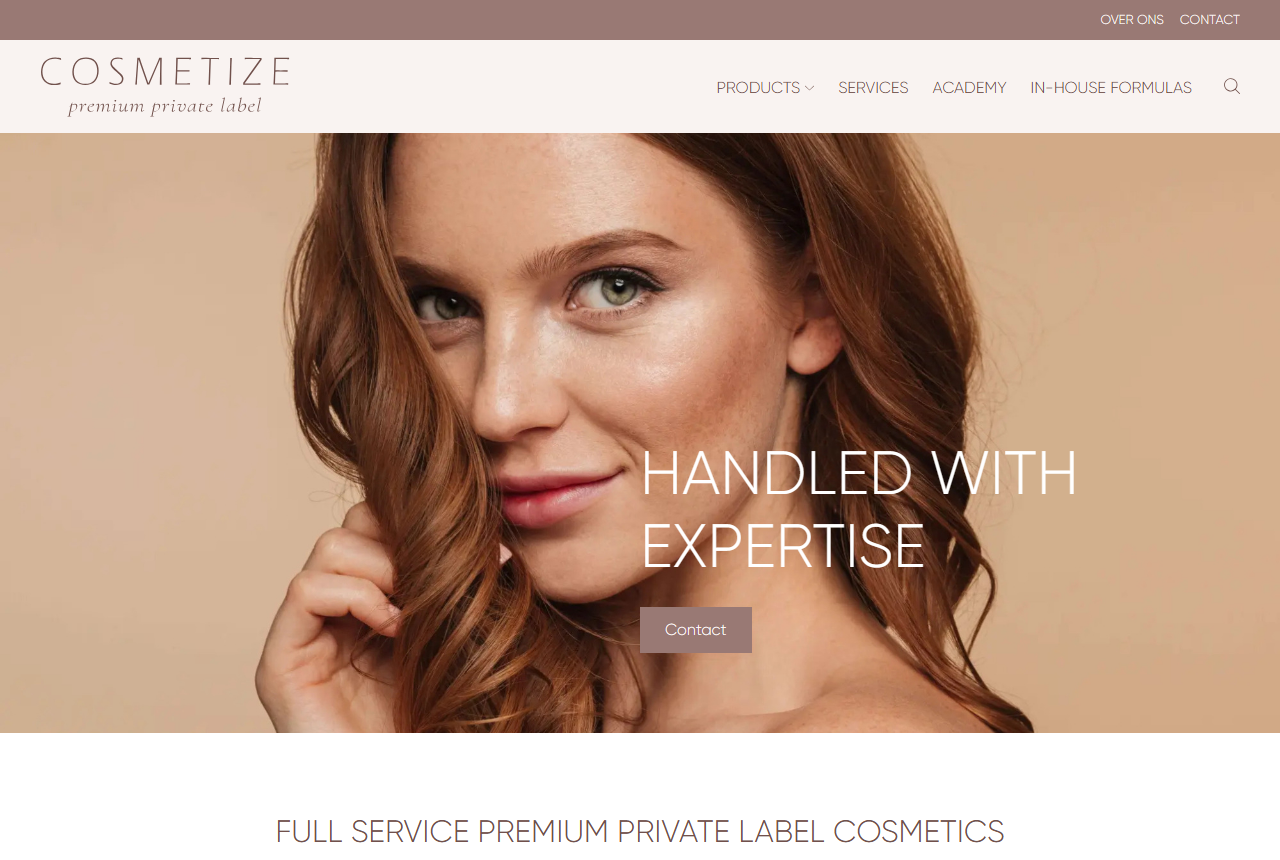
A full-service private-label manufacturer covering nine categories: face care, sun care, makeup, home fragrance, body care, hand and foot care, hair care, perfume and baby care. It states that production follows GMP practice and that stability, challenge and compatibility testing is arranged through independent laboratories. Website: cosmetize.nl
Delarange Cosmetics — Zeewolde
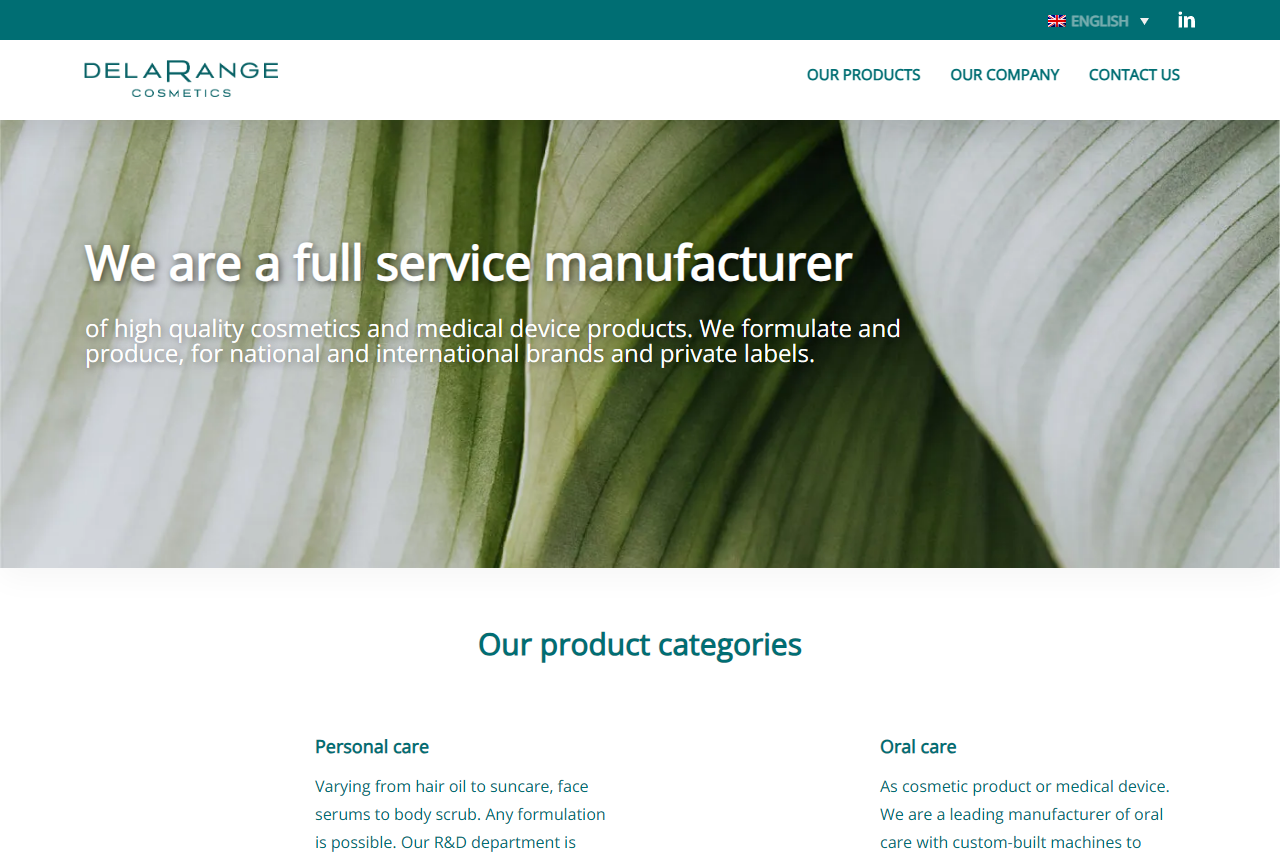
A full-service manufacturer of cosmetics and medical device products, describing more than 30 years in lip care and a second production stream in oral care covering toothpaste, mouthwash, oral foam and sprays. It cites ISO 13485 for the device side alongside BRCGS and SGS certification. Website: delarange.com
Frisson — Dronten
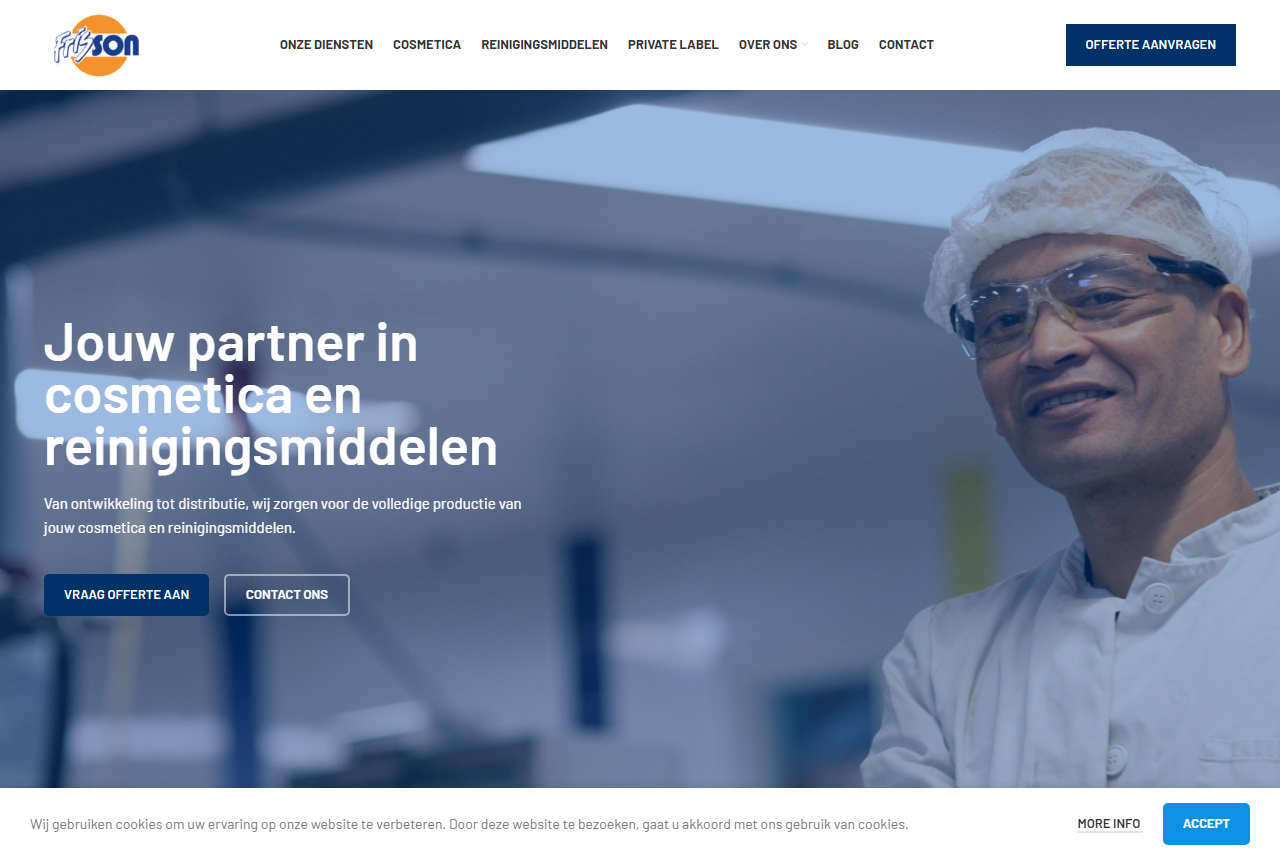
A private-label producer with more than 35 years of stated experience and its own R&D laboratory, making creams and butters, perfumes, soaps, shampoos, shower gels, sun care and sprays, and quoting roughly three to four weeks from formula approval to finished goods. It also states that it handles safety data sheets, label information, safety assessments and CPNP registration. Website: frisson.nl
Girasol Natural Products — Breda
A certified B Corporation producing skincare, haircare and medical-care products for brands and private labels, stating capability in 100% natural, vegan and halal formulations, with services spanning formula development, raw material selection, filling, labelling and regulatory support. Website: girasol.nl
Hegron Cosmetics — Purmerend
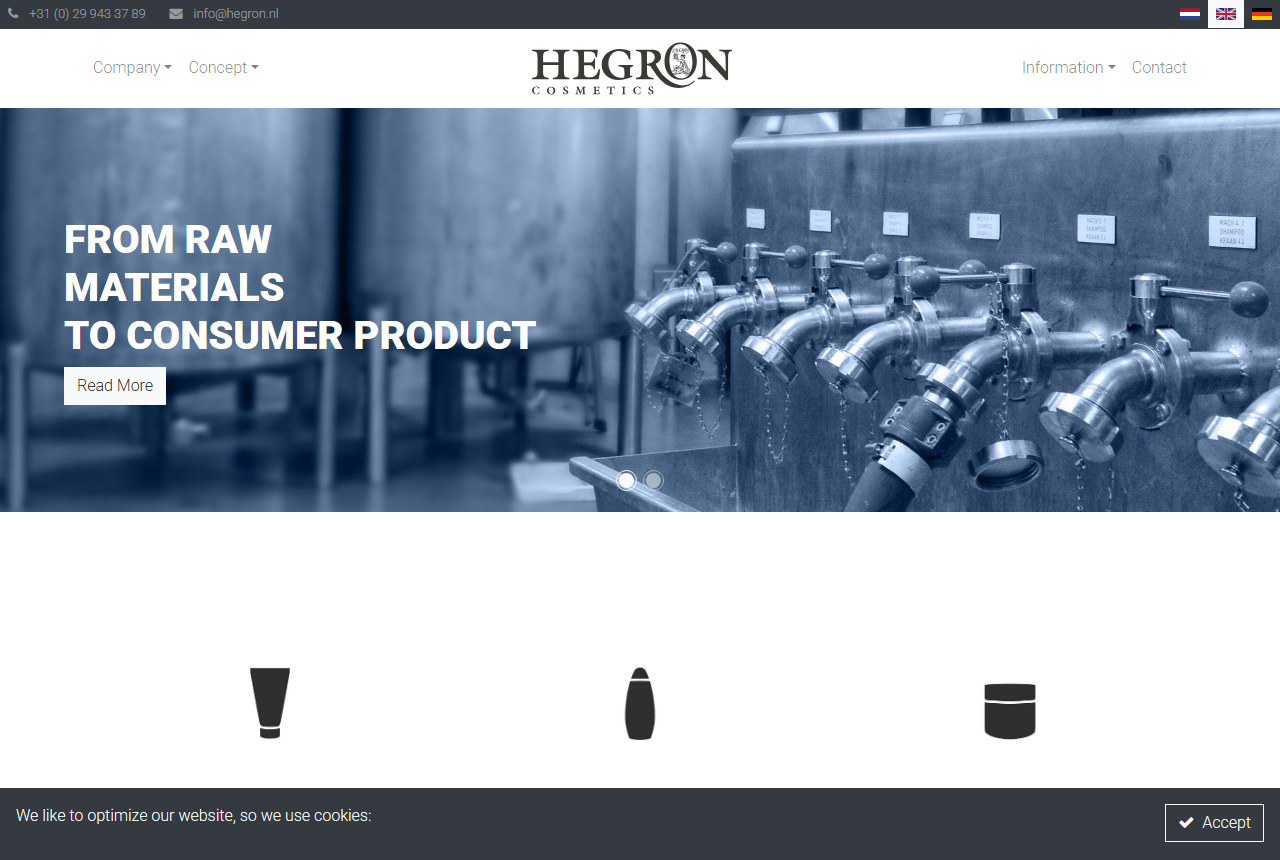
In cosmetics since 1960 with around 175 employees, an in-house microbiology and product development laboratory and ISO 22716 certification, producing hair care, bath and shower, hand soap, styling, skincare, body care, hand and nail, foot care, baby and kids, sun care, deodorant and perfume for private labels and its own brand. Website: hegron.nl
Mondial Cosmetics — Alkmaar
Producing cosmetics in various forms since 1936 and describing itself as the largest Dutch developer and producer of makeup, with stated annual filling capacity above 40 million units across lipstick, lip gloss, mascara, foundation, eyeshadow, blush and nail polish, plus 1,750 m² of warehousing. Website: mondialcosmetics.com
Personal Care Concepts — Heerhugowaard
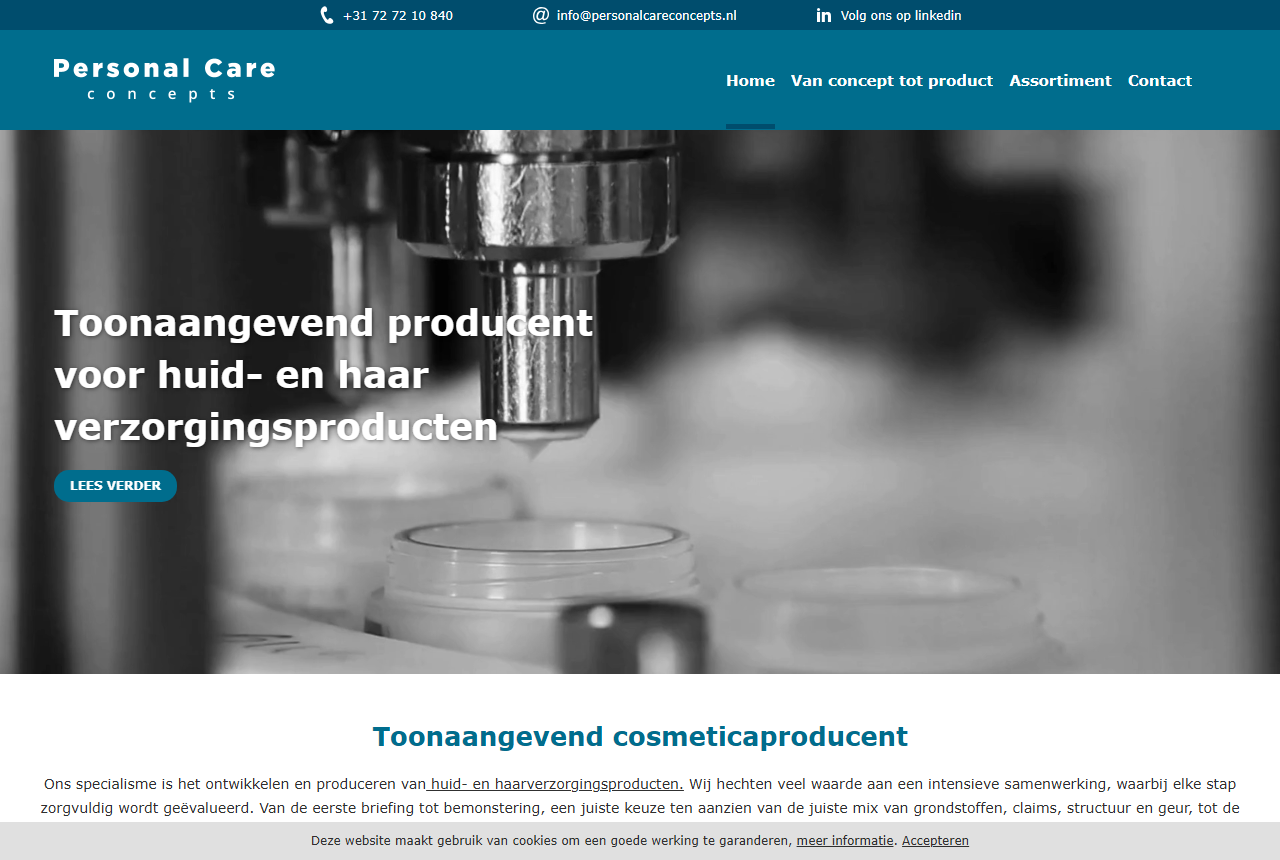
A full-service producer of skin and hair care plus medical and natural cosmetic products, working with retail brands, pharmaceutical companies, startups and online retailers, stating ISO 22716 certification and compliance with Regulation 1223/2009. Website: personalcareconcepts.nl
Rapide International — Haaksbergen
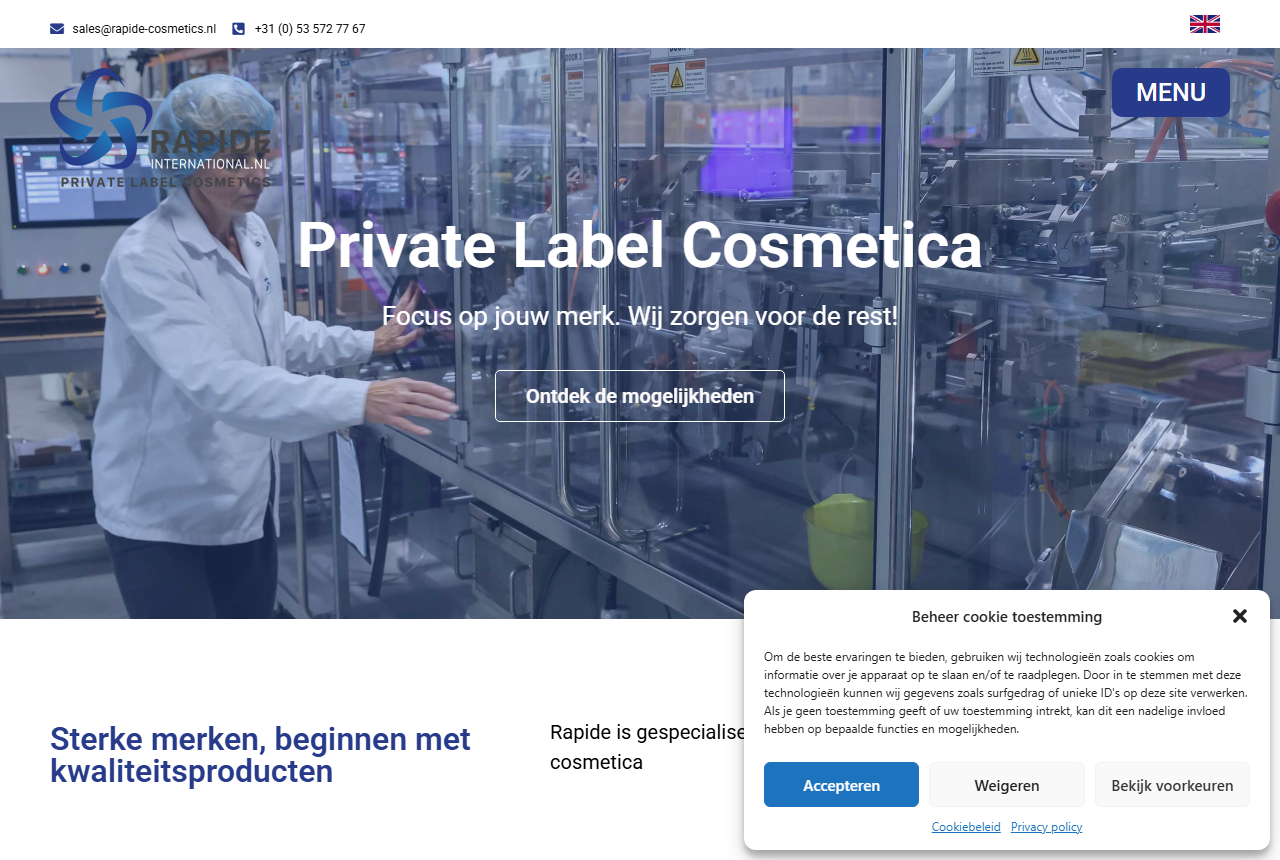
A private-label developer and producer of cosmetics and medical devices operating to ISO 22716 and ISO 13485, covering facial care, body care, baby care, sun protection, hair care, eau de toilette and home fragrance, with in-house R&D, regulatory guidance, packaging advice and printing. Website: private-label-cosmetics.nl
Rebel Nature — Amsterdam
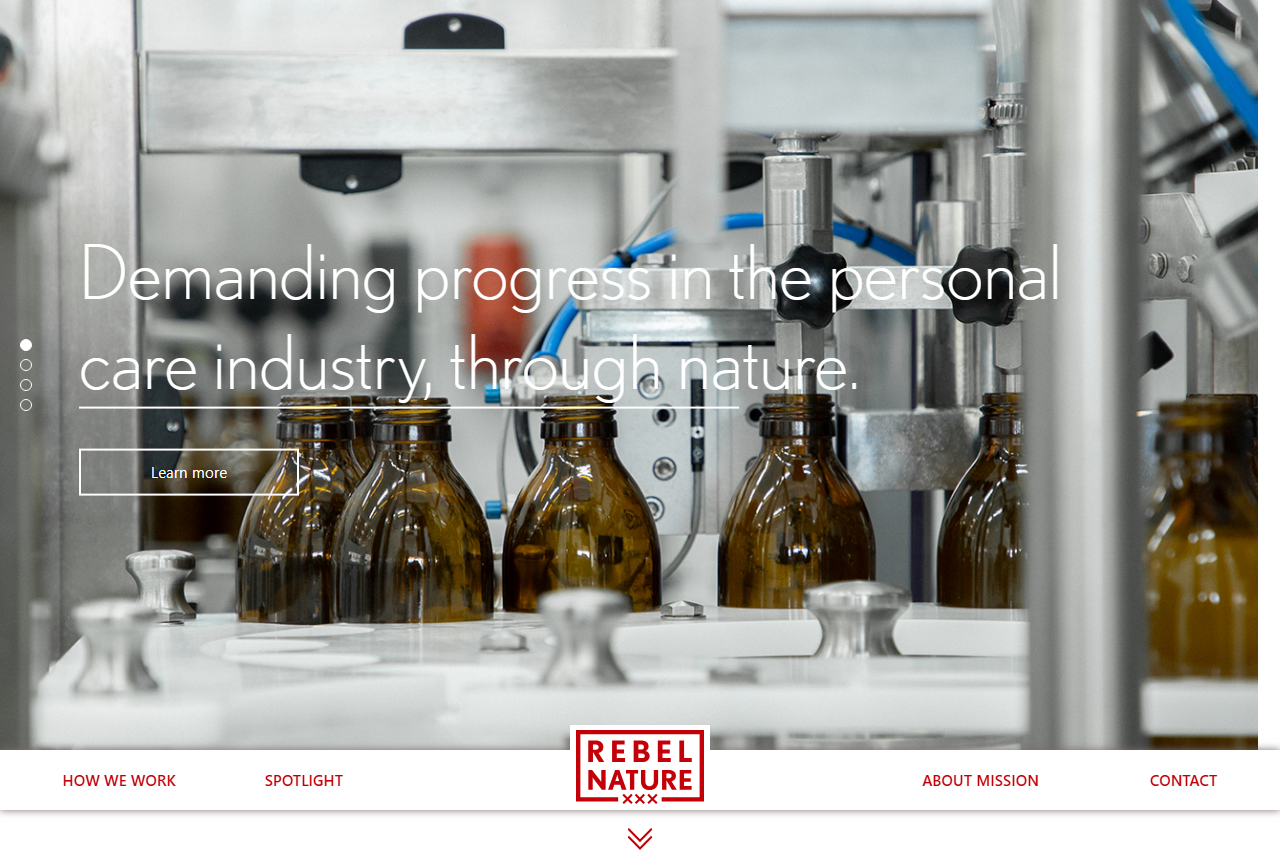
A contract manufacturer working exclusively in the natural personal care segment, drawing on a stated library of more than 500 natural or nature-derived raw materials across solid sticks, liquids, creams and powders, with minimums from 2,000 pieces and an EcoVadis Silver rating. Website: rebel-nature.nl
RedPharma — Almere
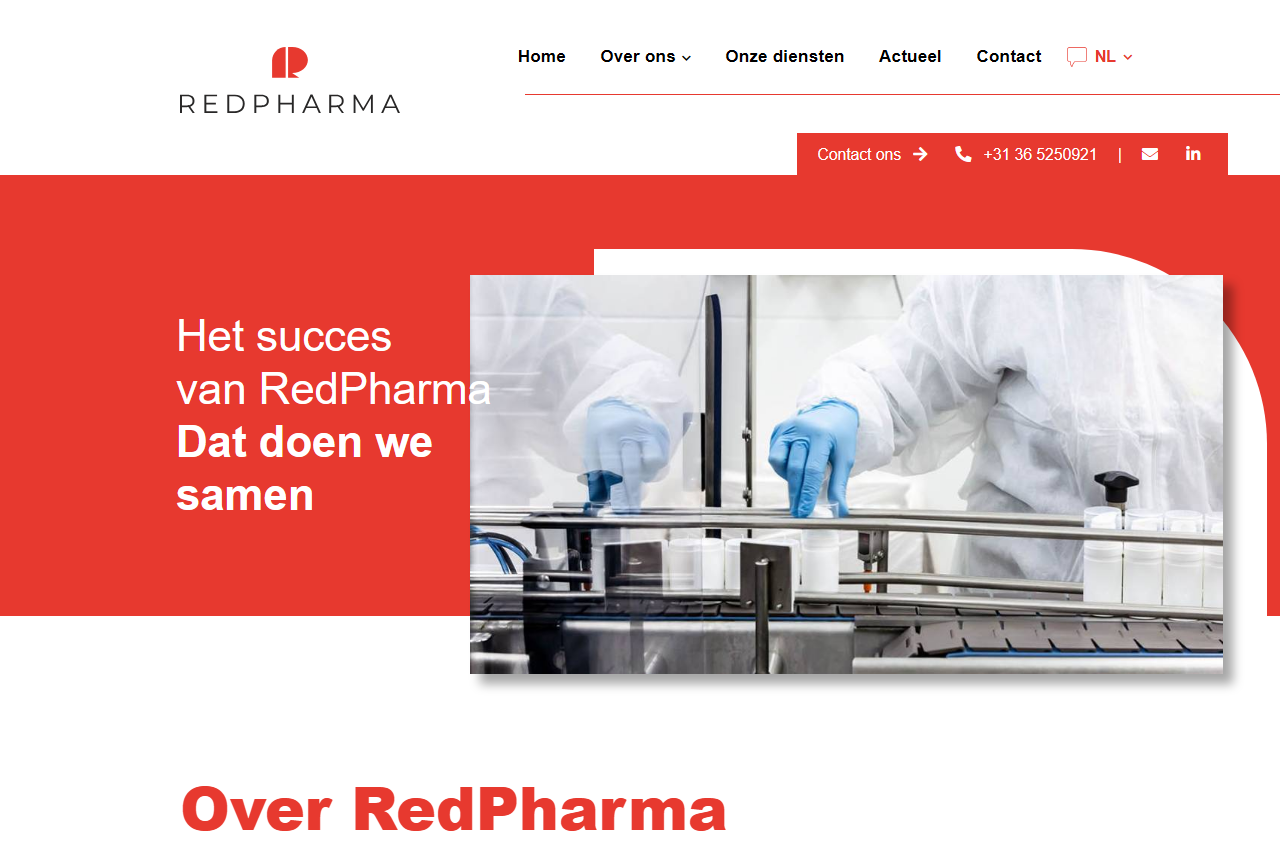
Founded in 2017, a contract manufacturer of cosmetics and medical devices in liquid and semi-solid forms such as gels, creams and lotions, organised into separate R&D, QA/QC/RA, production and logistics functions, and reporting an expansion of production capacity. Website: redpharma.nl
What to compare when evaluating any manufacturer
Country of origin is a weaker signal than most brand owners assume. The variables below decide whether a partnership works, and they should be compared line by line across every quotation, whether it comes from Alkmaar or Ipoh.
| What to compare | What to ask for specifically | Why it decides the outcome |
|---|---|---|
| Minimum order quantity | MOQ per SKU and per shade or variant, plus the MOQ on packaging components | A three-variant launch is three minimums; component minimums are often higher than bulk minimums |
| Total elapsed time | Weeks from approved sample to goods available at port, including stability testing | Development and testing usually cost more calendar time than filling does |
| Certification status | The ISO 22716 certificate itself, the certifying body and the expiry date | A logo on a website is not evidence; a dated certificate is |
| Regulatory documentation | Quantitative formula, certificate of analysis, GMP evidence, free-sale certificate | These are what a destination-market registration requires, and they are slow to obtain retroactively |
| Formula ownership | Written terms on who owns the formula if the relationship ends | An ODM stock formula and a bespoke OEM formula carry very different exit rights |
| Payment structure | Deposit percentage, balance trigger, and currency of settlement | Deposit terms and exchange exposure move landed cost more than a small unit-price difference |
| Destination-market fit | Written confirmation that the formula meets the destination market’s ingredient annexes | EU-compliant is not automatically ASEAN-compliant; reformulating after filling is expensive |
Based on ORIZI Group’s manufacturing experience, the failure we see most often in cross-border sourcing is not quality — it is a documentation mismatch discovered after production. A formula developed against one region’s ingredient annexes is filled, shipped, and only then found to contain a substance restricted differently in the destination market. The fix is a single sentence in the brief, sent before sampling begins, naming the destination market’s regulatory framework and asking the manufacturer to confirm compliance with it in writing. That sentence costs nothing and prevents the most expensive category of error in the whole process.
Looking Beyond the Netherlands for a Manufacturing Partner?
European manufacturing suits some briefs and not others. If your primary market is Malaysia or wider ASEAN, three factors usually outweigh a European origin story: halal certification issued under a system your market recognises, formulation built against the ASEAN Cosmetic Directive from the start, and minimum order quantities low enough to test a concept without committing a year of working capital.
ORIZI Group is a Malaysia-based OEM and ODM manufacturer serving cosmetics, skincare and personal care brands. Our facility operates under ISO 22716 cosmetic GMP and holds Halal certification, and we work with brand owners from formulation through to finished, notification-ready product. For brands that want to own their formula rather than adopt a stock one, our private label and ODM service covers development, sampling and scale-up in one place, while our OEM cosmetics manufacturing capability handles bespoke briefs where the formulation is the product.
Where a project’s difficulty is regulatory rather than technical — ingredient restrictions, claim substantiation, notification dossiers across multiple ASEAN markets — our regulatory affairs consulting team works on that separately from production. If you would like a view on whether your concept is better made in Europe or in Malaysia, send us the brief and we will tell you honestly, including when the answer is that you should manufacture elsewhere.
Frequently asked questions
Do I need a licence to manufacture cosmetics in the Netherlands?
No. There is no Dutch pre-market licence for cosmetic products and no requirement to register a Dutch company to have a product made there. EU Regulation (EC) No 1223/2009 requires instead that a Responsible Person established in the European Union holds the Product Information File, that a qualified assessor has signed a Cosmetic Product Safety Report, and that the product is notified through the CPNP portal before it is placed on the EU market. Enforcement is by national market surveillance after launch, carried out in the Netherlands by the NVWA.
What minimum order quantity should I expect from a Dutch cosmetics manufacturer?
Company-stated figures for 2026 cluster at 2,000 to 5,000 units per SKU for skincare, haircare and body care, and around 10,000 units for colour cosmetics, where tooling and shade development costs have to be recovered. The lowest published entry point among the manufacturers listed here is 2,000 pieces. These figures are per stock-keeping unit rather than per order, so a three-shade launch means three minimums. Packaging component minimums can be higher than bulk minimums and should be quoted separately.
Is European manufacturing better than Asian manufacturing for a beauty brand?
Neither is better in general; they solve different problems. European production earns its higher unit cost when the brand needs a European origin claim, a capability concentrated in Europe such as colour cosmetics or oral care at volume, or production inside the EU market it sells into. Asian production, including Malaysia, is stronger on minimum order quantity, sampling speed, halal certification recognised in ASEAN markets, and total landed cost for products sold in the region. Compare landed cost per unit rather than ex-works price.
How long does a first cosmetics production run typically take?
Plan for four to six months from approved brief to goods in the warehouse when manufacturing in Europe for an Asian market. Formulation and sampling commonly take 6 to 12 weeks including revisions, production a further 4 to 8 weeks, and ocean freight from northern Europe to Southeast Asia roughly 28 to 40 days port to port before customs clearance. Repeat orders of an unchanged formula are shorter, typically three to four months. Stability testing, custom packaging tooling and regulatory documentation are the usual causes of overrun.
Sources, limitations and update history
Sources: each manufacturer’s official website, read and captured on 28 August 2026; European Commission cosmetics legislation portal for Regulation (EC) No 1223/2009; the Cosmetic Products Notification Portal; the CosIng ingredient database; ISO 22716:2007; and the NVWA cosmetics pages.
Limitations: capabilities, certifications, capacity figures and minimum order quantities stated above are company-stated as at 28 August 2026 and were not independently audited. No facility was visited, no certificate was inspected and no order was placed. Minimums and lead times vary by formula, pack format and season. This article is editorial research and general information, not a recommendation to contract with any company named, and not regulatory advice — verify current requirements with the relevant authority and confirm all commercial terms directly with any manufacturer.
Update history: 28 August 2026 — first publication.
Conclusion
The Netherlands is a credible, underused option for brand owners who need European production at order sizes a mid-sized factory will actually take. Its strengths are specific rather than general: colour cosmetics at volume, lip and oral care, dual cosmetic and medical-device capability, and a service culture built around export. Its constraints are equally specific: minimums several times higher than an ASEAN OEM, a long ocean leg, and halal certification that may not be recognised where you intend to sell. Decide on the brief and the destination market first, then choose the geography — not the other way around.
Related reading: Top 10 OEM/ODM Cosmetic Factories in Switzerland (2026) – a premium-tier European sourcing base, and what the legally protected Swiss Made claim actually requires.
Also worth comparing: Top 10 OEM/ODM Cosmetic Suppliers in South Africa (2026) – an English-speaking base with deep textured-hair and sun-care capability and JAKIM-recognised halal certifiers.