Mexico has one of the largest beauty markets in the Americas and a contract-manufacturing sector built almost entirely from independent mid-size laboratories. For brand owners mapping global supply options, it is an increasingly relevant market landscape — and one that is poorly documented in English. This guide sets out who the notable Mexican OEM/ODM cosmetic suppliers are, what regulates them, and what to compare before shortlisting any of them.
Written & researched by Kok Toong Hoi · Technical input by ORIZI Group R&D Team · Fact-checked by Creaton Poh · Published by ORIZI Group · Last reviewed August 2026
Disclosure: This article is published by ORIZI Group and may refer to our own manufacturing experience, services and capabilities. External factual claims are supported by cited sources.
Quick answer
Mexico’s OEM/ODM cosmetics sector is made up of independent contract laboratories concentrated in Jalisco, Estado de México, Guanajuato and Mexico City, rather than large global CDMOs. Ten notable suppliers with verified live websites are profiled below. All operate under COFEPRIS, Mexico’s federal health-risk regulator, and the NOM-259-SSA1-2022 good-manufacturing-practice standard. The sector’s distinguishing features are low entry minimums — some laboratories publish figures as low as 10 to 100 units — and duty-advantaged access to the United States and Canada under USMCA.
Key takeaways
- Mexico regulates cosmetic facilities, not individual products. Manufacturers file an operating notice with COFEPRIS; there is no product pre-registration equivalent to an ASEAN notification or a Chinese NMPA filing.
- NOM-259-SSA1-2022 is the national good-manufacturing-practice standard, in force since July 2023. COFEPRIS has clarified that enforcement follows NOM-259 rather than ISO 22716.
- The sector’s competitive edge is accessibility, not scale — published entry minimums are far lower than typical Asian export factories.
- Colour cosmetics capability exists but is concentrated in a small number of vertically integrated plants; the sector’s depth is in emulsions, hair care, body care and sun care.
- Website presence is an unreliable signal of capability in this market: several companies still listed in English-language round-ups have expired or deactivated domains.
Table of Contents
- Quick answer
- Key takeaways
- Why the Mexican market matters to brand owners
- How COFEPRIS regulates cosmetics manufacturing in Mexico
- Ten notable OEM/ODM cosmetic suppliers in Mexico
- What to compare when evaluating any manufacturer
- The ORIZI Group perspective
- Scope and limitations of this guide
- Frequently asked questions
- Looking beyond Mexico for a manufacturing partner?
Why the Mexican market matters to brand owners
Mexico is among the largest beauty and personal-care markets in Latin America, with an estimated value in the region of USD 17–18 billion. That domestic demand is what sustains an unusually broad base of independent contract laboratories — the local term is maquiladora — serving Mexican brands, direct-selling organisations and, increasingly, export customers.
Three structural features make the market relevant beyond its borders. First, Mexico sits inside the United States–Mexico–Canada Agreement, so goods meeting the rules of origin move between the three countries at preferential duty rates with road freight measured in days. Second, the sector’s entry minimums are genuinely low by international standards, which suits brands validating a concept before committing to volume. Third, several laboratories already maintain United States FDA cosmetic registrations and Health Canada notifications, indicating export documentation practice rather than purely domestic operation.
The counterweight is scale and technology depth. Mexico has no equivalent of the very large contract manufacturers found in Canada, South Korea or Guangdong, and the advanced actives, encapsulation and texture-engineering tiers common in East Asian ODM houses are thinly represented. For brand owners, Mexico is best understood as an accessible regional production base rather than a global low-cost manufacturing hub.
How COFEPRIS regulates cosmetics manufacturing in Mexico
The Mexican regulator is the Comisión Federal para la Protección contra Riesgos Sanitarios (COFEPRIS), the federal health-risk protection commission. Three points define the regime.
| Element | What applies in Mexico | Practical effect for a brand owner |
|---|---|---|
| Market authorisation | Facility Aviso de Funcionamiento filed with COFEPRIS; cosmetic products are generally not pre-registered | Faster launches domestically, but no product certificate exists to present to a foreign regulator |
| Manufacturing standard | NOM-259-SSA1-2022, in force July 2023 — personnel, premises, equipment, raw materials, quality control, transport | COFEPRIS has stated a GMP certificate is not mandatory and that enforcement follows NOM-259, not ISO 22716 |
| Labelling | NOM-141-SSA1/SCFI-2012 — Spanish-language information, net content, manufacturer identification | Artwork prepared for Mexico requires a separate pass for other markets |
| Claims | Products making therapeutic claims fall outside the cosmetic category | Claim wording, not formulation, is where most classification disputes begin |
The consequence for an exporting brand is that the safety dossier stays with the brand owner. A Mexican production run does not automatically generate the safety assessment an EU or UK importer will require, nor the ingredient documentation an ASEAN notification needs. Those must be commissioned alongside the production run, not after it.
Ten notable OEM/ODM cosmetic suppliers in Mexico
The companies below were identified through Spanish- and English-language research in August 2026 and each operates a live corporate website, captured at the time of writing. They are listed alphabetically. Descriptions are factual summaries of what each company publishes about itself and have not been independently audited.
Cosmética Lab Natural
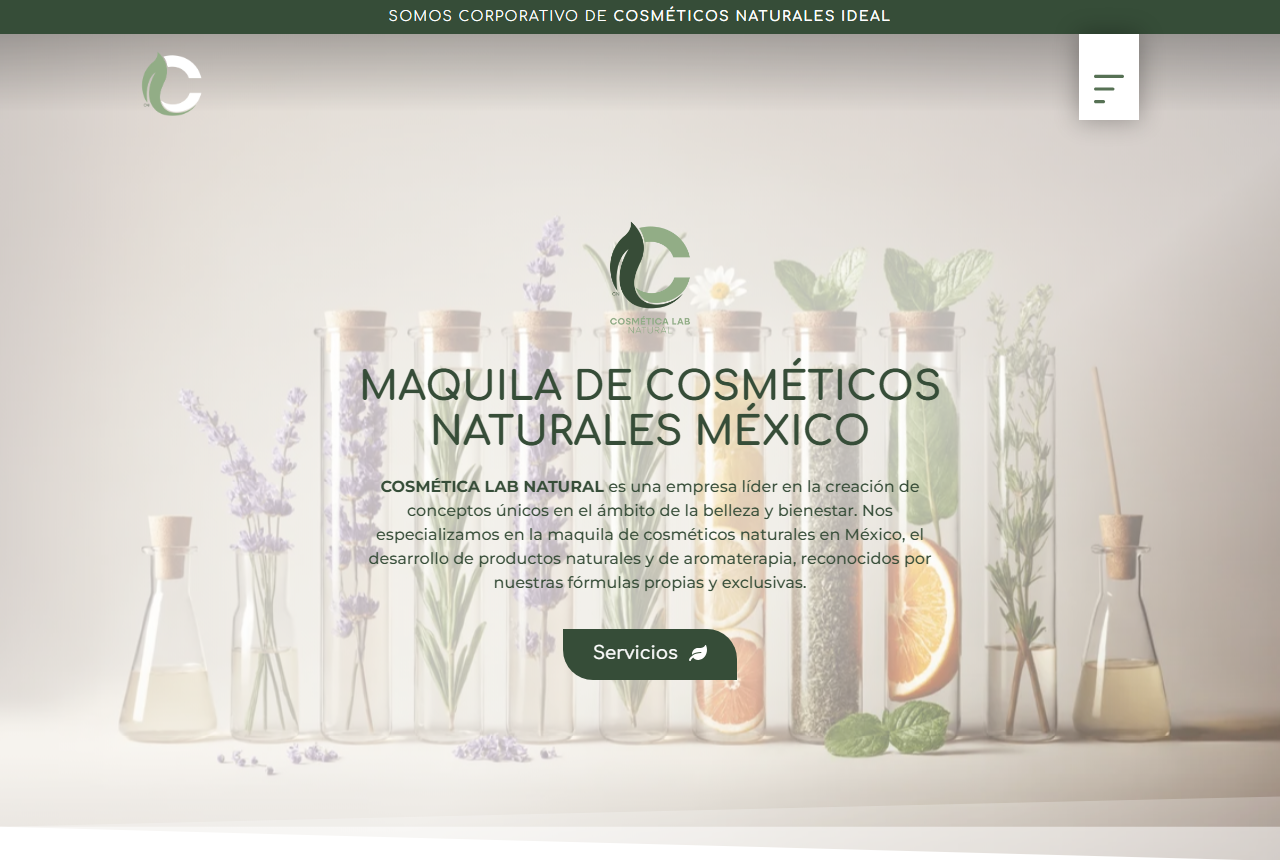
Part of the Corporativo de Cosméticos Naturales Ideal group, this laboratory specialises in natural cosmetics, aromatherapy and herbal preparations and states a catalogue of more than 250 products spanning skincare, personal hygiene, baby care and supplements. Website: cosmeticalabnatural.mx
CosmetiLab 18
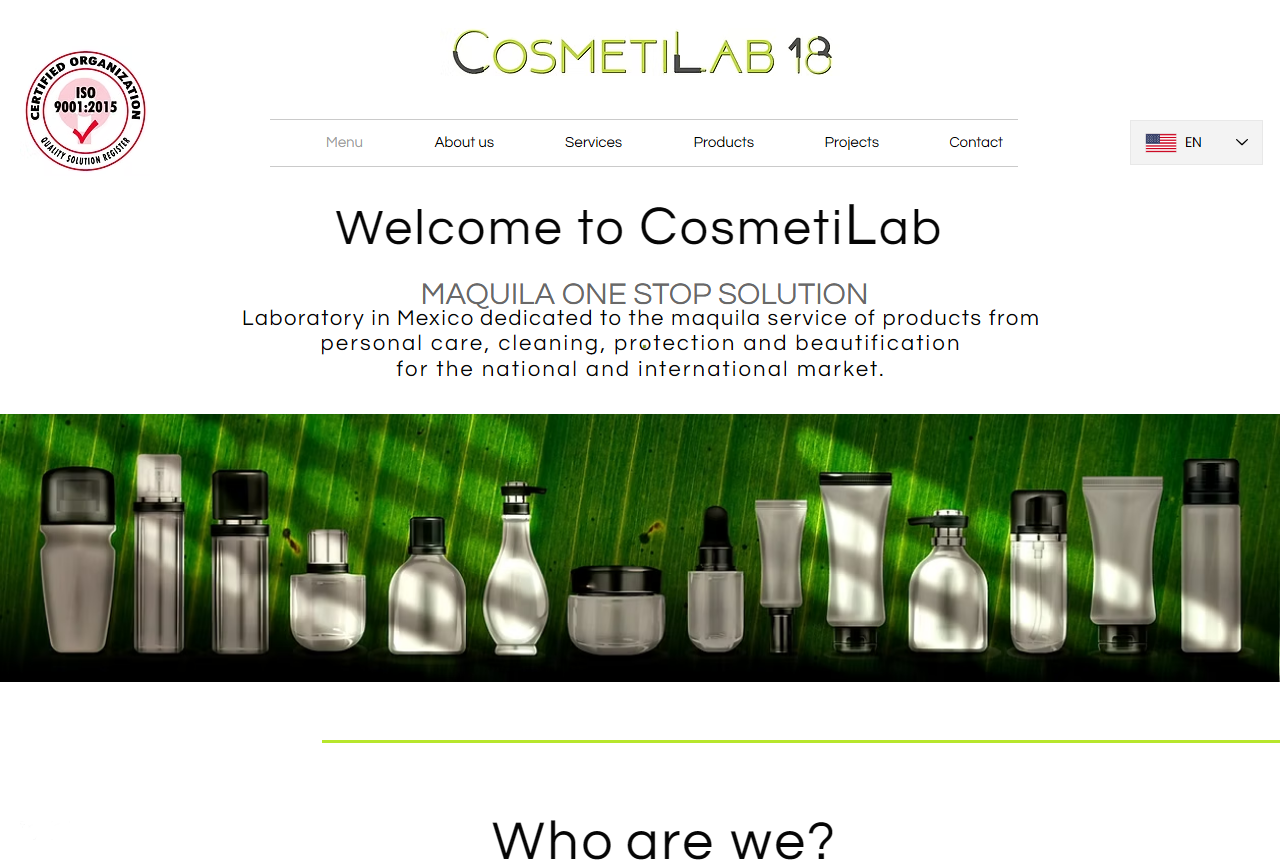
Established in 2017 and describing itself as part of a multinational group, CosmetiLab 18 offers formulation, manufacturing, conditioning, quality assurance and logistics as a single service, and publishes ISO 9001:2015 certification with ISO 22716 and ISO 14001 stated as in progress. Website: en.cosmetilab.com
Eureka Cosmética
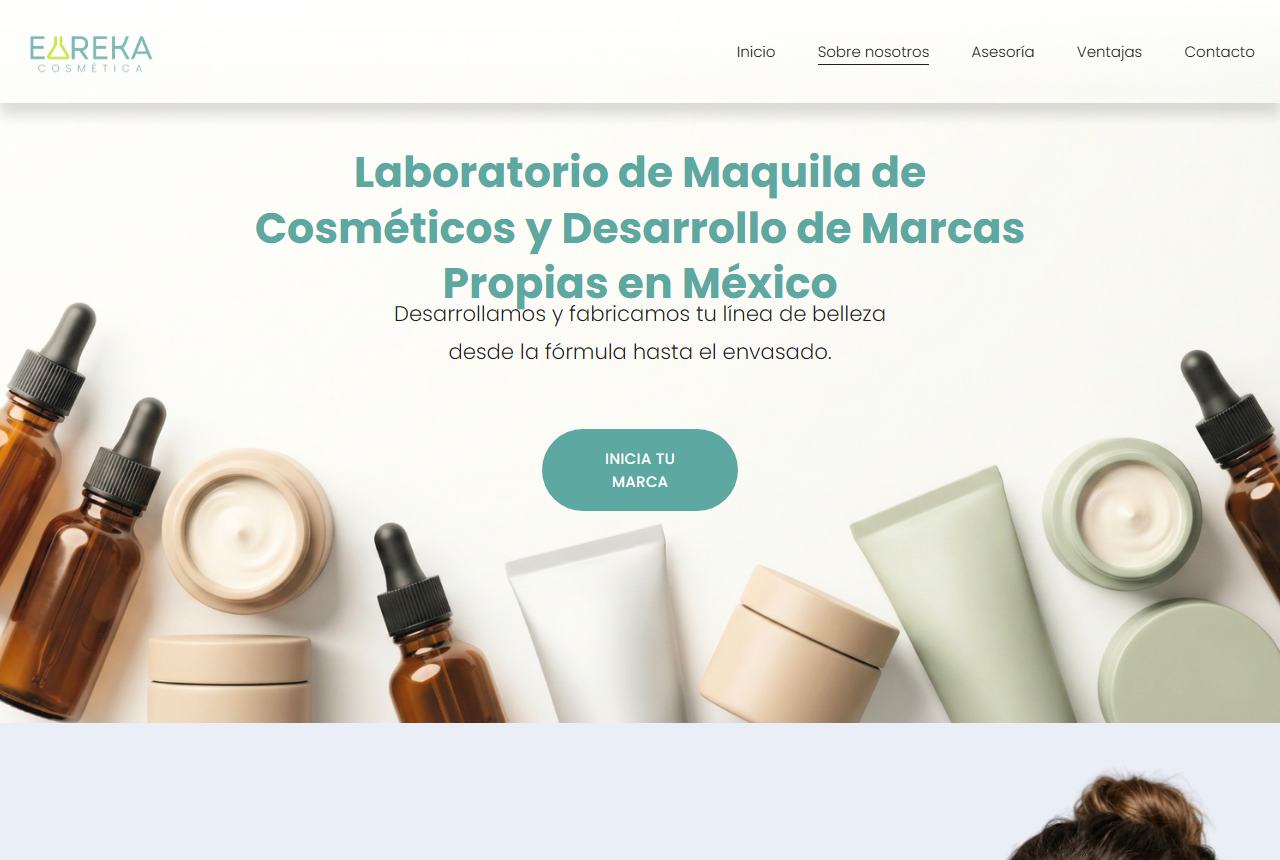
Based in Zapopan, Jalisco, Eureka Cosmética bundles formulation, packaging selection, label design and regulatory labelling advice into one private-label service across skincare, hair care and body care, positioned primarily at founders launching a first brand. Website: eurekacosmetica.com
Gardenia Naturals Labs
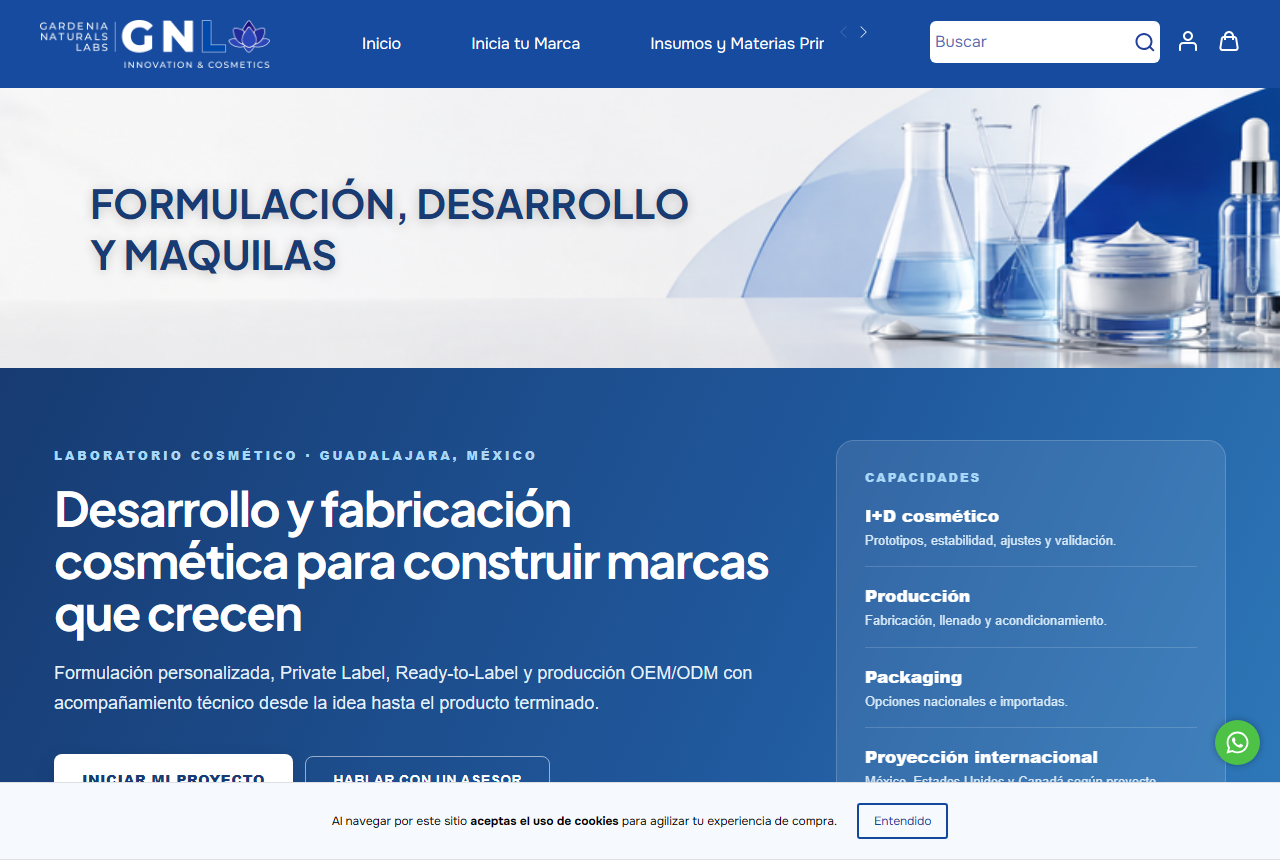
A Guadalajara laboratory that publishes ready-to-label stock from 10 pieces and private label or OEM/ODM development from 100 pieces, states COFEPRIS, FDA and Health Canada registrations, and claims more than 550 brands developed since 2020 across skincare, hair care, dermocosmetics and sun care. Website: gardenianaturals.com.mx
Helleskin Laboratorios
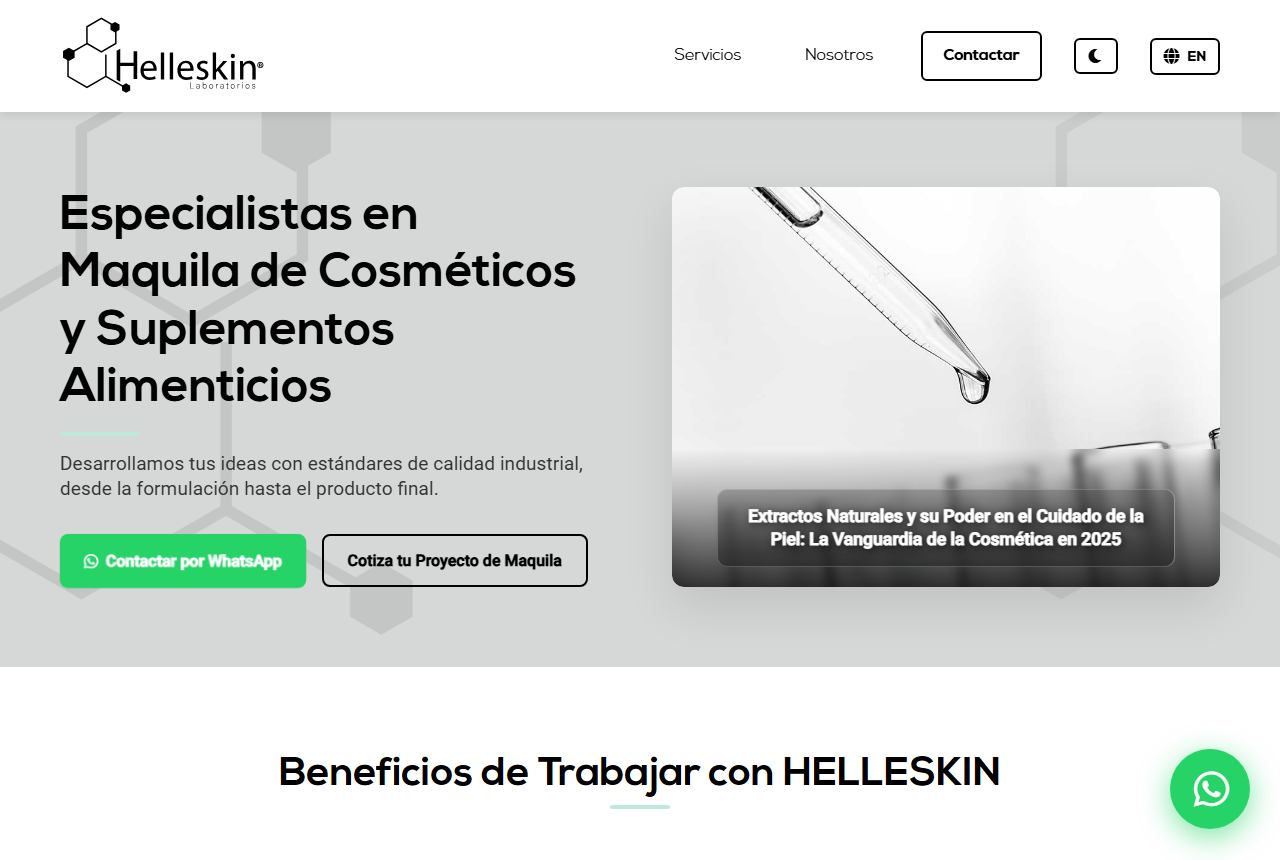
Helleskin operates as a formulation laboratory and maquilador handling cosmetics and dietary supplements together, with published material describing more than a decade of formulation work across cosmetics, health, food and agro-industrial sectors. Website: helleskin.com
IMAQ Industrial Maquiladora
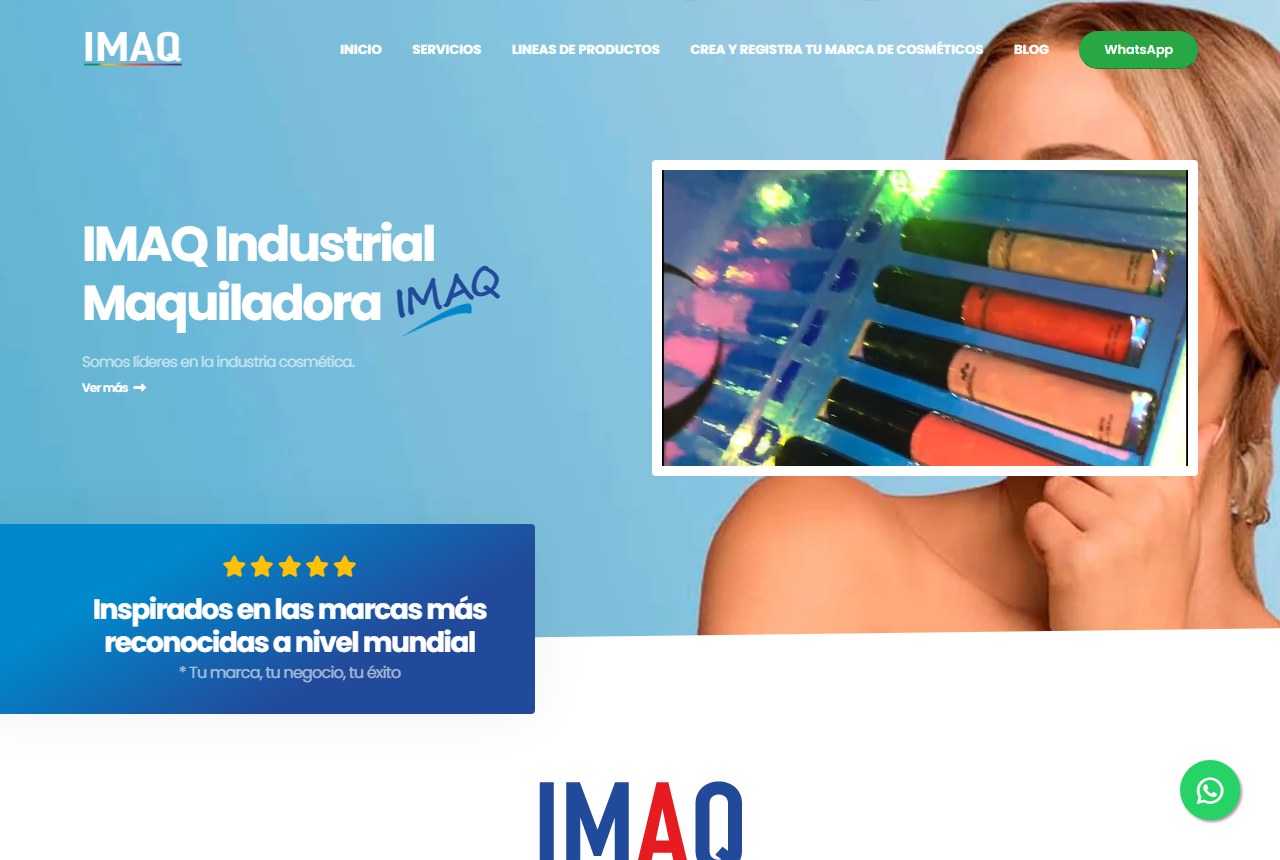
Located in Naucalpan de Juárez, Estado de México, IMAQ claims more than 60 years in the cosmetics trade and is the most vertically integrated operation identified, stating in-house injection and blow moulding, hot stamping, screen printing, tampography and multi-colour flexographic label printing alongside a deep colour-cosmetics range. Website: industrialmaquiladora.com
Laboratorios Anteii
Founded in 1989 in Jalisco and operating a full English-language site, Anteii states COFEPRIS good-manufacturing-practice status, a SEDEX ethical audit and a United States FDA cosmetic registration, and works in facial, hair and body care while explicitly stating it does not produce colour cosmetics. Website: anteii.com
Naturalcare Cosmetics Lab
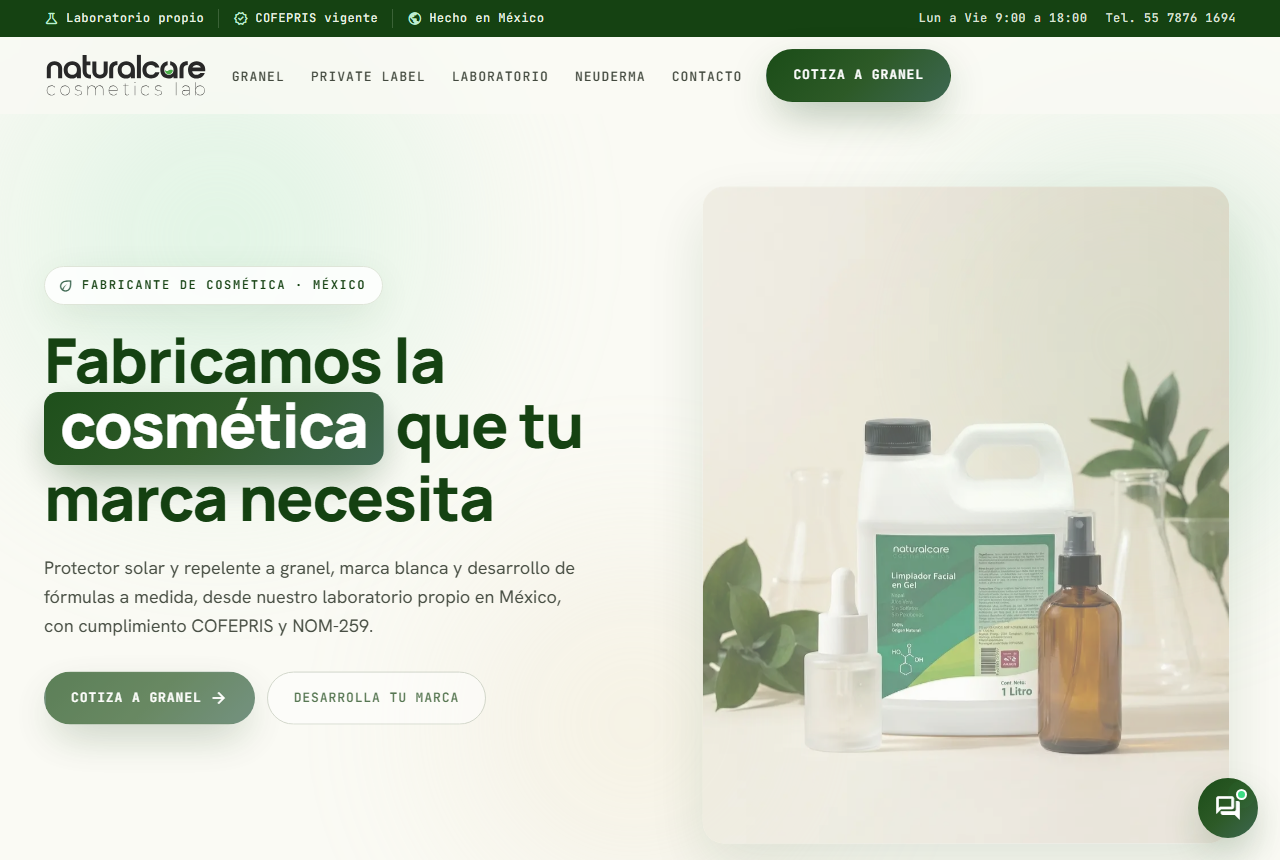
Operating its own plant in Metepec, Estado de México, Naturalcare publishes its COFEPRIS operating-notice key and names NOM-259-SSA1-2022 and NOM-141-SSA1/SCFI-2012 as its manufacturing and labelling standards, offering bulk supply, private label and full OEM development with sun care and repellent as flagship bulk categories. Website: naturalcare.mx
OMC — Organik Maquiladora Cosmética
Working from León, Guanajuato, OMC covers makeup, skincare, hair care and hygiene with natural, organic, vegan and clinical positioning options, and adds brand registration, barcode registration and more than a hundred label and decoration types to its production service. Website: fabricantedecosmeticosomc.com.mx
Tecnología Cosmética
One of the longest-established maquiladores in Mexico City with more than three decades of operation, Tecnología Cosmética states COFEPRIS good-manufacturing-practice certification and covers skincare, personal care, fragrances, makeup, oils and aromatherapy and home care, quoting an entry threshold as a project value rather than a unit minimum. Website: tcosmetica.com
What to compare when evaluating any manufacturer
The same evaluation framework applies whether a candidate factory is in Mexico, Malaysia, Poland or Korea. Six comparisons matter more than the headline unit price.
| What to compare | What good looks like | Warning sign |
|---|---|---|
| Regulatory evidence | Current facility licence or operating notice supplied on request, plus a named GMP standard | Certification implied on the website but not produced in writing |
| Category fit | The plant states clearly what it does and does not make | A claim to manufacture “any” product format |
| Real minimum order | Bulk MOQ and packaging MOQ quoted separately | A low bulk figure quoted without the pack component that actually sets the floor |
| Documentation practice | Full INCI breakdown with percentages provided during quotation | Ingredient detail withheld until after a development fee |
| Stability and shelf life | A written stability protocol and a shelf-life commitment | Shelf life stated verbally with no supporting testing |
| Total landed cost | Quote broken out by bulk, pack, decoration, freight terms and duty | A single per-unit figure with no Incoterm attached |
Destination-market compliance is a separate question from manufacturing quality, and it is the one most often deferred too long. A formula approved in one jurisdiction may use a UV filter, preservative or colourant at a concentration another jurisdiction does not permit. Establish the ingredient position for every target market before a formula is scaled up, because a late substitution restarts stability and compatibility testing.
The ORIZI Group perspective
Based on ORIZI Group’s own experience manufacturing cosmetics and personal-care products in Malaysia, the factor that most often decides whether a cross-border sourcing project succeeds is not the factory’s technical capability but its documentation habits. A plant that can supply a complete quantitative ingredient breakdown, a manufacturing declaration and a stability protocol during the quotation stage will almost always be easier to work with than one that produces the same paperwork reluctantly six weeks later — regardless of which country it operates in.
The second recurring observation is that distance multiplies every ordinary problem. A minor fill-level deviation is a same-week conversation with a domestic manufacturer and a two-month problem with a supplier on another continent. That is a scope-limited observation drawn from our own project experience rather than a general market statistic, and it does not mean overseas sourcing is wrong — it means the tolerance for ambiguity in the specification has to be much lower.
Scope and limitations of this guide
This is desk research, not an audit. No plant was visited, no quality system inspected, no certificate verified against its issuing body and no product tested. Every certification, founding year, capability and minimum order quantity described above is as published by the company concerned in August 2026. Minimum order quantities and pricing vary with format, packaging availability and season and should be treated as an opening position rather than a quotation.
Coverage is also limited to companies operating a public website in Spanish or English. Mexico’s maquila sector includes laboratories that trade largely through referral and publish nothing online; their absence here reflects the method, not their capability. Several companies cited as current in other English-language round-ups were found to have expired or deactivated domains and were excluded.
Frequently asked questions
Does Mexico require cosmetic products to be registered before sale?
Generally no. Mexico regulates cosmetics primarily at facility level: the manufacturer or importer files an Aviso de Funcionamiento with COFEPRIS, and individual cosmetic products are not subject to the pre-market registration used in China or under ASEAN notification. The product must still comply with NOM-259-SSA1-2022 manufacturing requirements and NOM-141-SSA1/SCFI-2012 labelling rules, and the responsible company must be able to demonstrate that the formula is safe. Products carrying therapeutic claims fall outside the cosmetic category and face stricter control.
Is ISO 22716 certification required to manufacture cosmetics in Mexico?
No. COFEPRIS has clarified that enforcement is based on Mexico’s own NOM-259-SSA1-2022 good-manufacturing-practice standard rather than ISO 22716, and that holding a GMP certificate is not mandatory. Some Mexican laboratories nonetheless pursue ISO certification because export customers in the United States, Canada or Europe request it. Brand owners whose route to market includes the European Union or the United Kingdom should make ISO 22716 evidence a contractual requirement even though Mexican law does not impose it.
What minimum order quantities do Mexican cosmetic suppliers accept?
Lower than most international sourcing markets. Among the suppliers reviewed here, one publishes ready-to-label stock from 10 pieces and private label from 100 pieces, while another states a minimum project value of approximately MXN 50,000 rather than a unit count. Others describe minimums as adaptable to format and packaging. As a planning assumption, expect several hundred to several thousand units for a custom formula, with the packaging component rather than the bulk usually determining the true floor. All figures are company-stated as of August 2026.
Does manufacturing in Mexico simplify entry into the United States and Canada?
It helps commercially but not on compliance. Goods meeting USMCA rules of origin move between Mexico, the United States and Canada at preferential duty rates, and road freight into United States distribution centres takes days rather than the weeks an ocean route requires. Regulatory entry remains separate: the United States operates FDA facility registration and product listing under MoCRA, and Canada requires a Cosmetic Notification Form and compliance with the Cosmetic Ingredient Hotlist. Two of the suppliers profiled above state registrations covering those markets.
Looking Beyond Mexico for a Manufacturing Partner?
Mexico is one option among several, and for many brand owners it is not the right one — particularly where halal certification, ASEAN market access or short lead times matter more than proximity to North America. ORIZI Group is a Malaysia-based OEM/ODM manufacturer of cosmetics, skincare and personal-care products, operating under ISO 22716 cosmetic good manufacturing practice and holding halal certification.
For brand owners who want a formula and pack developed from a brief rather than selected from a stock catalogue, our private label and ODM service covers development through to finished goods, while our OEM cosmetics manufacturing capability handles production for brands that already hold their own formulations. Where the constraint is documentation rather than production — ingredient annexes, notification dossiers, market-entry requirements — our regulatory affairs consulting team works on exactly the paperwork that most often delays a cross-border launch.
If you are comparing production bases and would like a straightforward view of what your product would involve in Malaysia, contact our team with your product type, target volume and destination markets.
Conclusion
Mexico offers brand owners an accessible, regionally advantaged manufacturing base with unusually low entry minimums and a lighter regulatory load than most comparable markets — balanced against limited scale, a thinner advanced-formulation tier and a documentation burden that stays with the brand. As with any market, the right decision comes from comparing a specific factory against a specific product and a specific destination market, not from comparing countries in the abstract.
Sources and references
- COFEPRIS — Comisión Federal para la Protección contra Riesgos Sanitarios, cosmetics regulatory framework.
- NOM-259-SSA1-2022, Mexican Official Standard on good manufacturing practices for cosmetic products (in force July 2023).
- NOM-141-SSA1/SCFI-2012, Mexican Official Standard on cosmetic labelling.
- Company websites as cited above, reviewed August 2026.
Update history
- August 2026 — First published. Ten Mexican OEM/ODM cosmetic suppliers profiled from research conducted 18–24 August 2026.
Related reading: Top 10 OEM/ODM Cosmetic Factories in Switzerland (2026) – a premium-tier European sourcing base, and what the legally protected Swiss Made claim actually requires.