Canada is one of the least discussed cosmetics manufacturing markets in the world, and that is largely a matter of scale rather than capability. It sits beside the United States, shares a regulatory philosophy with Europe, and hosts a contract-manufacturing sector built almost entirely around serving small and mid-size brands. For a brand owner mapping global sourcing options in 2026, it is worth understanding on its own terms.
Written & researched by Fenny Yip, ORIZI Group industry contributor · Technical input by ORIZI Group R&D Team · Fact-checked by Creaton Poh · Published by ORIZI Group · Last reviewed August 2026
Disclosure: This article is published by ORIZI Group and may refer to our own manufacturing experience, services and capabilities. External factual claims are supported by cited sources.
Quick answer
Canada’s cosmetics contract-manufacturing sector is concentrated in Ontario, with specialist laboratories in British Columbia and Alberta. It is characterised by unusually low minimum order quantities — several manufacturers publish a no-MOQ position on private label — and by a post-market regulatory system in which Health Canada requires a Cosmetic Notification Form within ten days of first sale rather than a pre-market approval. The sector suits small-batch, formulation-led and North America-bound programmes more than large-volume export manufacturing.
Key takeaways
- Canadian cosmetics manufacturing is geographically concentrated: most contract manufacturers operate within an hour of Toronto, Ontario.
- Health Canada regulates cosmetics under the Food and Drugs Act with a post-market notification system, not a pre-market approval regime.
- Published minimum order quantities are among the lowest of any developed manufacturing market, which reflects a sector built to serve indie brands.
- Several Canadian manufacturers hold US FDA registration under MoCRA, which matters for brands whose primary market is the United States.
- Canadian production carries no regulatory weight in ASEAN markets — a product entering Malaysia still requires notification to the National Pharmaceutical Regulatory Agency (NPRA).
Table of Contents
- Why the Canadian market matters to brand owners
- How Health Canada regulates cosmetics
- Ten Canadian OEM/ODM cosmetic suppliers
- What to compare when evaluating any manufacturer
- The ORIZI Group perspective on cross-border sourcing
- Limitations of this article
- Frequently asked questions
- Looking Beyond Canada for a Manufacturing Partner?
Why the Canadian market matters to brand owners
Canada produces cosmetics for a domestic market of roughly 40 million people and an adjacent United States market of about 330 million. That asymmetry shapes the entire sector: Canadian contract manufacturers are structurally oriented towards export to the south, and their operating model reflects a customer base of small and mid-size North American brands rather than multinational fillers.
Three characteristics follow from that structure, and they are what a brand owner outside North America should actually weigh.
First, minimum order quantities are low. Several established Canadian private-label houses publish a no-minimum position on catalogue formulations, and others advertise minimums in the low thousands of units. Very few developed manufacturing markets offer that. It reflects a sector that has spent thirty years serving brands launching one product at a time.
Second, documentation tends to be complete. Canadian manufacturers produce ingredient disclosures, safety information and labelling in a format that satisfies both Health Canada and the United States Food and Drug Administration (FDA), and often the European Union as well. That reduces friction later when the same dossier has to support a notification in another jurisdiction.
Third, the sector is small. Canada has nothing comparable to the industrial density of Guangdong, Gyeonggi or Lombardy. Capacity for a large national rollout exists at only a handful of companies, and depth in specialised formats — aerosols, anhydrous colour, sachet filling — is thinner than in Asia or continental Europe.
How Health Canada regulates cosmetics
Health Canada is the federal department responsible for cosmetics regulation in Canada. Cosmetics are governed by the Food and Drugs Act and the Cosmetic Regulations made under it.
The system is post-market rather than pre-market. Any person who manufactures or imports a cosmetic for sale in Canada must submit a Cosmetic Notification Form (CNF) to Health Canada no later than ten days after the product is first sold. The notification identifies the product, its ingredient composition and the responsible party. There is no licence to obtain and no approval to wait for, which is why a Canadian launch timeline is generally governed by production and packaging rather than by regulatory review.
The substantive constraint is the Cosmetic Ingredient Hotlist, an administrative list published by Health Canada identifying substances that are prohibited or restricted in cosmetics sold in Canada. The Hotlist is enforced under the general prohibition on selling a cosmetic that may injure the user’s health. It is updated periodically, and a formulation that has run for years in another market can still fall foul of it.
Labelling is regulated separately under the Cosmetic Regulations and the Consumer Packaging and Labelling Act. Canadian cosmetic labels must carry bilingual English and French declarations and an ingredient list in International Nomenclature of Cosmetic Ingredients (INCI) format in descending order of concentration.
Two boundary questions matter in practice. A product that makes a therapeutic claim, or that contains a scheduled active such as a sunscreen filter or an antiperspirant salt, is regulated as a drug or a natural health product rather than a cosmetic, with its own licensing pathway. And Canadian compliance has no extraterritorial effect: a product entering the European Union needs a CPNP notification and an EU-established Responsible Person, one entering the United States falls under FDA requirements including MoCRA facility registration, and one entering Malaysia requires notification to NPRA through the Quest3+ portal before sale.
Ten Canadian OEM/ODM cosmetic suppliers
The companies below are listed alphabetically. Each is a currently trading Canadian manufacturer with a published contract-manufacturing, private-label or ODM offer; the accompanying images are captures of each company’s official website taken in August 2026. This is a market map, not a ranking, and ORIZI Group has no commercial relationship with any of them.
Apollo Health & Beauty Care
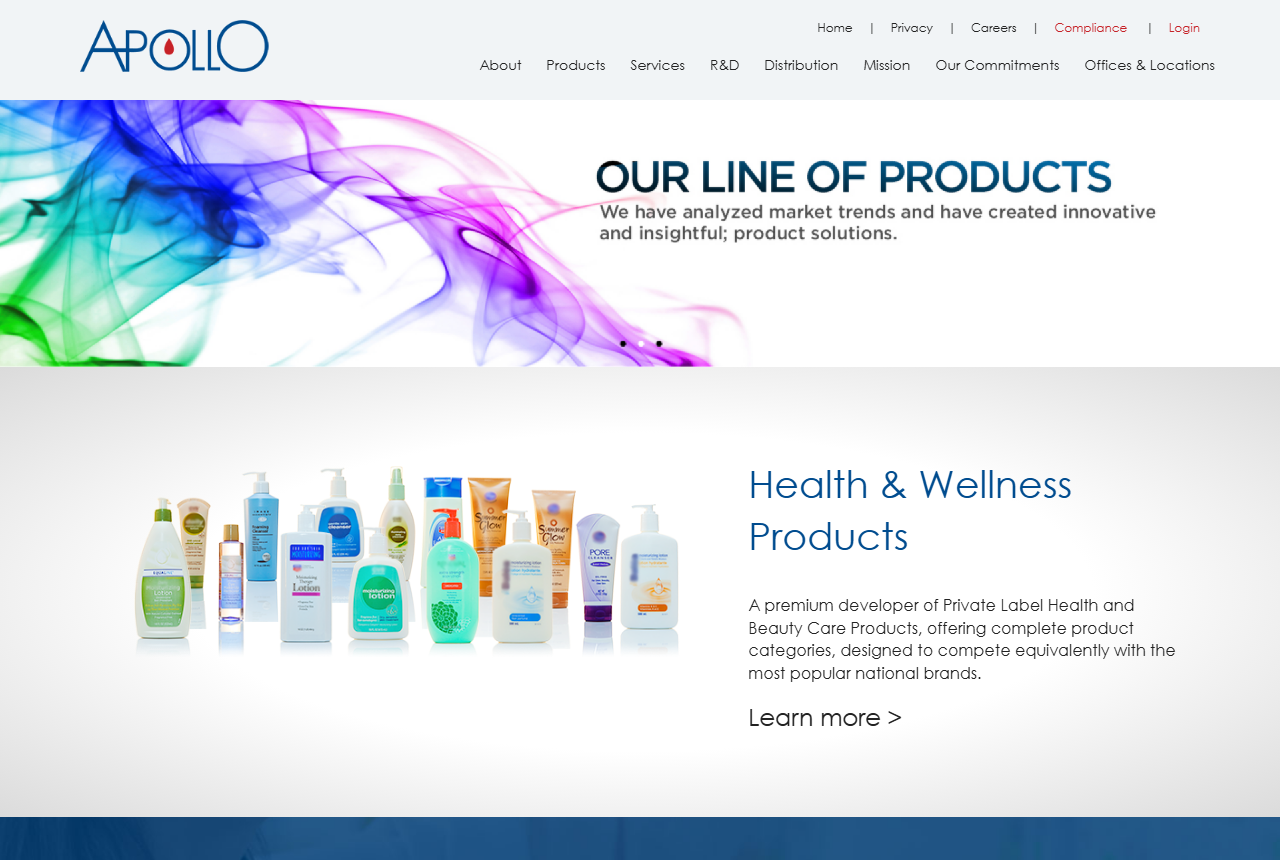
Based in Toronto, Ontario, Apollo describes itself as the largest private label and control label personal care manufacturer in Canada, producing liquid soap, body wash, hair care, skin care, specialty bath and baby care for mass, drug and specialty retail. Its stated model centres on national-brand-equivalent formulations produced for retailer-owned lines.
Website: apollocorp.com
ATS Health & Beauty Care
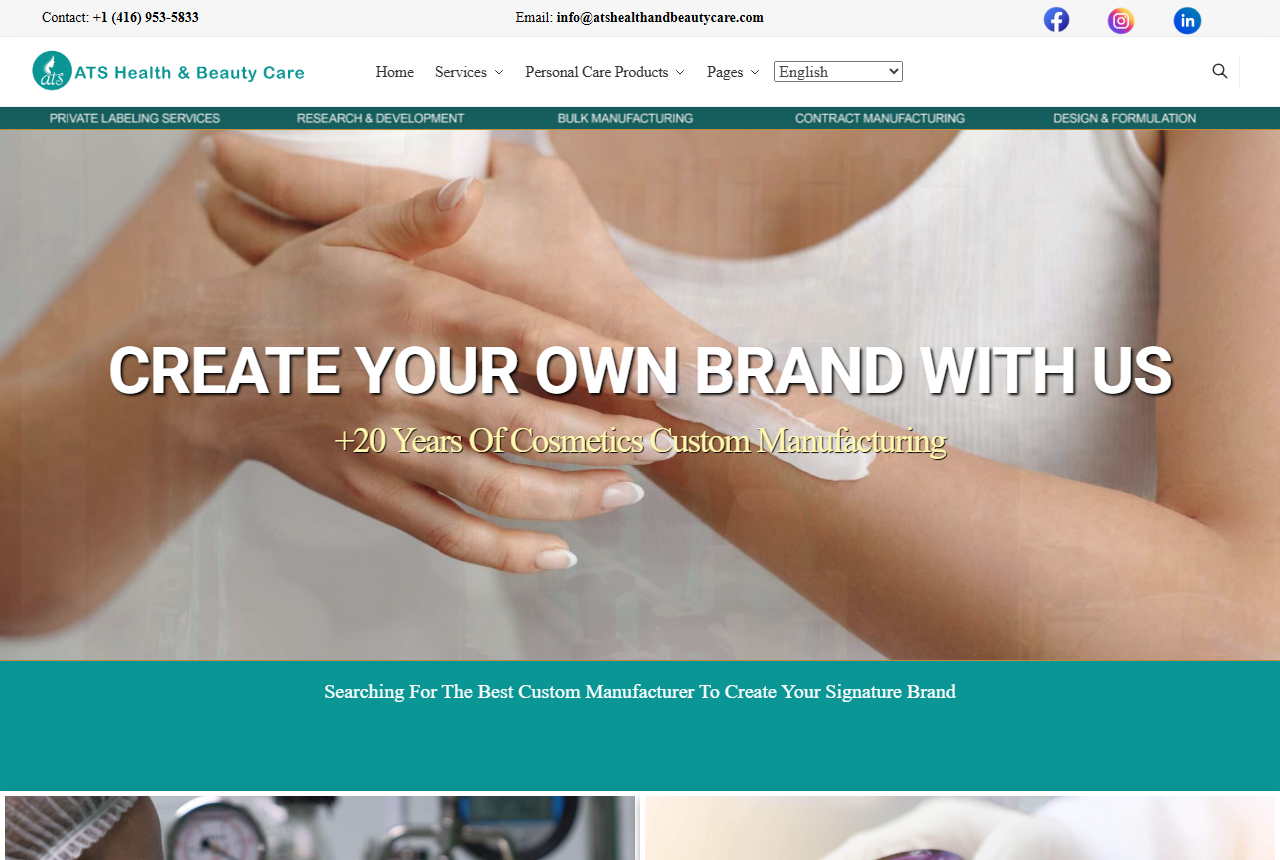
A Toronto contract and private-label manufacturer stating more than twenty years in custom cosmetics production, with hair care as its visible specialism, including a dedicated curly and textured-hair range alongside skin, bath and body. It publishes a minimum of 5,000 pieces per SKU and holds a Health Canada licence for natural product number (NPN) manufacturing.
Website: atshealthandbeautycare.com
Clamar Cosmetics
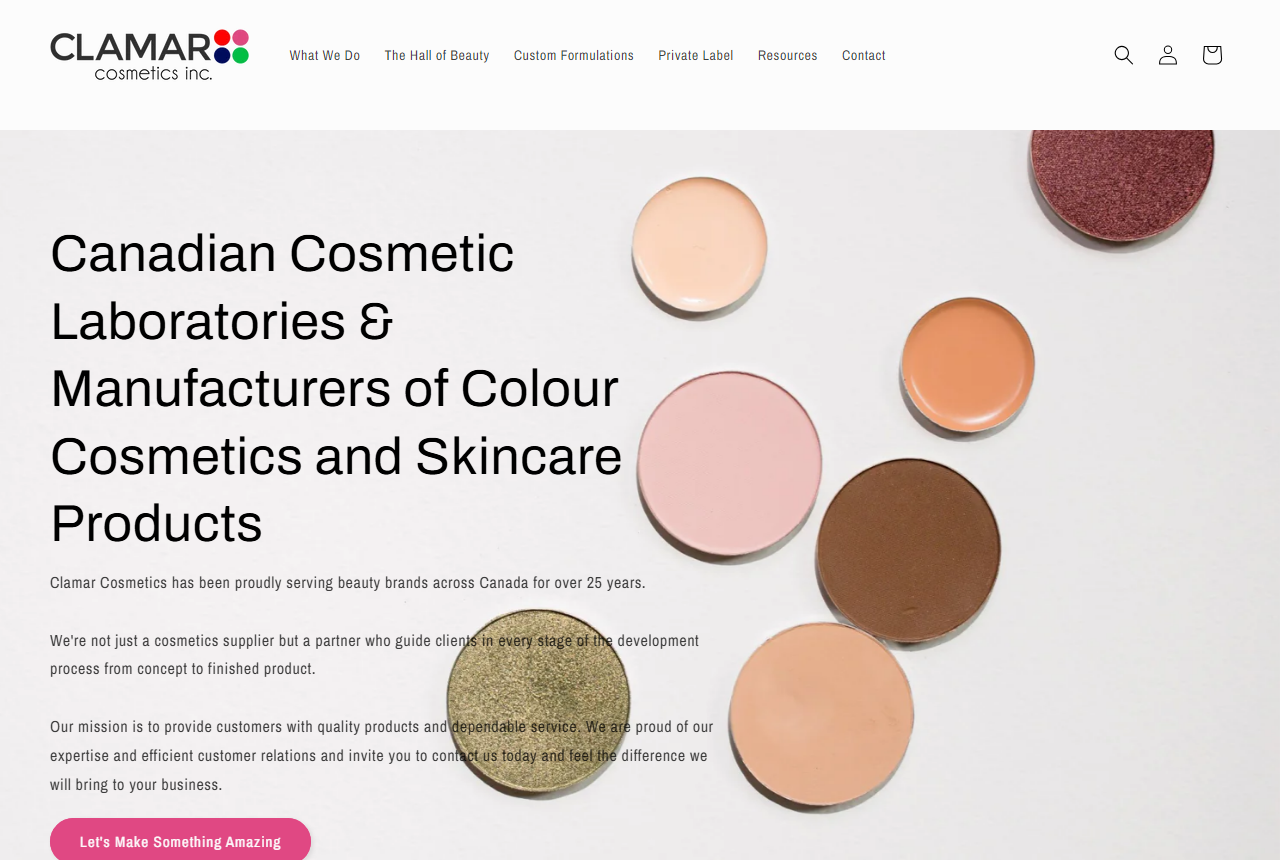
Operating from Pickering, Ontario for over twenty-five years, Clamar is the clearest colour-cosmetics specialist in the Canadian market, compounding across liquid, cream, powder and hot-pour processes and filling into bottles, jars, tubes, vials and sachets. The company states it develops more than 750 new formulations annually and offers a formula-validation service for brands scaling existing products.
Website: clamarcosmetics.com
Cosmaceutical Research Lab
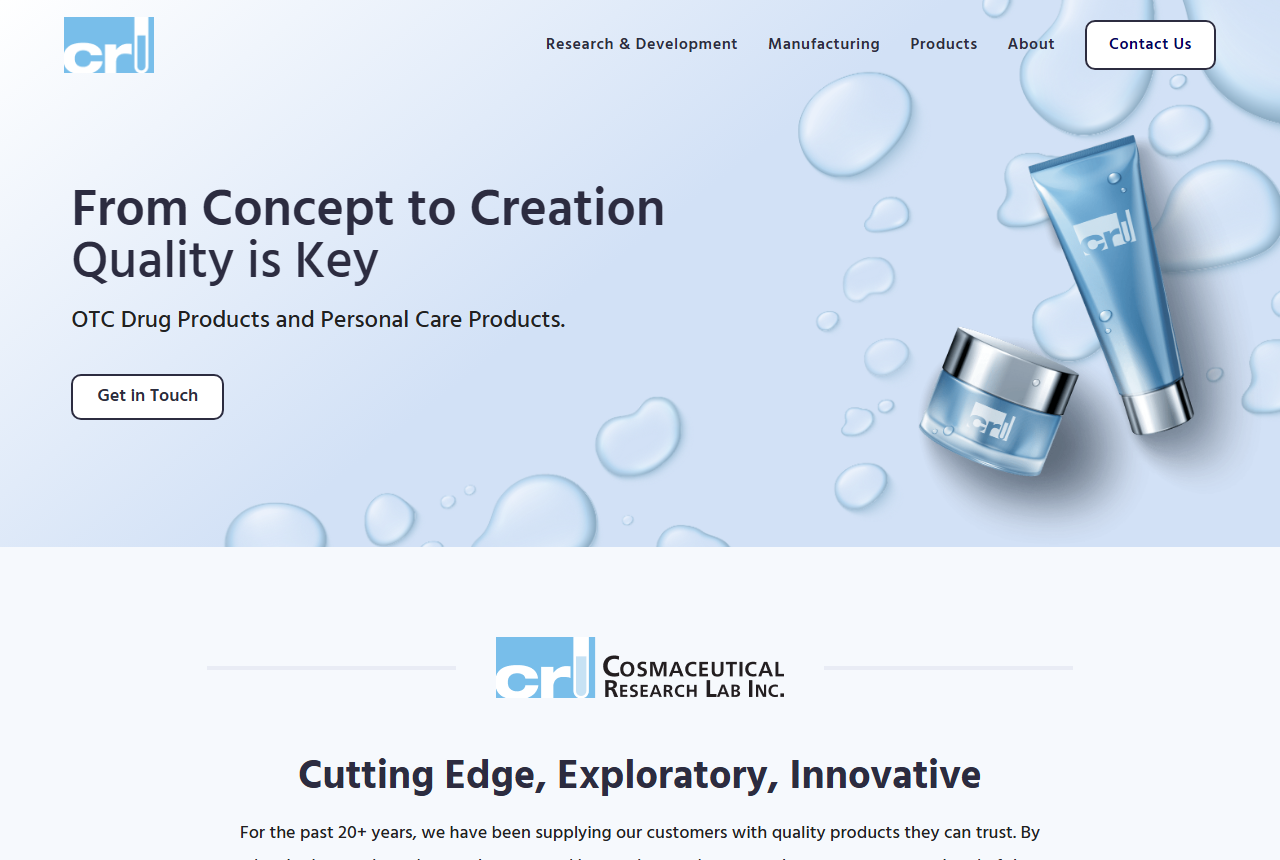
A Surrey, British Columbia laboratory and contract manufacturer with over twenty years of operation, working across skincare, haircare and over-the-counter drug products. It publishes cGMP certification, US FDA registration, a Health Canada Drug Establishment Licence and a Natural Health Products licence — a combination relevant to formulations that cross out of cosmetic classification.
Website: cosmaceutical.ca
Cosmetic Labs Canada
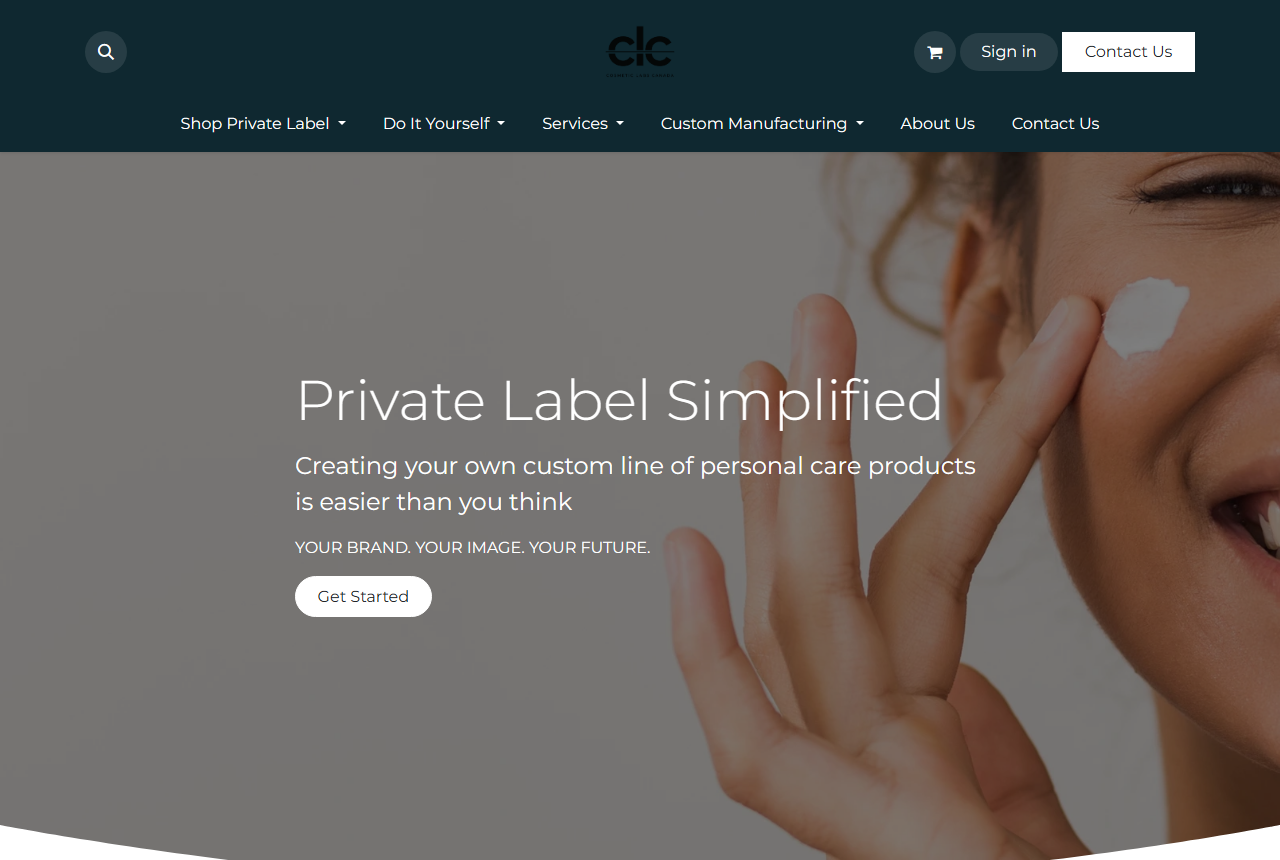
Located in Sault Ste. Marie, Ontario, this manufacturer combines private-label and custom production across skincare, haircare, bath and body, men’s grooming, kids and pet care with in-house graphic design, label and packaging print. It advertises low minimum order quantities and turnaround from as little as 21 business days after label approval, with production stated to take place in its own Canadian facility under GMP guidelines.
Website: cosmeticlabscanada.com
DBO Labs
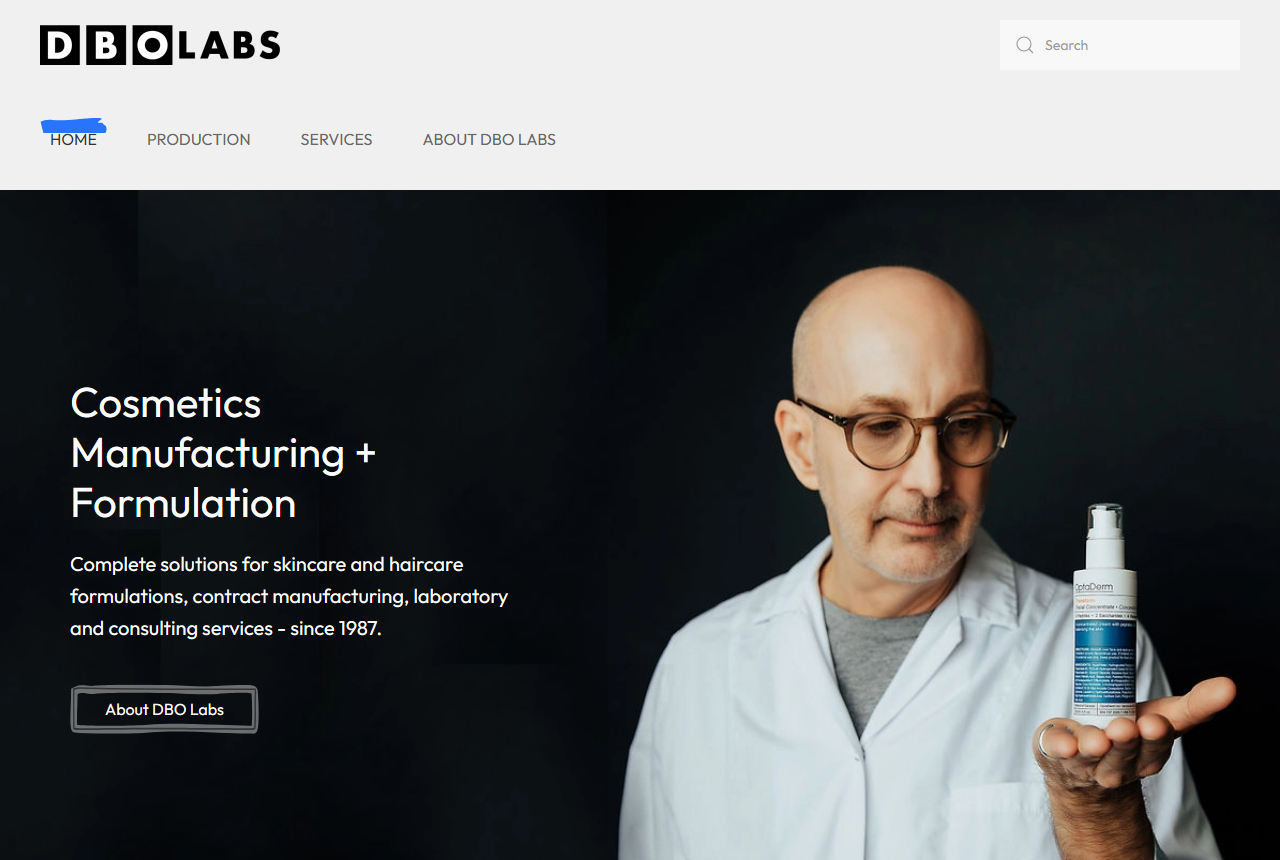
A Burnaby, British Columbia formulation laboratory operating since 1987, offering custom formulation, white label, contract manufacturing and consulting across skincare and haircare. Client references on its site describe long-running relationships and a boutique manufacturing scale, positioning it as a development partner rather than a volume filler.
Website: dbolabs.com
Nature’s Own Cosmetics
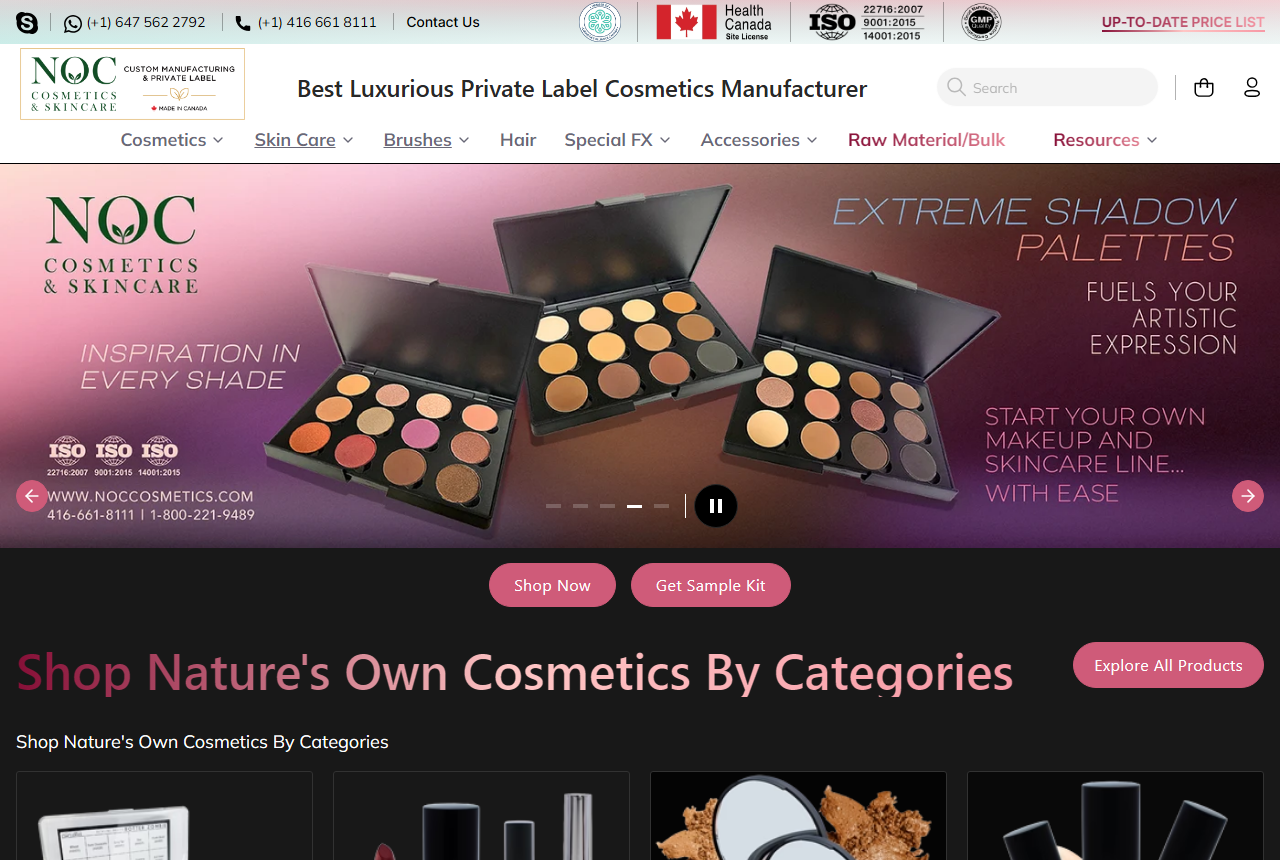
Formerly Jordane Cosmetics and based in North York, Ontario, this manufacturer produces colour cosmetics, skincare, brushes and an unusual line of theatrical and special-effects makeup. It publishes ISO 22716, ISO 9001 and ISO 14001 marks, a Health Canada site licence and membership of Cosmetics Alliance Canada, and advertises no minimum on private-label orders.
Website: naturesowncosmetics.com
Pinnacle Cosmetics
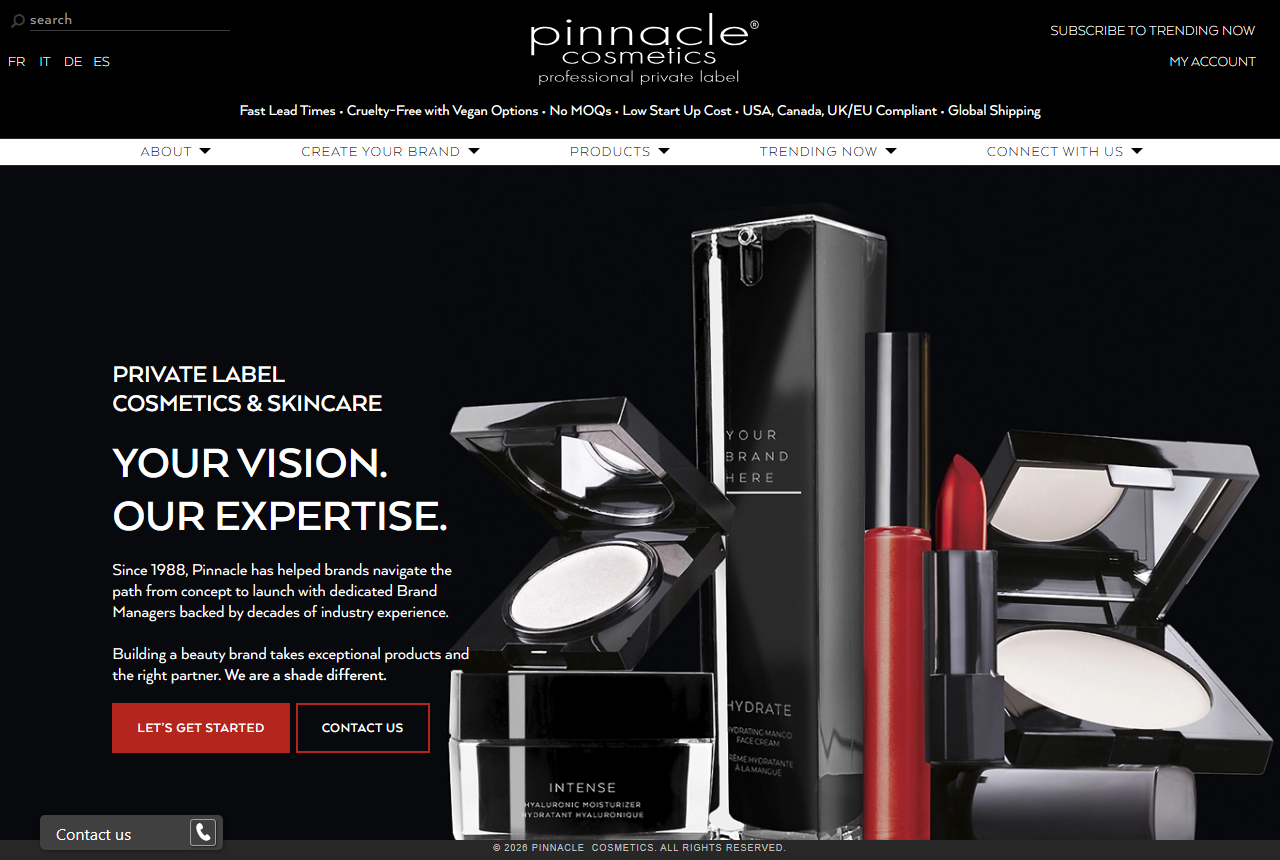
Founded in 1988 in Etobicoke, Toronto, Pinnacle is one of Canada’s longest-established private-label houses and states it was the first in the market to offer no minimum order quantities. Its published proposition covers colour cosmetics and skincare made in GMP-compliant Canadian facilities, with cruelty-free and paraben-free formulations, vegan and halal-certified options, and two to three week lead times on a first branded order.
Website: pinnaclecosmetics.com
Swift Innovations
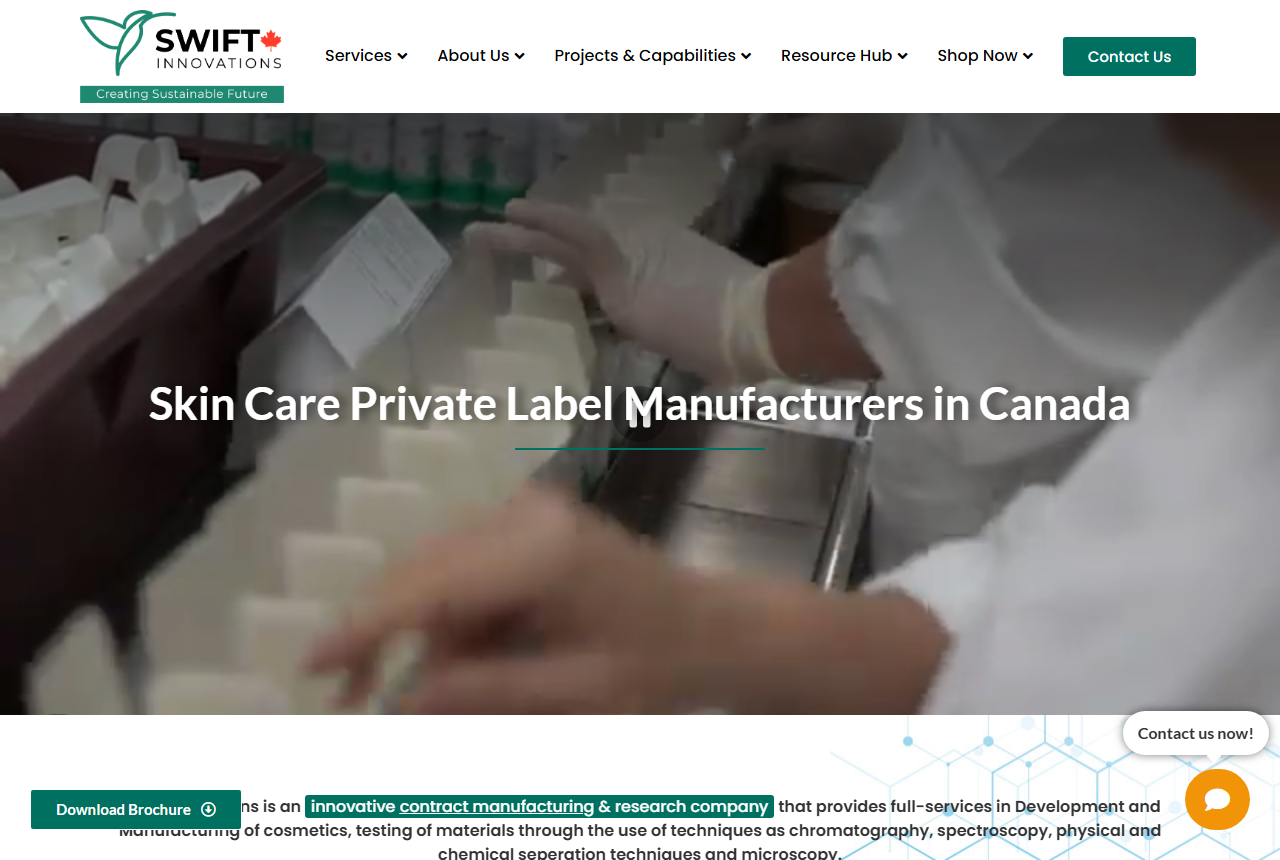
An Alberta-based contract research and manufacturing operation working from ingredient sourcing and extraction through formulation, testing and private labelling. Its published capability list — proprietary blends, extracts, peptides, essential oils, encapsulated bioactives and surfactants — and its stated focus on green processing position it towards natural-claims and bioactive-led products.
Website: swiftinnovations.ca
Vicora Cosmeceuticals
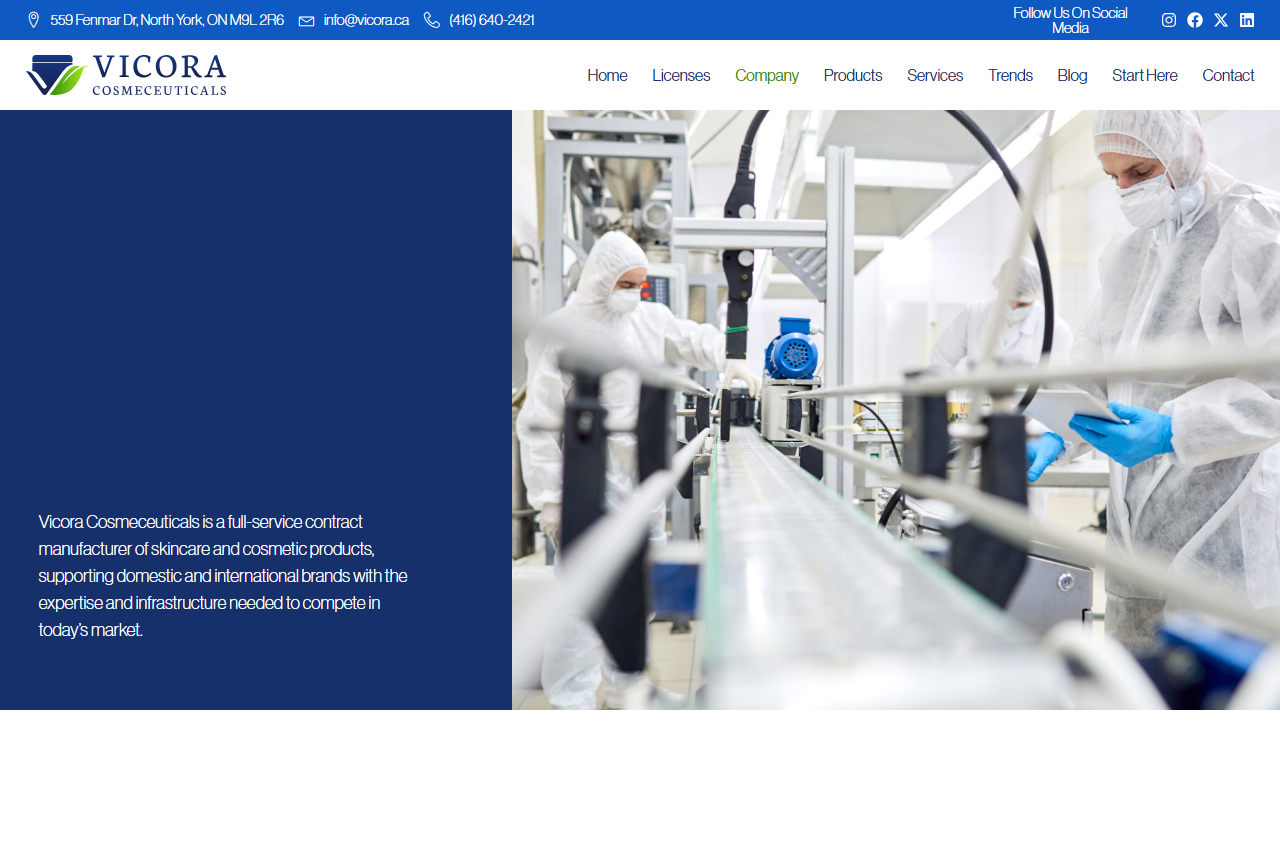
A North York, Ontario full-service contract manufacturer offering product and custom development, private label, turnkey programmes and contract filling and packaging. It publishes the most specific credential set of the companies reviewed here: a Health Canada site licence, USDA Organic certified processor status, GMP certification through Food, Health and Consumer Products of Canada, and US FDA registration under MoCRA.
Website: vicora.ca
What to compare when evaluating any manufacturer
Country of manufacture is one variable among several, and rarely the decisive one. The comparison that matters is between specific manufacturers on a specific product brief. The table below sets out the criteria that most often separate a workable partner from an expensive mistake.
| Criterion | What to ask for | Why it decides the outcome |
|---|---|---|
| True minimum order quantity | Separate figures for bulk manufacturing and for packaging components | A no-MOQ claim usually covers bulk only; custom bottles and cartons carry their own minimums, often in the thousands |
| Formula ownership | Written confirmation of whether the formulation is exclusive to you or a shared stock formula | Determines whether a competitor can buy the identical product with a different label |
| GMP status | Certificate number, issuing body and expiry date, not a logo on a website | ISO 22716 is the international standard for cosmetics GMP; certification bodies and scopes differ materially |
| Regulatory documentation | Full quantitative formula, GMP declaration, and a Letter of Authorisation for your market’s notification | Without these, a product cannot be notified in most jurisdictions regardless of quality |
| Stability and compatibility testing | Whether accelerated stability, preservative efficacy and packaging compatibility are included or quoted separately | Testing typically adds 8 to 12 weeks and is the most commonly underestimated line in a launch schedule |
| Landed cost | Quotation on delivered or FOB terms, not ex-works | Freight, duty, insurance and working capital during transit can change the ranking of two quotations entirely |
| Halal certification | Issuing body, and whether that body is recognised by JAKIM | A halal certificate from a non-recognised body does not permit use of the Malaysian halal logo |
The ORIZI Group perspective on cross-border sourcing
Based on ORIZI Group’s manufacturing experience, the failure point in cross-border sourcing is almost never the formulation. It is the interval between an approved sample and a released production batch.
Two things account for most of that interval. The first is packaging: custom components frequently carry longer lead times and higher minimums than the bulk they contain, and a decorated bottle from a different supplier than the filler introduces a compatibility test nobody scheduled. The second is regulatory documentation, which is straightforward to produce when it is requested during quotation and slow to reconstruct after a purchase order has been placed.
The practical consequence for a brand owner evaluating a distant manufacturer is that the questions to ask on the first call are administrative rather than technical. What is the real minimum on the packaging, not the bulk? Which documents will you issue for a notification in my market, and in what timeframe? Which tests are in your quotation and which are extra? A manufacturer that answers those three precisely is usually a manufacturer whose delivery dates hold.
Limitations of this article
The company information here is drawn from each manufacturer’s published material as reviewed in August 2026. ORIZI Group did not visit any facility, inspect any certificate, request a quotation or test a product, and none of the certifications, capacities or minimums described have been independently verified. Website content changes, and certificates expire. Treat this as a starting map for research, not as due diligence, and confirm every material point directly with a manufacturer before entering an agreement. Regulatory descriptions reflect requirements as published at the time of writing and should be checked against the current text before you rely on them.
Frequently asked questions
Does Canada require approval before a cosmetic can be sold?
No. Canada operates a post-market system. Under the Cosmetic Regulations made under the Food and Drugs Act, a manufacturer or importer must submit a Cosmetic Notification Form to Health Canada within ten days of the product’s first sale in Canada, listing the product, its ingredients and the responsible party. There is no product licence and no approval waiting period. The formula must comply with the Cosmetic Ingredient Hotlist, and labels must carry bilingual English and French text with an INCI ingredient list.
What is a typical minimum order quantity for a Canadian cosmetics manufacturer in 2026?
Lower than most comparable markets. Several Canadian private-label manufacturers publish a no-minimum position on catalogue formulations, and others advertise minimums in the low thousands of units per SKU, with at least one publishing 5,000 pieces per SKU. These figures describe bulk manufacturing and filling. Custom packaging components typically carry separate minimums of several thousand pieces, and in practice that is what usually determines the size of a first production run.
Does a Canadian GMP certificate satisfy Malaysian requirements?
No. A cosmetic product sold in Malaysia must be notified to the National Pharmaceutical Regulatory Agency (NPRA) through the Quest3+ portal before sale, and the notification is filed by a Malaysia-incorporated company that becomes the responsible party. A Canadian GMP certificate and Health Canada notification support that application as evidence but do not replace it. The formulation must also comply with the ASEAN Cosmetic Directive annexes, which differ from Canada’s Cosmetic Ingredient Hotlist on certain UV filters, preservatives and colourants.
How long does cosmetic OEM development typically take?
For a straightforward formulation using existing packaging, roughly 8 to 16 weeks from brief to first production batch. Custom packaging components, accelerated stability testing, preservative efficacy testing and regulatory notification each extend that, and running them sequentially rather than in parallel is the most common cause of a delayed launch. International shipping adds further time: sea freight from North America to Southeast Asia typically runs 25 to 45 days in transit before customs clearance.
Looking Beyond Canada for a Manufacturing Partner?
For brands whose primary market is Southeast Asia, manufacturing closer to that market usually resolves the trade-offs described above rather than managing them. ORIZI Group is a Malaysia-based OEM and ODM manufacturer operating an ISO 22716 GMP-certified facility with Halal certification, producing cosmetics, personal care, health and nutrition formats for brand owners across the region.
Proximity changes the economics in three concrete ways. Sample rounds take days rather than international courier cycles. Sea freight to regional markets is measured in days rather than weeks, which releases the working capital that otherwise sits on the water. And Halal certification is issued domestically, which matters for any brand competing on that positioning in Malaysia, Indonesia or the Gulf.
If you are at the formulation stage, our private label and ODM service covers development, stability testing and production under one scope. If your constraint is documentation rather than manufacturing, our regulatory affairs consulting team handles NPRA notification and market-entry requirements, and our OEM cosmetics capability page sets out the formats and categories we produce.
To discuss a specific brief, contact our team with your product format, target market and indicative volume, and we will tell you honestly whether it is a fit.
Conclusion
Canada is a credible but narrow option in global cosmetics sourcing: strong on small-batch flexibility, documentation quality and access to the United States market, thin on scale and specialised format capacity. Whether it suits a given brand depends less on the country than on the specific manufacturer and the specific brief — which is why the comparison criteria above matter more than any national ranking. Compare on landed cost per filled unit against a written specification, and the answer usually becomes obvious.
Sources: each company’s official website as reviewed in August 2026; the Food and Drugs Act and Cosmetic Regulations, the Cosmetic Notification Form guidance and the Cosmetic Ingredient Hotlist published by Health Canada; the Consumer Packaging and Labelling Act; the US Food and Drug Administration’s Modernization of Cosmetics Regulation Act facility registration requirements; the National Pharmaceutical Regulatory Agency (NPRA) Quest3+ cosmetic notification guidance; ISO 22716:2007 Cosmetics — Good Manufacturing Practices.
Update history: August 2026 — first publication.
Also looking at the third USMCA market? Our guide to OEM/ODM cosmetic suppliers in Mexico profiles ten Mexican contract laboratories and how COFEPRIS and NOM-259 compare with Health Canada’s requirements.