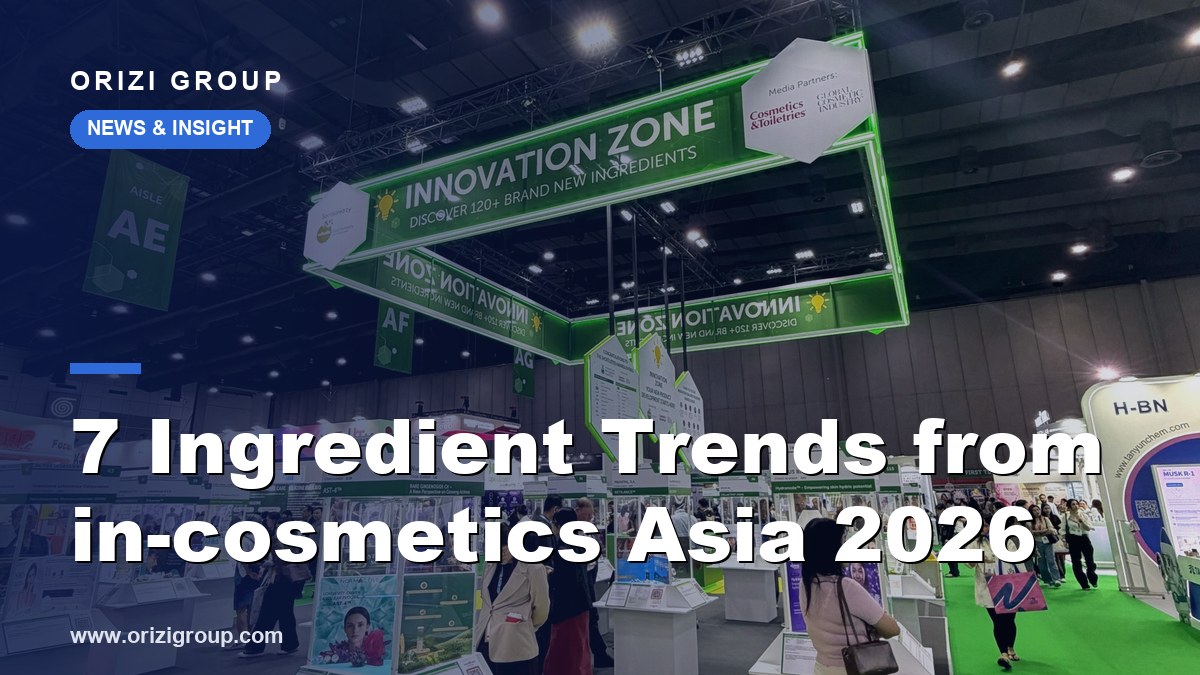
Three days on the floor at BITEC Bangkok, the 2026 award winners, and what the newest actives mean for brands planning their 2027 launches.
Key takeaways
- Regeneration has replaced “anti-ageing” as the headline promise: the Actives Gold went to a dragon-fruit stem-cell active that targets the skin’s bioelectric potential.
- Neurocosmetics won at two of the four in-cosmetics shows in 2026 (Paris and Bangkok), so the trend is now global rather than niche.
- Sun care innovation has moved to the formula level: both the Formulation Gold and the Functional Gold went to sun care technologies.
- Hair care is borrowing skincare science, and fragrance now has its own zone and its own award at the show.
- A team from Dr Orizi, ORIZI Group’s cosmetics company, met about 18 ingredient principals and distributors over three days to bring these options back to brand projects.
What is in-cosmetics Asia, and why does it matter for 2027 launches?
in-cosmetics Asia is the Asia-Pacific edition of the in-cosmetics series of personal care ingredient shows, organised by RX and held at BITEC (Bangkok International Trade & Exhibition Centre) in Thailand. The 2026 edition ran from 3 to 5 November 2026, with more than 770 exhibitors announced before the show and the COSMEX manufacturing exhibition running alongside it (organiser press release).
Ingredient shows matter for brand owners because new actives are launched to manufacturers well before they appear in finished products on shelf. A brand that briefs its manufacturer on these ingredients now is planning for the 2027 launch window, not chasing a trend that has already peaked.
Scope of this article: cosmetic and personal care ingredients shown at in-cosmetics Asia 2026, read from the point of view of a brand owner in Malaysia and Southeast Asia. Award results come from the organiser; product descriptions come from the suppliers and trade press, so performance figures are the suppliers’ own claims.
Which ingredients won at in-cosmetics Asia 2026?
The in-cosmetics Asia 2026 awards were announced on 3 November 2026 in Bangkok (official awards page).
| Award | Prize | Company | Ingredient or formula | What it does (supplier description) |
|---|---|---|---|---|
| Innovation Zone Best Ingredient – Actives | Gold | Vytrus Biotech | Ignilyte™ | Dragon-fruit stem-cell active designed to reactivate the skin’s bioelectric potential for regeneration |
| Innovation Zone Best Ingredient – Actives | Silver | dsm-firmenich | GLYCARE® SK RENEW | Human milk oligosaccharide made by precision biofermentation, for sensitive and stressed skin |
| Innovation Zone Best Ingredient – Actives | Bronze | Givaudan Active Beauty | PrimalHyal™ NeuroYouth | Low-molecular-weight hyaluronic acid with amino acids, positioned for skin neuro-rejuvenation |
| Innovation Zone Best Ingredient – Functional | Gold | Evonik | TEGO® Filmstar BST1 | Biodegradable film former that spreads UV filters more evenly to support SPF performance |
| Innovation Zone Best Ingredient – Functional | Silver | Dow | DOWSIL™ EL-9400 Hybrid Elastomer Blend | Silicone elastomer network in a biodegradable carrier for silky, flexible textures |
| Innovation Zone Best Ingredient – Functional | Bronze | Gattefossé | Protecticire® MB | Natural wax-butter texturiser that forms a soft shield on each hair fibre |
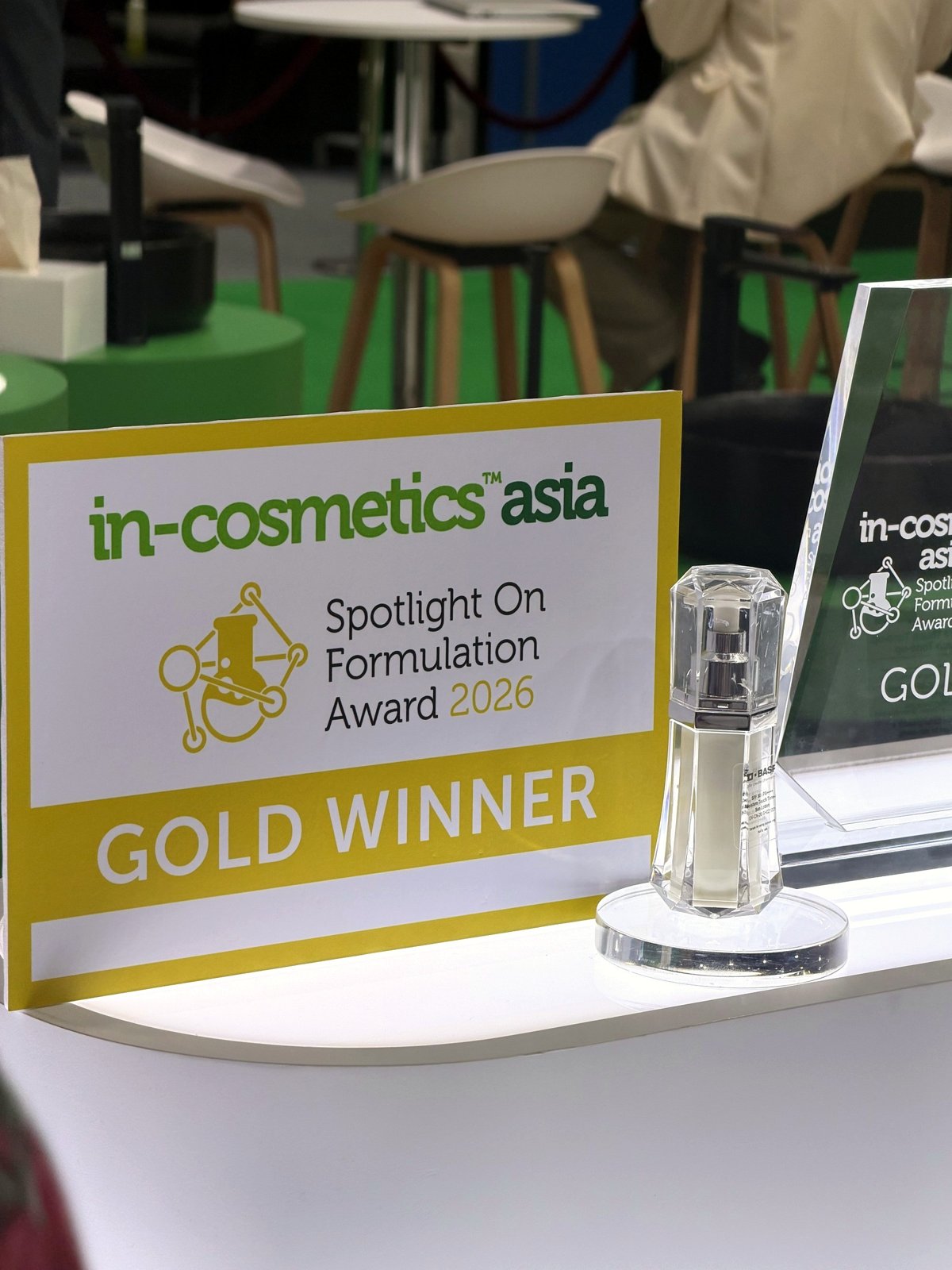
| Spotlight On Formulation | Gold | BASF | SPF 50 / PA++++ Moisture Touch Tone-up Sun Lotion | Photostable oil-in-water lotion without octocrylene or ethylhexyl methoxycinnamate |
| Spotlight On Formulation | Silver | dsm-firmenich | Surpr-ICE Balm | Balm that turns into a light serum with an instant cooling effect |
| Spotlight On Formulation | Bronze | Bloomage Biotechnology | Hymagic™-SAHA | Salicylic acid combined with hyaluronic acid for pores and irritation |
| Fragrance Awards (new in 2026) | Winner | Only Fragrances | Scent of You | Floral, musky, creamy fragrance with iris, vanilla cream and sandalwood |
Ingredient descriptions follow the organiser’s awards page and the Industries Cosmétiques report on the 2026 winners.
What are the 7 ingredient trends from in-cosmetics Asia 2026?
1. Skin longevity: regeneration replaces “anti-ageing”
Skin longevity is the idea that skincare should keep skin resilient over time instead of only correcting visible signs of age. The organiser named skin longevity and biotech as headline themes for 2026, and the Actives Gold went to Vytrus Biotech’s Ignilyte, a dragon-fruit stem-cell active presented as restoring the skin’s bioelectric potential.
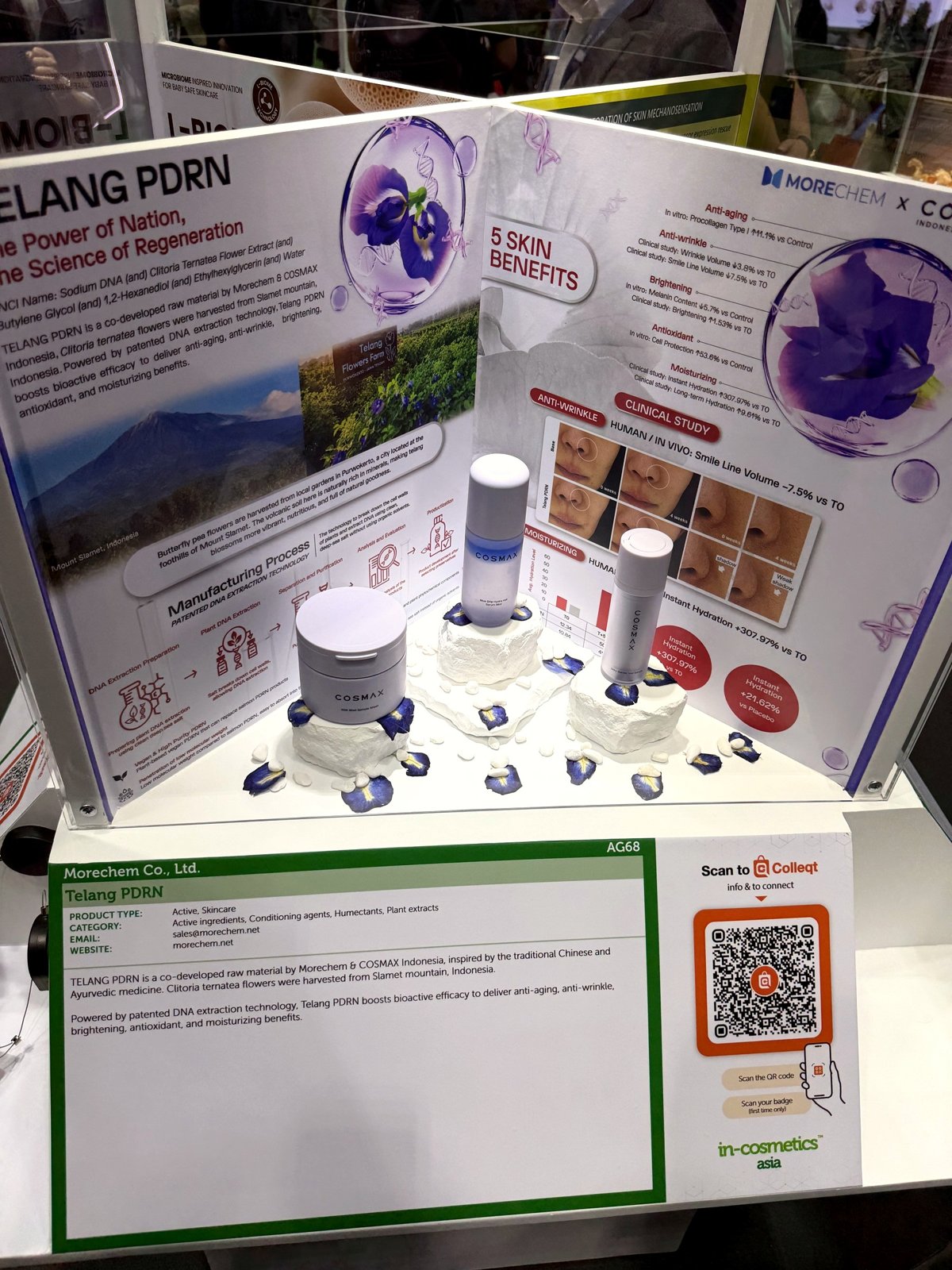
PDRN (polydeoxyribonucleotide) was the most visible regeneration ingredient across the halls. PDRN is a DNA-fragment ingredient associated with skin repair, traditionally sourced from salmon. Many 2026 versions are plant-derived or biotech-derived instead, which matters to brands that need non-animal or halal-documented ingredients. Exosome-type ingredients were also on show, from plant or microbial sources.
2. Neurocosmetics go mainstream
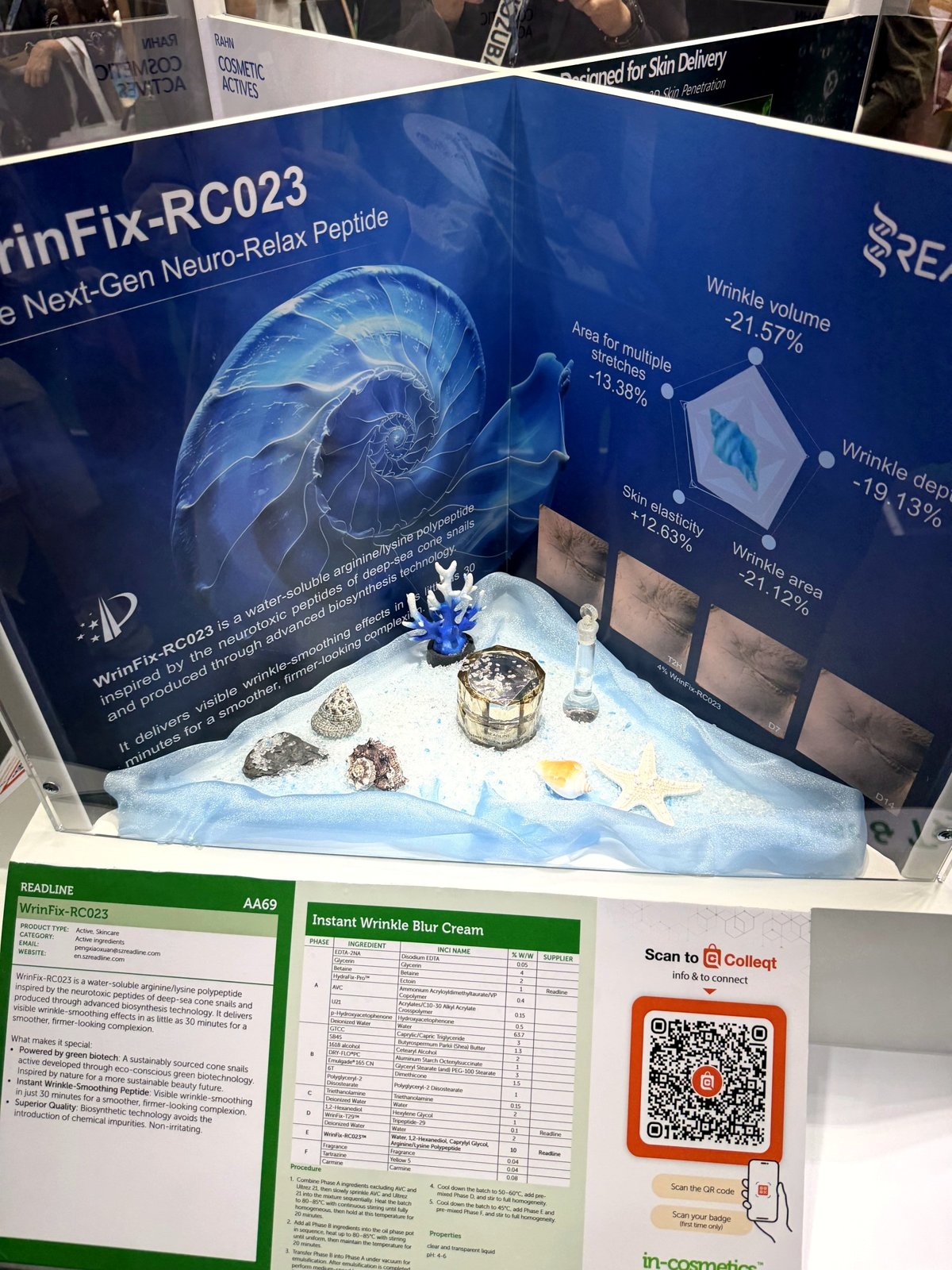
Neurocosmetics are skincare ingredients that act on the skin’s sensory nerve pathways to calm, soothe or improve how skin feels. Givaudan Active Beauty’s PrimalHyal NeuroYouth took Actives Bronze in Bangkok, several neuro-relax peptides filled the Innovation Zone, and in April RAHN’s chicory-root CALNEURIN SENSE won Actives Gold at in-cosmetics Global in Paris (we covered it in our look at CALNEURIN SENSE).
3. Sun care innovation moves to the formula
Two of the three ingredient and formulation Golds went to sun care technology. BASF won Formulation Gold for an SPF 50 / PA++++ tone-up lotion that avoids octocrylene and ethylhexyl methoxycinnamate, and Evonik won Functional Gold for a film former that spreads UV filters more evenly. Clariant also launched Eclipsogen CAP Duo Z, a ready-to-use hybrid dispersion of organic filters and zinc oxide. For brands, the message is that light, tone-up and filter-conscious sunscreens are where the new formulation tools are going.
4. Biotech and fermentation become the default origin story
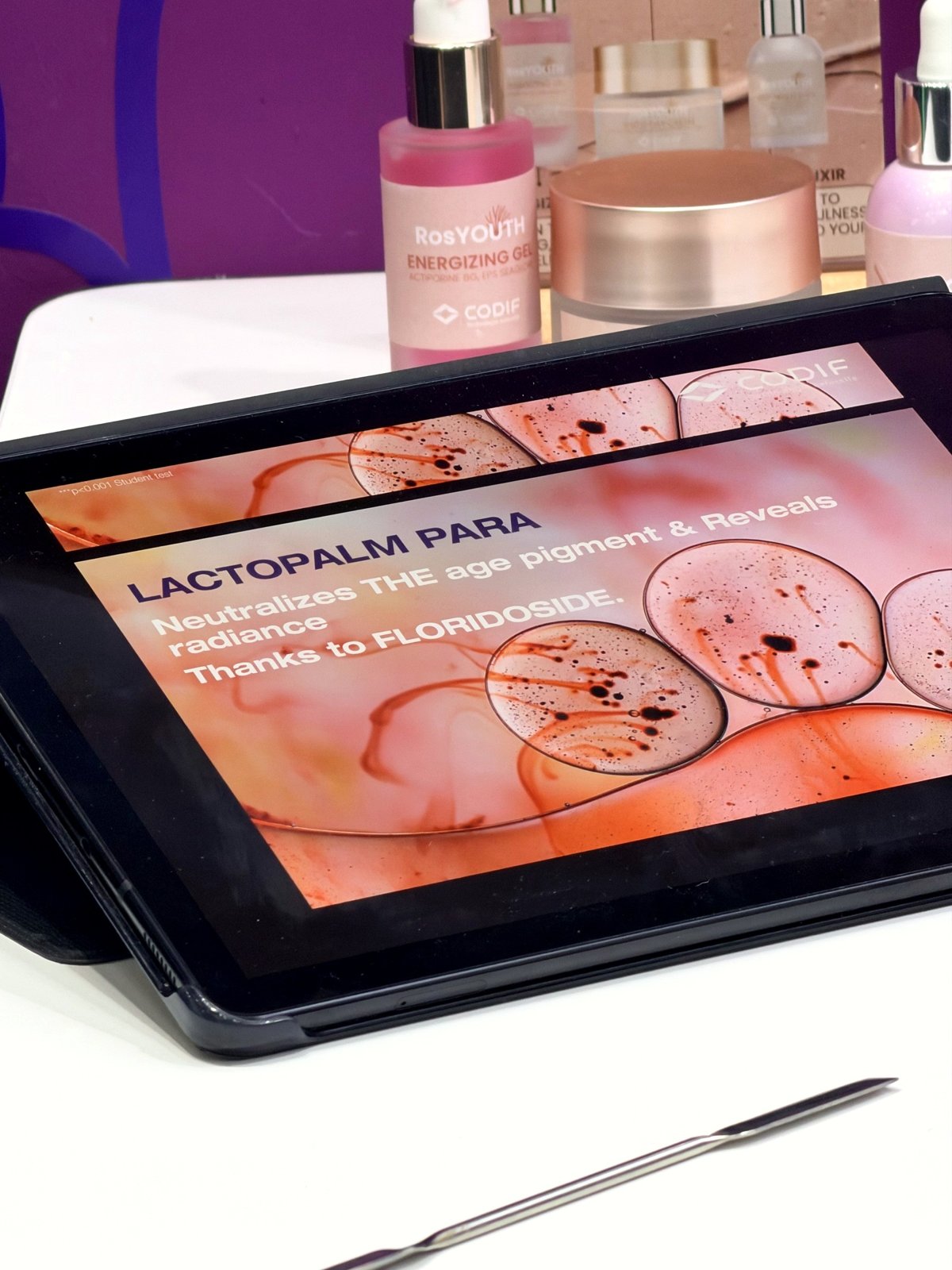
Precision fermentation is the production of a specific molecule by engineered microorganisms instead of extraction from a plant or animal. The Actives Silver, dsm-firmenich’s GLYCARE SK RENEW, brings human milk oligosaccharides to skincare this way. BASF launched Lincare, a flaxseed-derived active for skin recovery after laser treatment (BASF announcement). CODIF walked our team through Lactopalm Para, a lacto-fermented red-algae active (floridoside) aimed at pigmentation.
5. Texture and sensory are now selling points
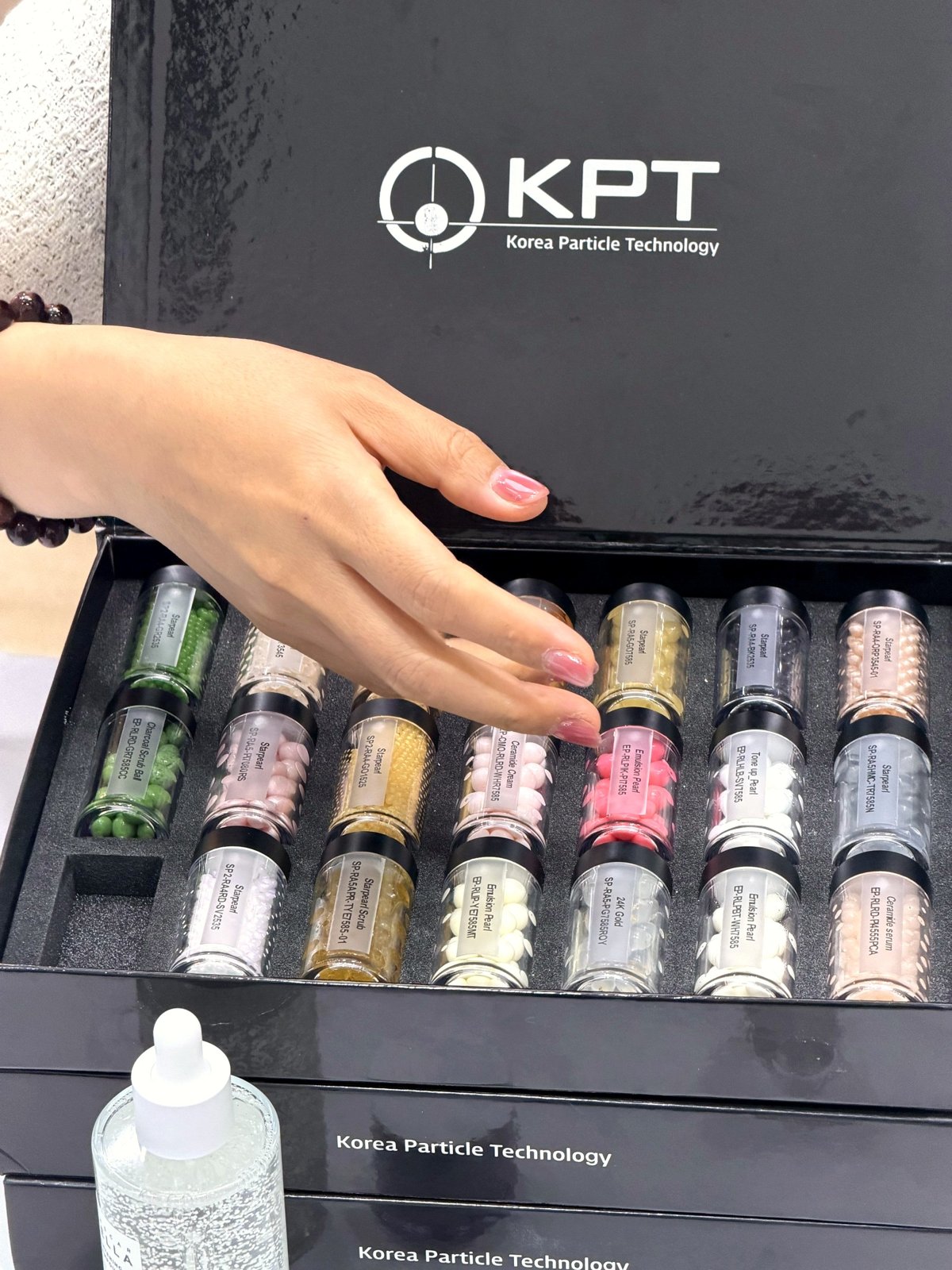
The Functional Silver (Dow’s silicone elastomer in a biodegradable carrier) and the Formulation Silver (dsm-firmenich’s cooling Surpr-ICE Balm) were both texture innovations. Encapsulation suppliers such as KPT (Korea Particle Technology) showed coloured beads and capsules that make encapsulated actives visible in the formula. Texture is how a customer judges a product at first touch, so these tools are a direct route to a product that feels new.
6. Hair care is treated like skincare
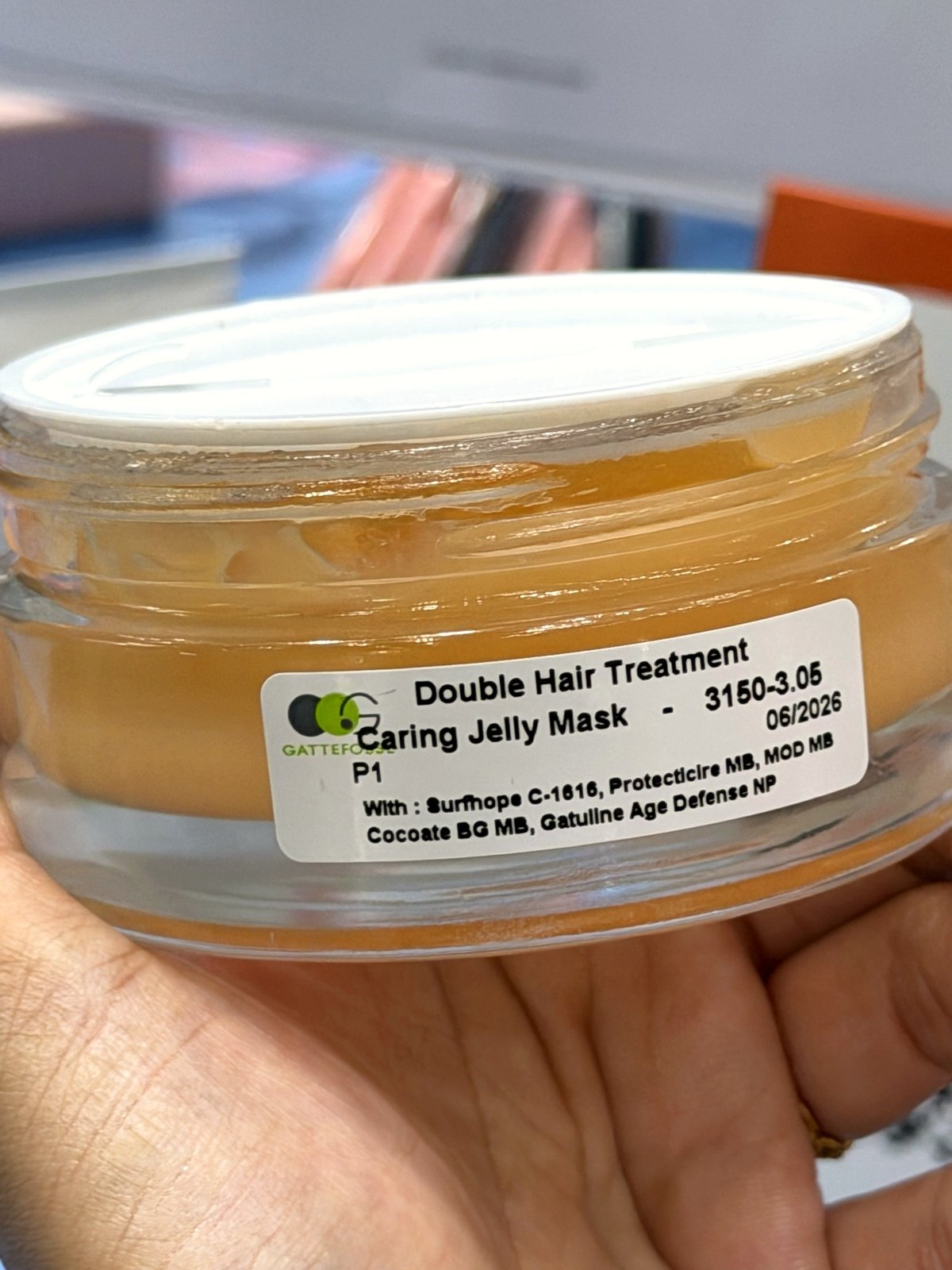
The “skinification” of hair care means applying skincare-grade actives, textures and claims to scalp and hair products. Gattefossé took Functional Bronze with Protecticire MB, a natural wax-butter texturiser that coats each hair fibre. Our team collected Gattefossé’s demonstration formulas, including a hair jelly mask built on the winning ingredient.
7. Fragrance becomes its own category
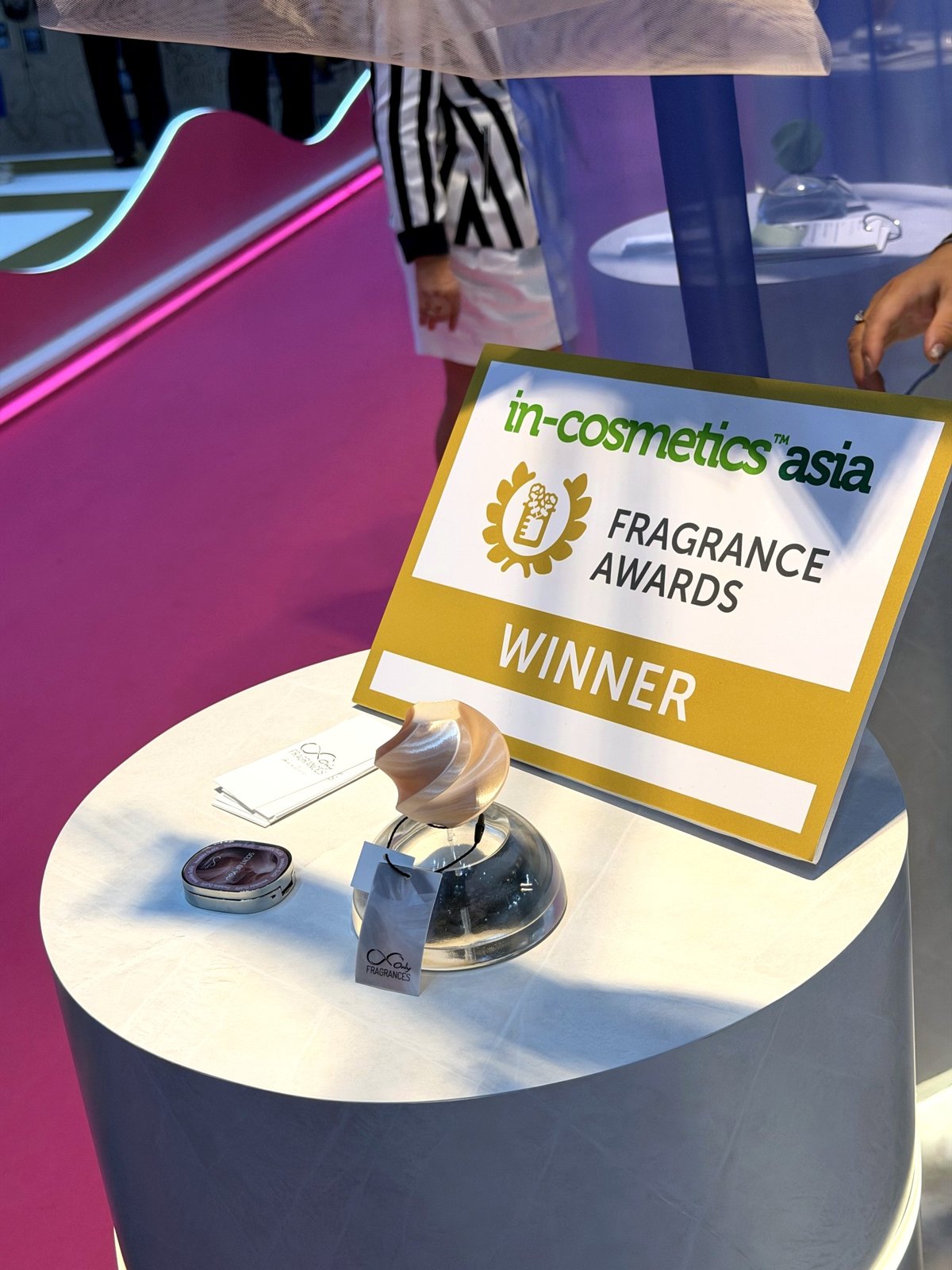
For the first time, in-cosmetics Asia ran a dedicated Fragrance Zone with a Scent Bar and new Fragrance Awards. The first winner was Only Fragrances with “Scent of You”, a floral, musky and creamy accord. Fragrance houses such as Bell and CPL Aromas built large stands around fine-fragrance-style scents for body and personal care, a direction that suits brands planning perfume and body mist ranges.
What repeated across all four in-cosmetics shows in 2026?
The in-cosmetics series ran four shows in 2026, and in-cosmetics Asia in November was the last of the year.
| Show | City and dates | Actives Gold winner |
|---|---|---|
| in-cosmetics Global | Paris, 14–16 April 2026 | CALNEURIN® SENSE (RAHN), a neurocosmetic (source) |
| in-cosmetics Korea | Seoul, 1–3 July 2026 | INTENSILK (Provital) (source) |
| in-cosmetics Latin America | São Paulo, 23–24 September 2026 | See the official awards page |
| in-cosmetics Asia | Bangkok, 3–5 November 2026 | Ignilyte™ (Vytrus Biotech), a regeneration active |
Two signals repeated across the year. Neurocosmetics won Gold in Paris and Bronze in Bangkok, and biotech-made actives (fermentation, stem cells, recombinant and bioidentical molecules) ran through the winner lists at every show (Premium Beauty News trend review of in-cosmetics Global 2026). When the same direction wins at shows in Europe and Asia in the same year, it is a safer bet for a 2027 launch than a single-show novelty.
How did ORIZI Group’s team use the three days?
Our Deputy General Manager led a team of six from Dr Orizi (M) Sdn. Bhd., ORIZI Group’s cosmetics and personal care company, made up of sales staff and chemists. Over three days the team met about 18 ingredient principals and distributors, including TINCI, TS-Biotech, Nikko Chemicals, Ashland, CODIF, Sunjin Beauty Science, Chemipol, Galaxy, Gattefossé, Transfar, KPT, KCC Beauty / Momentive and Winkey Active, and walked the Innovation Zone and Fragrance Zone.
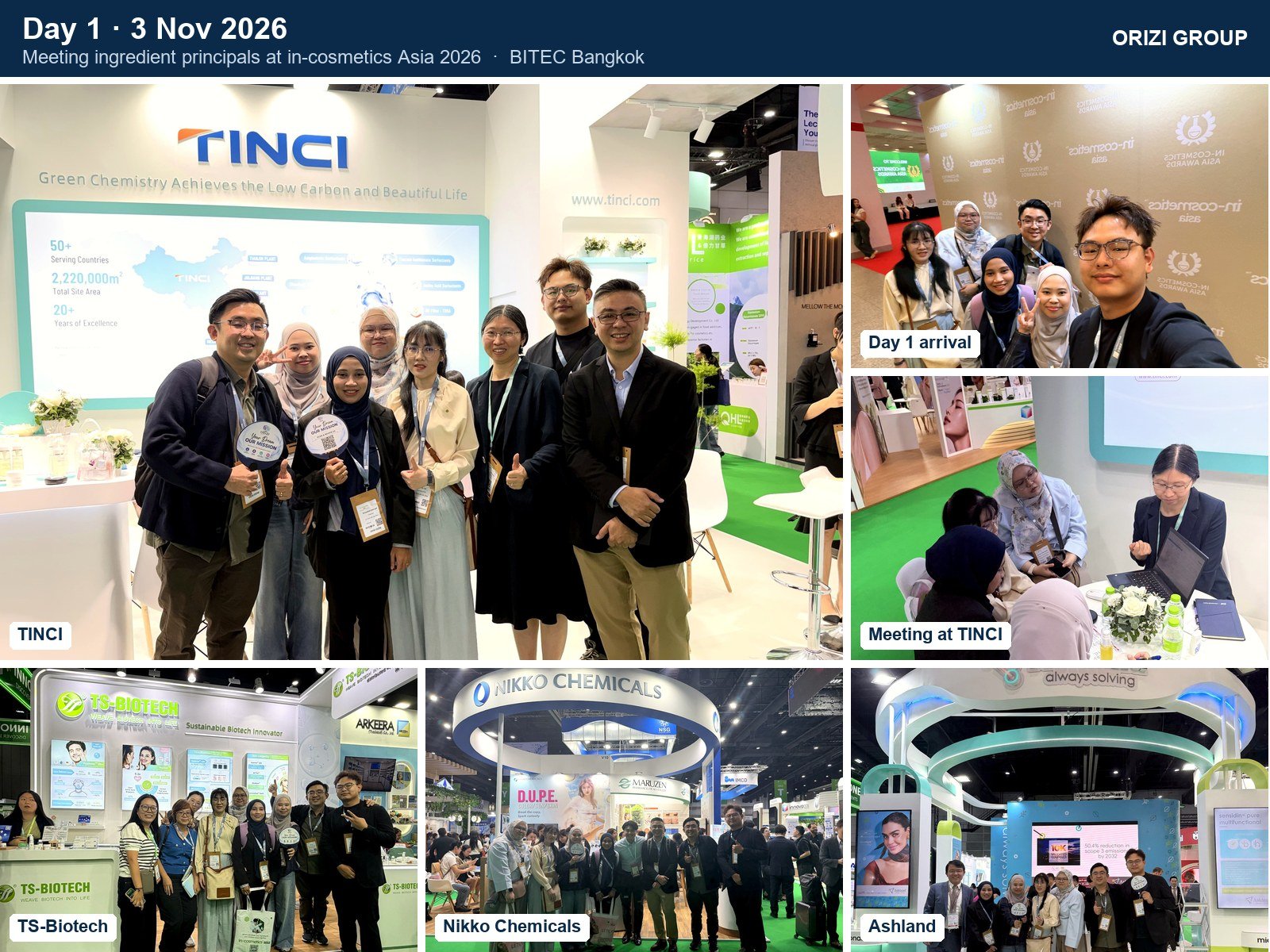
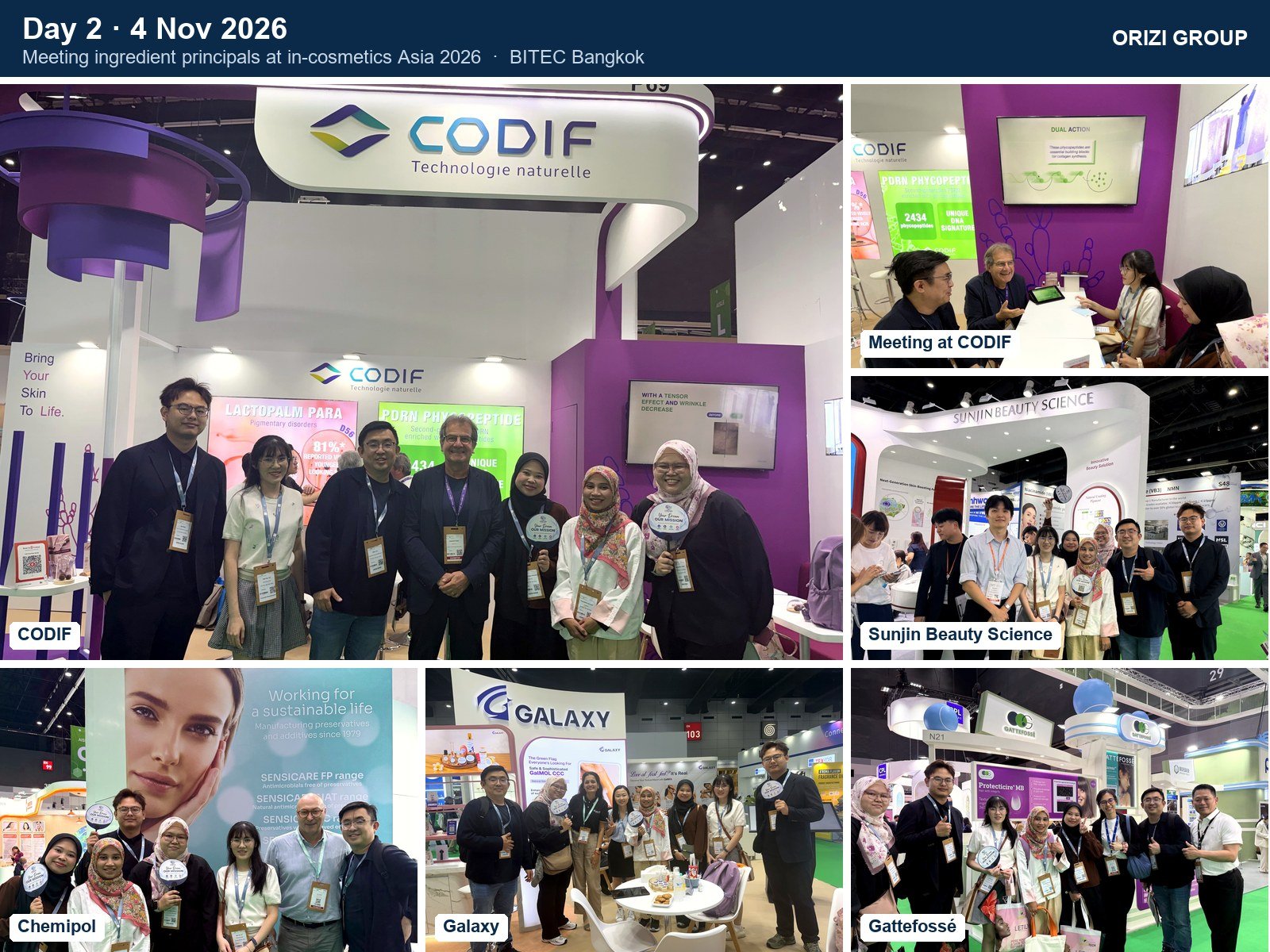
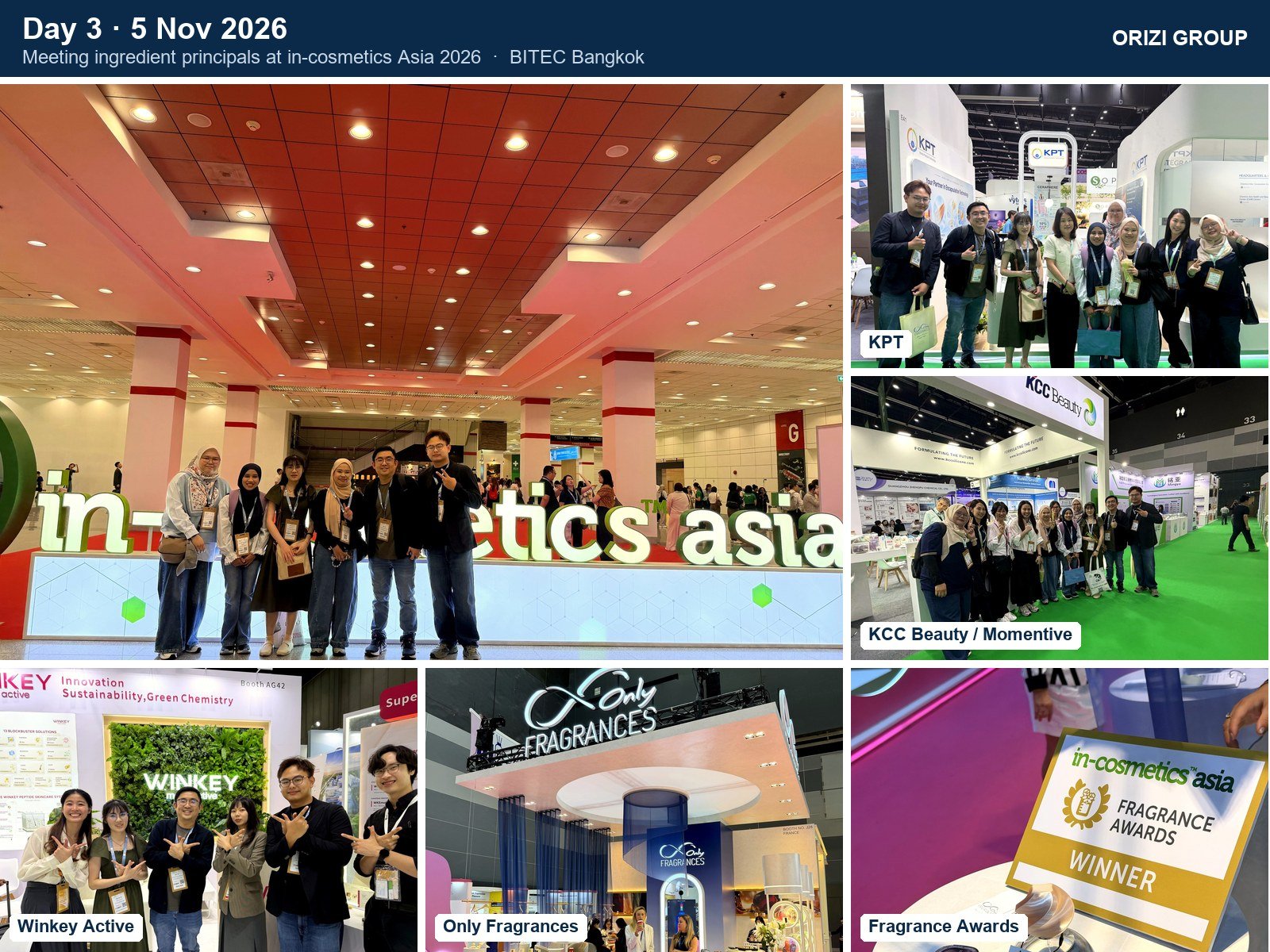
Based on ORIZI Group’s manufacturing experience, a new active only becomes useful to a brand after three checks: the supplier’s technical and safety documentation, a compatibility and stability trial in the actual formula, and confirmation that the claims fit the target market’s cosmetic rules. That is why the team collected technical data and demonstration samples rather than only brochures. These ingredients join the principal network described in our ingredient library announcement and handled through our raw material sourcing service. Earlier show reports, such as our reading of Cosmoprof CBE ASEAN 2026 and our Cosmobeaute Malaysia 2026 recap, follow the same approach.
What should a brand check before launching with a show-winning ingredient?
- An award is not a product claim. Awards judge innovation; the claims on a finished product must be supported by the brand’s own evidence or the supplier’s data at the dose actually used.
- Claims must fit the market’s cosmetic rules. In Malaysia, cosmetic claims follow the NPRA (National Pharmaceutical Regulatory Agency) guideline for cosmetic claims, which does not accept claims of an effect on mental wellbeing. Neurocosmetic products should talk about how skin feels, not about mood.
- Check the ingredient’s origin. Cosmetics may not contain cells, tissues or products of human origin under the EU-based ingredient lists that the ASEAN Cosmetic Directive follows (Regulation (EC) No 1223/2009, Annex II; Malaysian annexes on the NPRA cosmetic guideline page). Exosome and PDRN ingredients for cosmetics should come from plant, marine or microbial sources, with documentation.
- Ask for halal documentation early if the product is for halal-certified lines, especially for ingredients with an animal or fermentation origin.
- Budget for cost-in-use and testing. New actives are often priced well above established ones, and every new formula needs stability and compatibility testing before launch.
FAQ
When and where was in-cosmetics Asia 2026?
in-cosmetics Asia 2026 was held from 3 to 5 November 2026 at BITEC (Bangkok International Trade & Exhibition Centre) in Bangkok, Thailand, alongside the COSMEX manufacturing exhibition.
Which ingredient won the top award at in-cosmetics Asia 2026?
The Innovation Zone Best Ingredient Award for Actives (Gold) went to Ignilyte by Vytrus Biotech, a dragon-fruit stem-cell active. The Spotlight On Formulation Gold went to BASF’s SPF 50 / PA++++ Moisture Touch Tone-up Sun Lotion.
What is the difference between in-cosmetics Global and in-cosmetics Asia?
in-cosmetics Global is the flagship European show of the series (Paris in April 2026), while in-cosmetics Asia serves the Asia-Pacific market in Bangkok each November. The series also runs in-cosmetics Korea and in-cosmetics Latin America, making four shows in 2026.
Can a Malaysian brand use the new ingredients launched at in-cosmetics Asia?
Yes, if the ingredient is permitted under the ASEAN Cosmetic Directive annexes and the product is notified to NPRA before sale. A manufacturer with access to the supplier can obtain samples and documentation, trial the ingredient in your formula and check the claims you plan to make.
Are exosome skincare ingredients allowed in cosmetics?
Ingredients of human origin are not allowed in cosmetics under the EU-based lists followed in ASEAN, so exosome-type cosmetic ingredients are made from plants or microorganisms. Their claims must still follow the cosmetic claims rules of each market.
Sources & references
- in-cosmetics Asia 2026 awards page – winners in every category.
- Industries Cosmétiques: The Winners of in-cosmetics Asia 2026 – descriptions of the winning ingredients.
- Happi: Winners Revealed at in-cosmetics Asia 2026 – award announcement and Fragrance Awards.
- in-cosmetics Asia 2026 press release – show dates, exhibitor numbers and themes.
- BASF: Lincare launch at in-cosmetics Asia 2026.
- Dow: four functional ingredients launched at in-cosmetics Asia 2026.
- in-cosmetics Global 2026 award winners and in-cosmetics Korea 2026 Actives Gold.
- NPRA Guideline for Cosmetic Claims (Annex I, Part 8) and EU Regulation (EC) No 1223/2009.
Update history: November 2026 — first published after in-cosmetics Asia 2026 (3–5 November 2026).
Disclosure: This article is published by ORIZI Group and may refer to our own manufacturing experience, services and capabilities. External factual claims are supported by cited sources.
Planning a 2027 launch around one of these ingredients? Share your brief with our product R&D team, browse ready-to-adapt options in our Ready Formulas library, or contact ORIZI Group to start a feasibility review.