
Seoul turned a design museum into a four-day export office this August. From our vantage point as a Malaysian OEM, the most useful thing about Seoul Beauty Week 2026 was not the queues at the booths — it was how deliberately Korea is helping its smallest beauty brands reach buyers abroad, and what that means for brand owners here who are competing with, or inspired by, those products.
Written & researched by Edan Foo, Assistant General Manager & Manufacturing Industry Practitioner, ORIZI Group · Technical input by ORIZI Group R&D Team · Fact-checked by Creaton Poh · Published by ORIZI Group · Last reviewed September 2026
Disclosure: This article is published by ORIZI Group and may refer to our own manufacturing experience, services and capabilities. External factual claims are supported by cited sources.
Quick answer: what does Seoul Beauty Week 2026 mean for Malaysian brand owners?
Seoul Beauty Week 2026 (22–25 August 2026, Dongdaemun Design Plaza, Seoul) showed that K-beauty exports are now driven by small and mid-sized brands backed by organised, government-funded buyer matching: 152 exhibitors, 116 overseas buyers from 48 countries and about 48,000 visitors. For Malaysian brand owners, the practical meaning is that K-beauty competition in ASEAN will keep intensifying, so a local brand needs a clear reason to exist — a formula, a certification such as halal, or a speed-to-market advantage — rather than simply copying a Korean reference product.
Key takeaways for brand owners
- The 2026 edition, organised by the Seoul Metropolitan Government, drew 152 exhibiting companies (up from 52 in 2022), 116 overseas buyers from 48 countries and roughly 48,000 visitors (organiser figures, reported 26 August 2026).
- Korea exported USD 11.4 billion of cosmetics in 2025, and SMEs accounted for 72.5% of that — the growth is coming from small brands, not only the giants.
- The event’s business core is pre-arranged one-on-one export meetings, not booth traffic. That is a model ASEAN brand owners can copy when they go looking for distributors.
- Regulation and certification were placed on the main forum stage next to AI and viral-marketing sessions. Documentation is now a commercial skill, not back-office work.
- Our view: “K-beauty-inspired, made in Malaysia” works best when the brand adds something a Korean import cannot, such as halal certification, local climate testing or shorter replenishment cycles.
Scope of this article
This article is ORIZI Group’s reading of a Korean industry event and what it implies for brands that manufacture in Malaysia. It is not an audited market study and it does not review any exhibitor. Event figures are the organiser’s own published numbers. Commentary about briefs, timelines and product development reflects our experience as a manufacturer at Dr Orizi (M) Sdn. Bhd., ORIZI Group’s cosmetics company, and is labelled as such.
What is Seoul Beauty Week?
Seoul Beauty Week is an annual beauty industry event run by the Seoul Metropolitan Government since 2022 to help Seoul-based beauty SMEs open domestic and export sales channels. In 2026 it was rebranded “Beautiful Life in Seoul (BLS) – Seoul Beauty Week” and combined an exhibition of cosmetics, beauty-tech, medical-aesthetics and inner-beauty companies with the Beauty Trade Show, a buyer-matching programme run by the Seoul Business Agency (Seoul Metropolitan Government announcement, 14 August 2026). Consumer programmes ran on 22–23 August and business programmes on 23–25 August.
Why does government-backed buyer matching matter to an ASEAN brand?
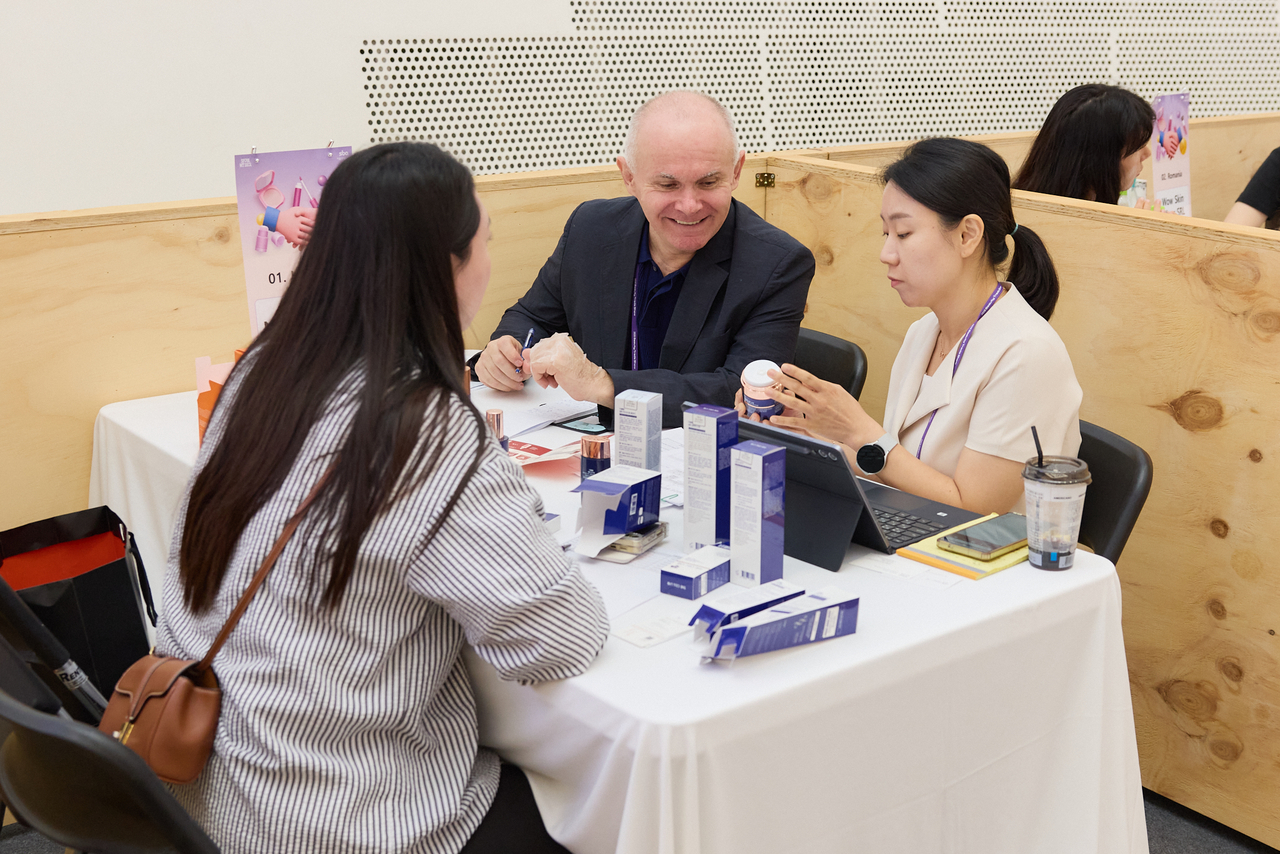
Government-backed buyer matching matters because it lowers the cost for a small Korean brand to find an ASEAN distributor, which means more K-beauty brands will arrive on Malaysian shelves. According to The Herald Business, 175 Seoul SMEs met 116 overseas buyers at the 2026 Beauty Trade Show, and over 2023–2025 the programme logged about KRW 120 billion in consultations and KRW 36 billion in contracts (The Herald Business, 26 August 2026). The organiser also highlights brands such as Power Player’s Ongredients, which reached a USD 5 million export milestone in 2025 after four consecutive appearances.
For a Malaysian brand owner, that is both a threat and a template. The threat is obvious: more well-packaged Korean products competing for the same shelf. The template is the method — arriving at a distributor meeting with samples, a price structure and complete export documents already prepared.
Should a Malaysian brand import K-beauty, manufacture in Korea, or manufacture locally?
The right route depends on how much formula control, certification and replenishment speed the brand needs. The table below is the decision framework our team uses when a brand owner arrives with a Korean reference product.
| Route | Formula ownership | Main lead-time drivers | Malaysian market entry | Halal option | Best for |
|---|---|---|---|---|---|
| Import a finished K-beauty brand | None — you distribute someone else’s brand | Shipping, stock allocation from Korea | Importer handles NPRA notification | Depends on the Korean brand | Distributors testing demand quickly |
| Manufacture with a Korean OEM/ODM | Negotiable; ODM formulas often stay with the factory | Development queue, sea freight, import clearance | Brand owner or importer handles NPRA notification | Limited; must be arranged specifically | Brands whose story depends on “Made in Korea” |
| K-beauty-inspired, made in Malaysia | Negotiable; custom formulas can be owned by the brand | Formulation, stability testing, packaging sourcing | Local manufacturer supports NPRA notification | Available with a halal-certified supply chain | Brands needing halal, fast restocks or ASEAN export from Malaysia |
We go into the trade-offs in more depth in our comparison of Korean OEM and Malaysian OEM for K-beauty-inspired skincare.
The ORIZI perspective: what we would tell a brand owner after this event
Based on ORIZI Group’s manufacturing experience, many of the skincare briefs that reach our team start with a Korean reference product. The briefs that move fastest are the ones that separate two questions early: which sensory and texture qualities the brand wants to match, and which claims and certifications the brand needs that the reference product does not have. Seoul Beauty Week reinforces why that separation matters — the Korean product will always be the better “Korean product”; a Malaysian brand wins on the parts a Korean import does not cover.
In practice we suggest three things this quarter:
- Brief on differences, not on copies. Name the reference product, then list what must be different: halal status, fragrance-free, humidity performance, pack size or price point.
- Prepare an export-ready dossier from day one. If the Korean model shows anything, it is that buyers expect ingredient lists, stability data and notification documents on the first call. Our export OEM manufacturing service is structured around building that dossier alongside the product.
- Treat derma and aesthetic positioning carefully. Medical-aesthetics brands were a visible part of the 2026 exhibitor mix. Clinical-style claims need evidence and correct product classification; our dermatology and aesthetic skincare OEM work starts with that classification question.
Limitations and what we are not claiming
We are not claiming that ORIZI Group attended or exhibited at Seoul Beauty Week 2026, and we are not reviewing or endorsing any exhibitor. Visitor, buyer and export figures are organiser-stated and have not been independently audited; the 2026 contract value had not been published at the time of writing. Regulatory requirements differ by market and change over time — in Korea cosmetics are regulated by the Ministry of Food and Drug Safety (MFDS), while in Malaysia products must be notified to the National Pharmaceutical Regulatory Agency (NPRA) before sale. Confirm current requirements with the relevant regulator.
Frequently asked questions
Is K-beauty still growing in Southeast Asia?
Korean cosmetics exports reached USD 11.4 billion in 2025, making Korea the world’s second-largest cosmetics exporter according to the Seoul Metropolitan Government, and SMEs supplied 72.5% of that total. Growth rates by country vary, so brand owners should check category-level data for their own market before planning a range.
Can a Malaysian manufacturer make a K-beauty-style product?
Yes. A Malaysian OEM can develop products with K-beauty-style textures, formats and ingredient concepts, but the product cannot be labelled “Made in Korea”. The strongest local versions add something the reference product lacks, such as halal certification or testing for tropical humidity.
Do I need a new NPRA notification if I change a Korean reference formula?
Every cosmetic product placed on the Malaysian market needs its own NPRA notification under the responsible company, whether it is imported or made locally. A reformulated product is a different product and must be notified on its own terms; your manufacturer or regulatory adviser should confirm the documents required.
How do I prepare for a distributor meeting at a trade show?
Bring finished samples, a clear price structure by volume, the full ingredient list (INCI), stability and compatibility test summaries, and proof of market notification or registration. Buyers at matchmaking programmes like Seoul Beauty Week’s expect these documents at the first meeting.
Sources and further reading
- Seoul Metropolitan Government — K-Beauty ranks second globally; Seoul Beauty Week to drive the industry’s next phase of growth (14 August 2026)
- The Herald Business — Overseas buyers flock to Seoul Beauty Week (26 August 2026)
- Official event site — seoulbeautyweek.or.kr and the Beauty Trade Show programme
- Regulators — MFDS (Korea); NPRA (Malaysia)
- Our earlier event readings: three signals from Vietbeauty & Cosmobeauté Vietnam 2026 and what Cosmoprof CBE ASEAN 2026 signals for Malaysian OEM manufacturers
- For a fuller, figure-by-figure recap of the event, see the Seoul Beauty Week 2026 recap on OEMHallmark.
Update history
September 2026 — published, covering the 22–25 August 2026 edition of Seoul Beauty Week at Dongdaemun Design Plaza, Seoul.
Planning a K-beauty-inspired range for Malaysia or export? Send us your reference product and what you need to be different, and our team will outline a feasible development route. Contact ORIZI Group.




