A practical comparison for founders who want a Korean-style skincare product but are weighing where to actually manufacture it.
Written & researched by Fenny Yip, industry contributor · Technical input by ORIZI Group R&D Team · Fact-checked by Creaton Poh · Published by ORIZI Group · Last reviewed July 2026
Disclosure: This article is published by ORIZI Group and may refer to our own manufacturing experience, services and capabilities. External factual claims are supported by cited sources.
Quick Answer
Korean OEMs are the natural choice if trend origination inside the Korean beauty ecosystem is your priority and you can commit to larger production volumes. A Malaysian OEM makes more sense if you want K-beauty-style formulations with lower minimum order quantities, halal certification, direct English or Malay communication, and cosmetic notification handled with Malaysia’s NPRA for the Southeast Asian market. Many founders searching for a “Korean cosmetic manufacturer” actually need a Korean-style product — and that can be formulated and produced closer to home.
Key Takeaways
- K-beauty is a product style and formulation philosophy — it is not legally or technically restricted to factories located in Korea.
- Korean OEMs excel at trend origination; founders who approach them from Southeast Asia commonly report high per-SKU minimums, longer communication loops and no halal option.
- A Malaysian OEM can produce Korean-inspired textures (essences, ampoules, cushion-style bases, glass-skin serums) with MOQs from 50 units on starter programmes and around 500 units on fast-track production.
- Selling in Malaysia requires NPRA cosmetic notification regardless of where the product is made — a local manufacturer handles this as part of the project.
- Halal certification is effectively unavailable from most Korean factories; in Malaysia, products can be produced halal-compliant in JAKIM halal-certified facilities.
Scope of this guide
This comparison covers OEM/ODM manufacturing of skincare and cosmetics (leave-on and rinse-off cosmetic products, not supplements or medical devices) for brand founders based in Malaysia, Singapore and the wider ASEAN region, as of July 2026. Regulatory references are to Malaysia’s NPRA (National Pharmaceutical Regulatory Agency) cosmetic notification framework and Korea’s MFDS (Ministry of Food and Drug Safety).
Why do so many founders search for a Korean cosmetic manufacturer?
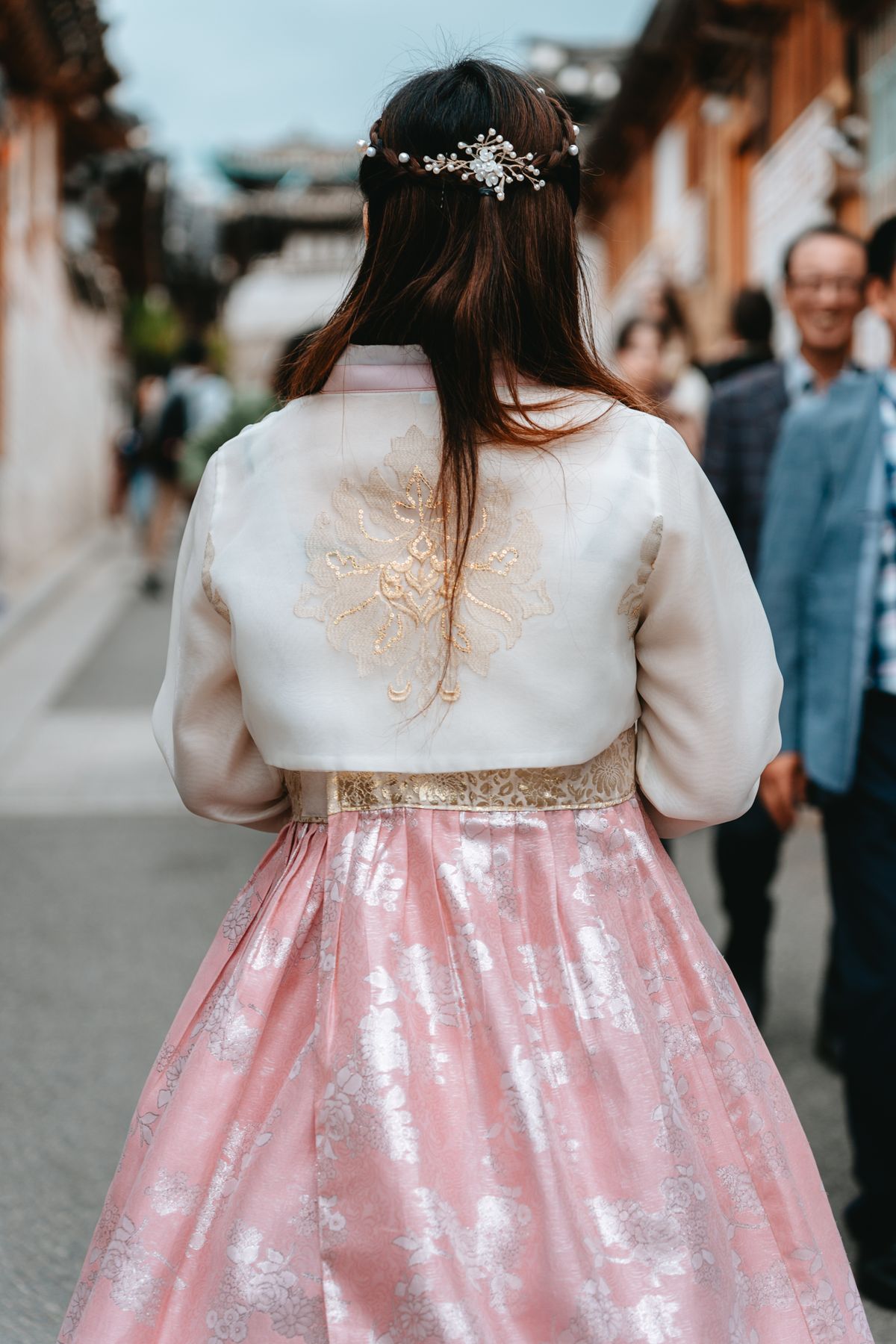
Korean beauty — K-beauty — has shaped global skincare expectations for over a decade: lightweight layering textures, essence and ampoule formats, innovative actives, and fast trend cycles amplified by K-pop and Korean drama. When a founder decides to build a skincare brand, “find a Korean manufacturer” often feels like the obvious first step, and questions like “how can I find South Korean cosmetic manufacturers?” appear constantly on forums and Q&A sites.
The useful distinction is between the look and feel of the product and the location of the factory. K-beauty is a formulation and packaging style. A competent OEM laboratory in Malaysia can benchmark a Korean reference product — its texture, sensorial profile, actives and packaging format — and develop an equivalent formulation locally. What a non-Korean factory cannot give you is the “Made in Korea” origin label; whether that label matters more than cost, speed, MOQ and halal access is the real decision.
Korean OEM vs Malaysian OEM: side-by-side comparison
| Factor | Korean OEM | Malaysian OEM |
|---|---|---|
| Trend origination | Strongest — inside the K-beauty ecosystem where formats are invented | Fast follower — benchmarks Korean references, typically within one trend cycle |
| “Made in Korea” label | Yes | No — “Made in Malaysia” |
| Typical minimum order | Founders approaching Korean OEMs from ASEAN commonly report minimums in the thousands of units per SKU | From 50 units on ready-formula starter programmes; around 500 units on fast-track custom production |
| Halal certification | Rarely available | Available — products can be produced halal-compliant in JAKIM halal-certified facilities |
| Regulatory handling for Malaysia | You (or an agent) must handle NPRA cosmetic notification as the local responsible company | Manufacturer supports NPRA notification as part of the OEM project |
| Communication | Often through translators or trading intermediaries; time-zone friendly but language-dependent | Direct in English, Malay or Chinese; same-region working hours |
| Site visits & audits | International flight required | Domestic travel — practical for factory audits and production witnessing |
| Logistics to ASEAN customers | International freight, import duty and customs clearance per shipment | Domestic or intra-ASEAN shipping |
When is a Korean manufacturer the right choice?
A Korean OEM is genuinely the better fit in three situations. First, if your brand story depends on the “Made in Korea” origin claim — for example, you are positioning explicitly as a Korean import brand. Second, if you need a proprietary Korean technology or ingredient system that only a specific Korean laboratory offers. Third, if your volumes are already large enough that Korean per-SKU minimums and international logistics are comfortable line items rather than barriers. In those cases, work with a reputable Korean OEM and verify its export documentation with Korea’s Ministry of Food and Drug Safety (MFDS), the Korean cosmetics regulator.
When does a Malaysian OEM make more sense?
For most first-time and small-to-mid brand founders in Southeast Asia, the practical answer is a Malaysian OEM producing Korean-style formulations. The reasons are structural, not patriotic:
- Lower entry volume. Starter programmes such as Ready2Brand (R2B) begin at 50 units with packages from RM3,000, so you can validate a K-beauty-inspired product in the market before committing to mass production.
- Speed on trend products. Viral trends have short windows. ORIZI Group’s A1 fast-track manufacturing pathway turns around R&D samples in 1–2 days and can take a trend-led product from brief to production-ready in as fast as one week — a timeline that matters when a Korean-inspired format is trending on TikTok this month, not next quarter.
- Halal access. Halal certification is a market-entry requirement for large parts of the Malaysian and Indonesian market, and it is effectively unavailable from most Korean factories. In Malaysia, products can be produced halal-compliant in JAKIM halal-certified facilities; certification status is verifiable on the JAKIM MYeHALAL portal.
- Regulatory simplicity. Any cosmetic sold in Malaysia must be notified with the NPRA under the cosmetic notification framework before sale — wherever it is made. Manufacturing locally means your OEM supports the notification as part of the project instead of you importing and self-managing compliance.
Can a Malaysian OEM really produce K-beauty-style formulations?
Yes. K-beauty formats — essences, ampoules, serums, cushion-style complexions, gel-cream moisturizers, sheet-mask serums — are defined by their formulation architecture and sensorial profile, and these can be developed in any well-equipped cosmetic laboratory. A Malaysian OEM developing a Korean-style product typically starts from a benchmark reference: the lab analyses the target texture, absorption behaviour, actives and claim set, then formulates an equivalent using compliant raw materials. Popular K-beauty actives such as niacinamide, hyaluronic acid, centella asiatica and fermented extracts are internationally traded ingredients, not Korean exclusives. For an overview of formats a Malaysian factory produces, see ORIZI’s OEM skincare manufacturing page.
ORIZI Group’s perspective
Based on ORIZI Group’s manufacturing experience in Ipoh, Malaysia, a consistent pattern appears in enquiries: founders arrive asking for “a Korean manufacturer” and leave having defined a Korean-style product. Several of the briefs our R&D team receives include a Korean retail product as the physical benchmark sample. Our formulation library of more than 5,000 ready-to-tweak formulas includes Korean-inspired textures precisely because this is one of the most repeated briefs. The honest limitation: if a client’s brand story requires “Made in Korea” on the label, we say so early and step aside — no Malaysian factory can put that origin on the box, and pretending otherwise would fail the client at customs documentation.
Risks, limitations and common mistakes
- Assuming K-beauty branding requires Korean origin. It does not — but if you imply Korean origin on packaging or marketing while manufacturing elsewhere, that is a misleading claim. Position the product honestly as Korean-inspired.
- Underestimating Korean MOQs and payment terms. Founders often budget for a small trial run and discover the quoted minimum is several thousand units per SKU, paid upfront in foreign currency.
- Forgetting NPRA notification. Importing a Korean-made product without a Malaysian responsible company and NPRA notification makes it unsellable in Malaysia.
- Ignoring stability and climate. Formulations tuned for Korean retail conditions may need re-stabilisation for hot, humid ASEAN retail environments; a local lab formulates for local conditions from day one.
- Choosing purely on price. Whichever country you choose, audit the factory’s certifications and track record — cheap production that fails stability or compliance costs more than it saves.
For the cost and paperwork side of the same decision (landed cost, Korean halal bodies recognised by JAKIM and ASEAN tariffs), see our Korea vs Malaysia OEM comparison for startup skincare brands.
Frequently asked questions
Is K-beauty only made in Korea?
No. K-beauty describes a formulation and packaging style that originated in Korea. The “Made in Korea” origin label is exclusive to Korean factories, but Korean-style formulations are produced by OEM laboratories worldwide, including in Malaysia.
What MOQ do I need for a Korean-style skincare product in Malaysia?
At ORIZI Group, ready-formula starter runs begin at 50 units through the Ready2Brand programme, and fast-track custom production through the A1 pathway starts around 500 units. Requirements vary with format, packaging and customisation level.
Can a Korean-style product made in Malaysia be halal-certified?
Yes. Korean-inspired formulations can be produced halal-compliant in JAKIM halal-certified facilities in Malaysia, provided the raw materials and process meet halal requirements. This is one of the main reasons ASEAN founders choose local manufacturing over importing from Korea.
Do I still need NPRA notification if my product is made in Korea?
Yes. Every cosmetic product sold in Malaysia must be notified with the NPRA (National Pharmaceutical Regulatory Agency) before it is placed on the market, regardless of country of manufacture. An imported Korean product needs a Malaysian responsible company to hold the notification.
How fast can a K-beauty-inspired product be developed in Malaysia?
On ORIZI Group’s A1 fast-track pathway, R&D samples are typically ready in 1–2 days and a production-ready product can be achieved in as fast as one week for suitable formats, with standard custom projects taking 1–2 weeks. Timelines extend when custom packaging or additional testing is involved.
Sources & references
- NPRA — Cosmetic regulatory information (Malaysia)
- MFDS — Ministry of Food and Drug Safety, Korea
- JAKIM MYeHALAL — halal certification verification portal
- ORIZI Group first-party manufacturing experience and enquiry observations (Ipoh, Malaysia, 2026)
Update history
22 July 2026 — First published.
Planning a Korean-inspired product? If speed matters, review the A1 fast-track manufacturing pathway; if you are starting small, the Ready2Brand programme begins at 50 units. Or send us your benchmark product for a feasibility review at [email protected].
Related reading: the “where should I manufacture?” question is being asked across the region right now. We unpack the regional version of it in three signals we read from Vietbeauty & Cosmobeauté Vietnam 2026, including a trade-off table for manufacturing in the market you sell in versus exporting from one ASEAN base. For the Korean side of the picture, our reading of what Seoul Beauty Week 2026 says about K-beauty’s export push looks at how Korea is helping its small brands reach ASEAN buyers.