Turkey has become one of the few countries that manufactures cosmetics for European retail chains, Gulf distributors and Central Asian markets from a single industrial base, and brand owners in Southeast Asia are starting to notice. This guide maps that market: who the significant contract manufacturers are, how Turkish cosmetic regulation works, and what a brand owner should compare before shortlisting any overseas factory.
Written & researched by Norpadilah Abd Latif, Chemist & Cosmetic Formulation Contributor · Technical input by ORIZI Group R&D Team · Fact-checked by Creaton Poh · Published by ORIZI Group · Last reviewed July 2026
Disclosure: This article is published by ORIZI Group, a Malaysian OEM/ODM cosmetics manufacturer, and refers to our own manufacturing experience, services and capabilities. ORIZI Group has no commercial relationship with any Turkish company named here. External factual claims are supported by cited sources.
Quick answer
Turkey’s cosmetics contract manufacturing sector is concentrated in Istanbul, Ankara and Izmir, and divides into three tiers: high-volume fragrance and aerosol producers such as Erte Cosmetics and Gelisim Kozmetik, dermocosmetics specialists led by International Group Nacar, and a younger tier of low-minimum contract laboratories including MKN Group and Elan Kimya. Turkish cosmetic law is harmonised with European Union Regulation (EC) No 1223/2009 and administered by TITCK, the Turkish Medicines and Medical Devices Agency, so safety documentation issued by a Turkish factory is already structured for European review.
Key takeaways
- Turkey sits inside a customs union with the European Union, so finished cosmetics generally enter the EU without customs duty — the structural reason European retailers buy Turkish private label.
- Fragrance and aerosol capacity is Turkey’s deepest specialism, with individual plants publishing daily aerosol output in the hundreds of thousands of units.
- Published minimum order quantities at the smaller Turkish contract houses start around 1,000 to 2,000 units per stock-keeping unit, which is low for the capability offered.
- Cosmetic GMP (ISO 22716) is the international standard governing personnel, premises, documentation, production and quality control in cosmetics manufacturing, and it is the certification to ask any Turkish supplier to evidence.
- For a Malaysian or ASEAN brand, distance changes the economics: sourcing decisions should compare landed cost, lead time and regulatory proximity, not unit price alone.
Table of Contents
- Quick answer
- Key takeaways
- Why Turkey’s manufacturing base matters to brand owners
- How cosmetics are regulated in Turkey
- Ten Turkish cosmetic manufacturers to know
- What to compare when evaluating any manufacturer
- The ORIZI Group perspective
- Limitations of this guide
- Frequently asked questions
- Sources and references
- Looking beyond Turkey for a manufacturing partner
Why Turkey’s manufacturing base matters to brand owners
Turkey’s position in cosmetics manufacturing is easiest to understand through its customer base. Turkish factories built their quality systems for European retail buyers, because Europe is where their volume goes. Under the Turkey–European Union customs union, industrial goods including finished cosmetics generally move into the EU free of customs duty, which removes a tariff layer that Asian suppliers cannot escape. The consequence is a supply base that documents, tests and batches to European expectations while operating on a cost structure well below western Europe.
The second factor is format. Turkey produces fine fragrance, cologne, aerosol deodorant, body spray and air-care products at industrial scale. These are technically demanding categories: alcohol handling, pressurised filling, dangerous-goods classification and fragrance compounding are not capabilities a general skincare plant acquires casually. A brand owner whose product concept sits in one of these formats will find deeper capacity in Turkey than in most of Southeast Asia, and that is the clearest reason to consider the market at all.
The third factor is scale distribution. Turkey supports both very large contract manufacturers running above one hundred million units a year and small laboratories publishing minimums in the low thousands. That range is unusual. It means the same country can serve a retail-chain private-label programme and a first-time indie launch, although not through the same supplier.
How cosmetics are regulated in Turkey
Cosmetic products in Turkey are governed by Cosmetic Law No. 5324 and the Cosmetic Products Regulation, administered by TITCK — the Turkish Medicines and Medical Devices Agency, an agency of the Ministry of Health. TITCK is the Turkish equivalent in function to Malaysia’s NPRA (National Pharmaceutical Regulatory Agency): it sets ingredient restrictions, oversees safety documentation and conducts market surveillance.
The Turkish framework is deliberately harmonised with EU Regulation (EC) No 1223/2009, the European cosmetics regulation. In practice this means a Turkish manufacturer maintains a Product Information File and a safety assessment in the European format, and applies the same annexes of prohibited and restricted substances. For a brand owner, that alignment is a documentation advantage: the dossier you receive is already structured the way a European or ASEAN regulatory reviewer expects to see it.
Two practical limits are worth stating plainly. First, domestic sale in Turkey requires product notification through the national Product Tracking System, known as UTS, together with a Responsible Person established in Turkey — obligations that do not transfer to your market. Second, harmonised law is not market access. Selling the same formula in the European Union still requires notification through the Cosmetic Products Notification Portal and an EU-established Responsible Person; selling it in Malaysia still requires a separate NPRA notification through Quest3+ held by a Malaysian-incorporated company. Manufacturing location changes who makes the product, not who is legally answerable for it.
Ten Turkish cosmetic manufacturers to know
The companies below all manufacture in Turkey, publicly offer contract manufacturing, private label or ODM services, and maintained a live official website when this guide was researched in July 2026. They are listed alphabetically. Details are as published by each company and have not been independently audited by ORIZI Group.
Asil Global
An Istanbul manufacturing group producing under its own Biomate and Noxy Herbal labels alongside contract filling for distributors, with a published range covering aerosol deodorants, perfumes, shower gels, shampoos and depilatory creams. Export markets named include the United Kingdom, France, the Netherlands, Germany and the Gulf states. Website: asilglobal.com
Daglar Kozmetik
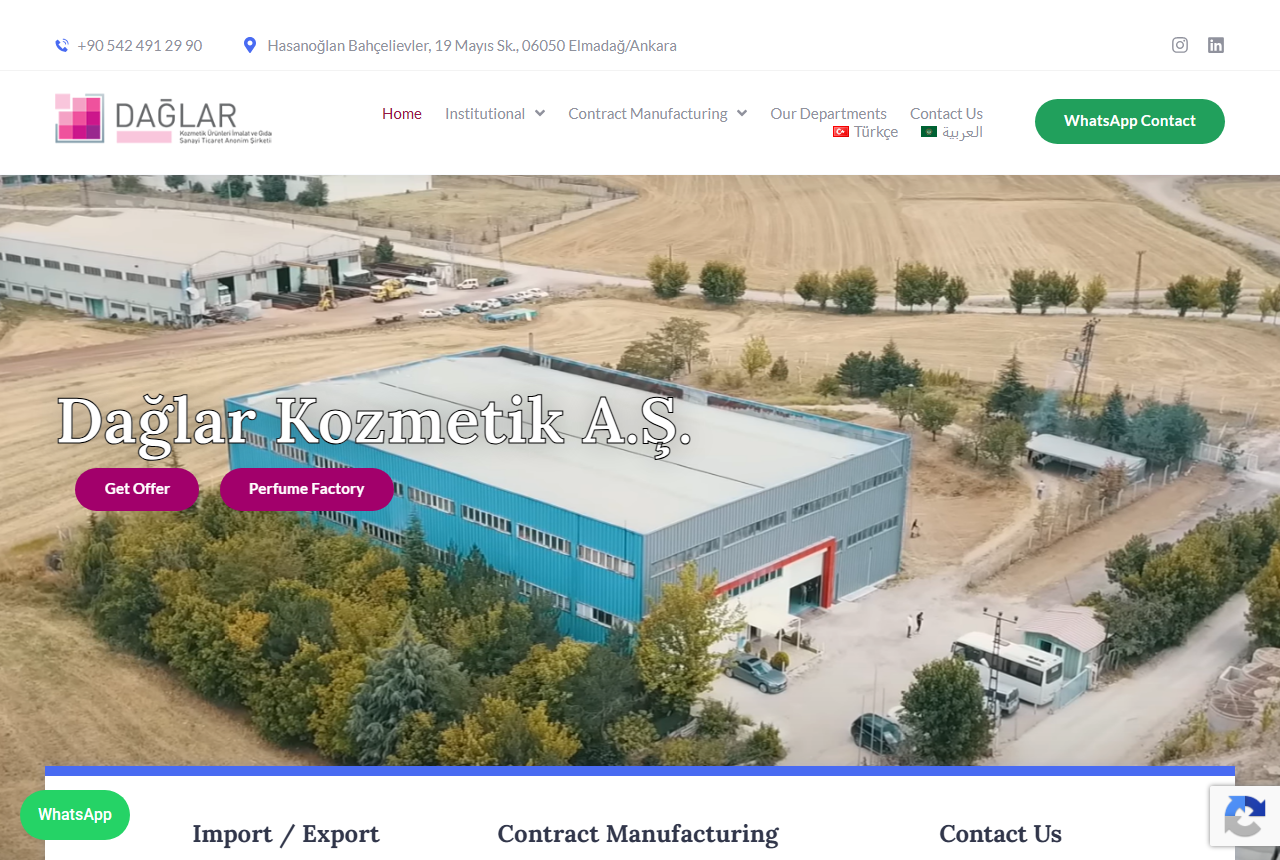
Established in 1997 and operating a 14,000 square metre plant at Elmadag near Ankara, Daglar states it has manufactured for more than 1,400 brands across a dozen product categories, with perfume production as its headline specialism. The company also handles import and export logistics for contract clients. Website: daglarkozmetik.com
Elan Kimya
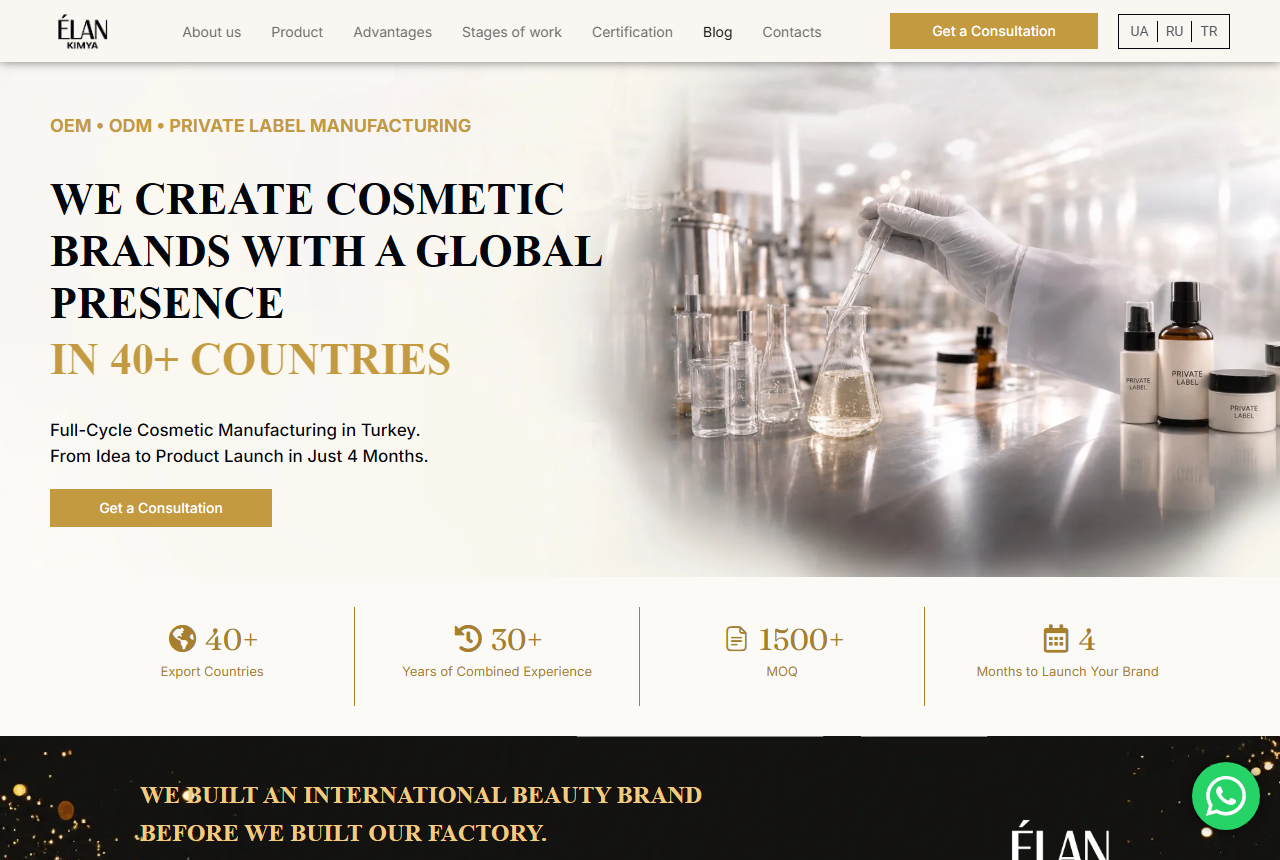
An Antalya-based OEM, ODM and private-label manufacturer founded in 2022, publishing a minimum of roughly 1,500 to 2,000 units per stock-keeping unit, exports to over 40 countries and production aligned to GMP and ISO 9001:2015 across skincare, hair care, colour cosmetics and brow and lash products. Website: elankimya.com
Elya Kozmetik
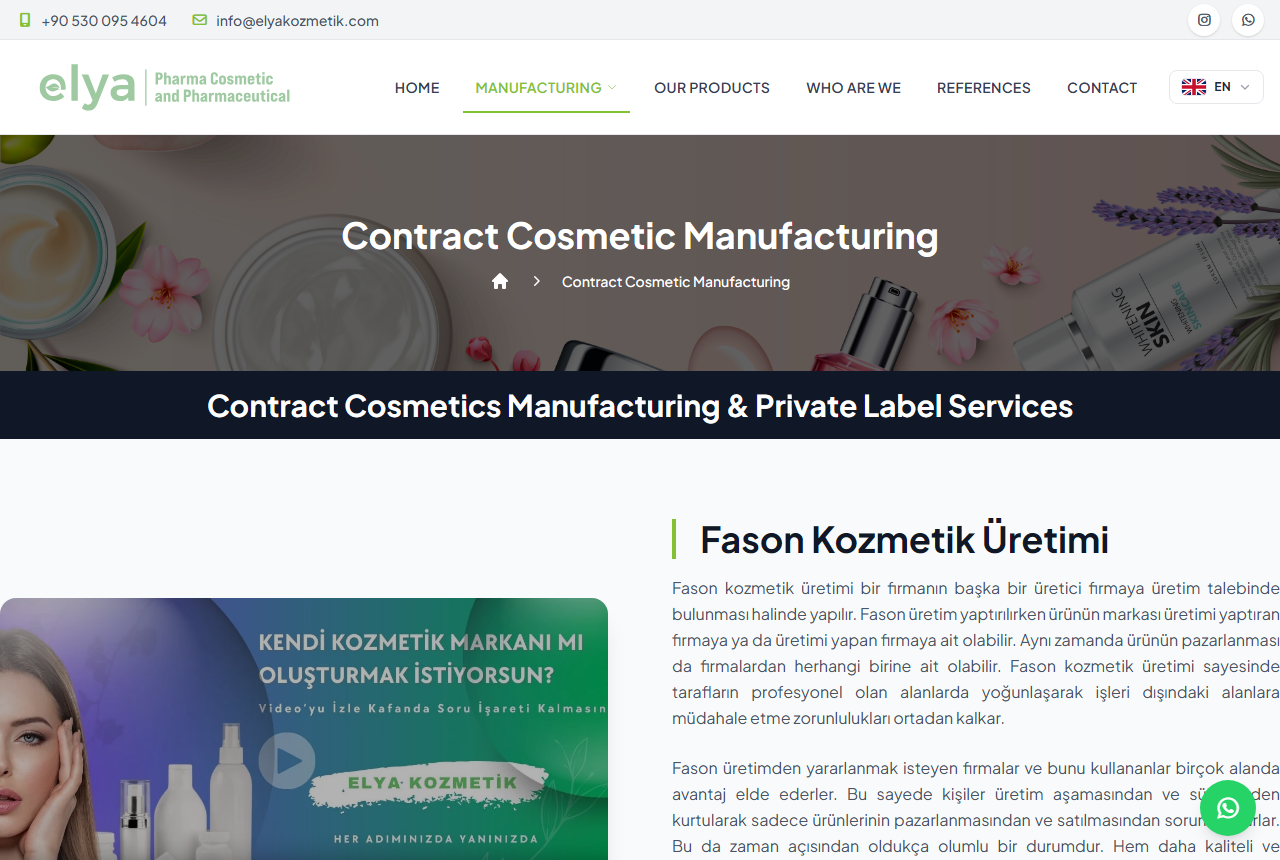
An Istanbul contract manufacturer producing creams, serums, sunscreens, shampoos, BB creams, tonics, peelings, clay masks and keratin treatments, with food supplements manufactured on the same site and minimums typically quoted between 1,000 and 5,000 units. Website: elyakozmetik.com
Erte Cosmetics
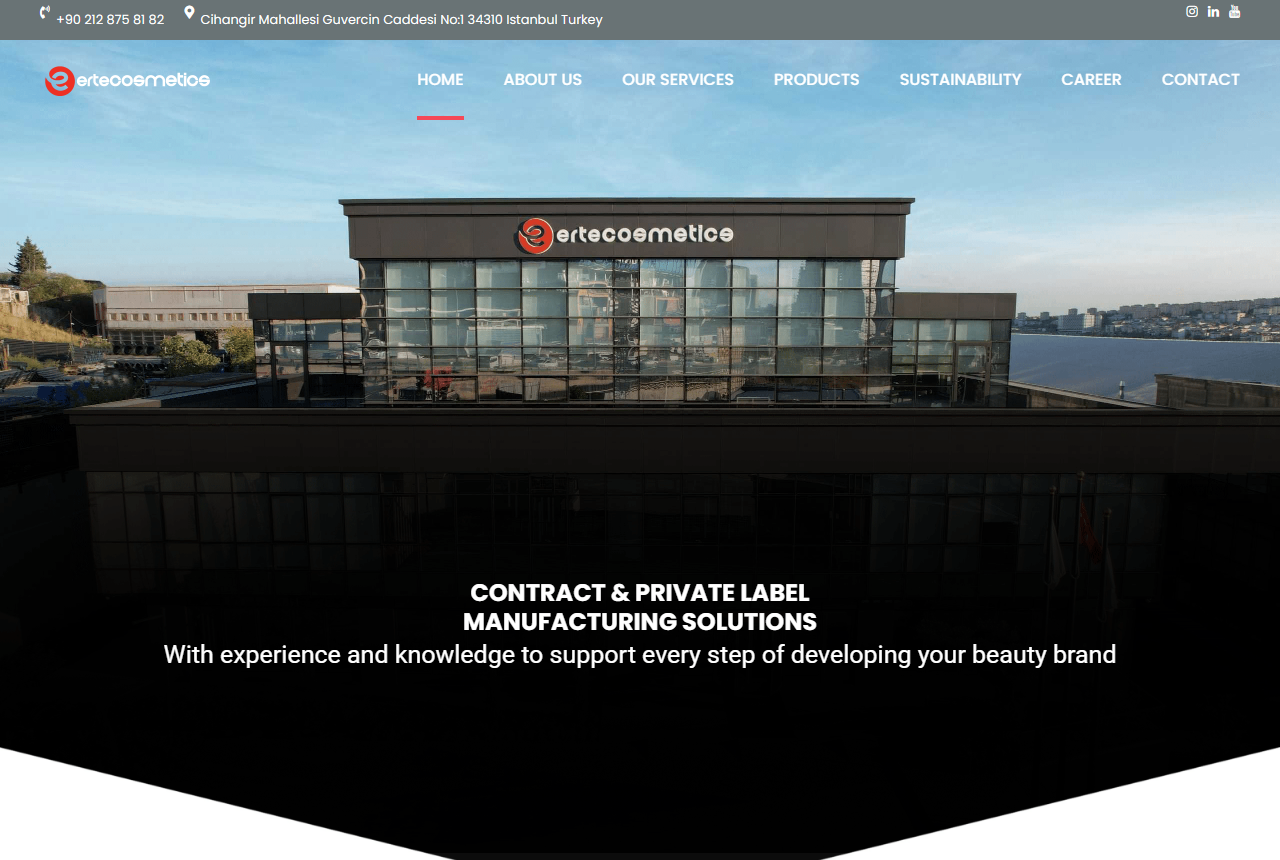
Part of the Erkul Group and trading since 2003 from Avcilar in Istanbul, Erte states a 40,000 square metre production area, around 310 staff, capacity above 100 million units a year and exports to more than 65 countries across perfume, home fragrance, bath and body, skincare and hair care. Website: ertecosmetics.com
Gelisim Kozmetik
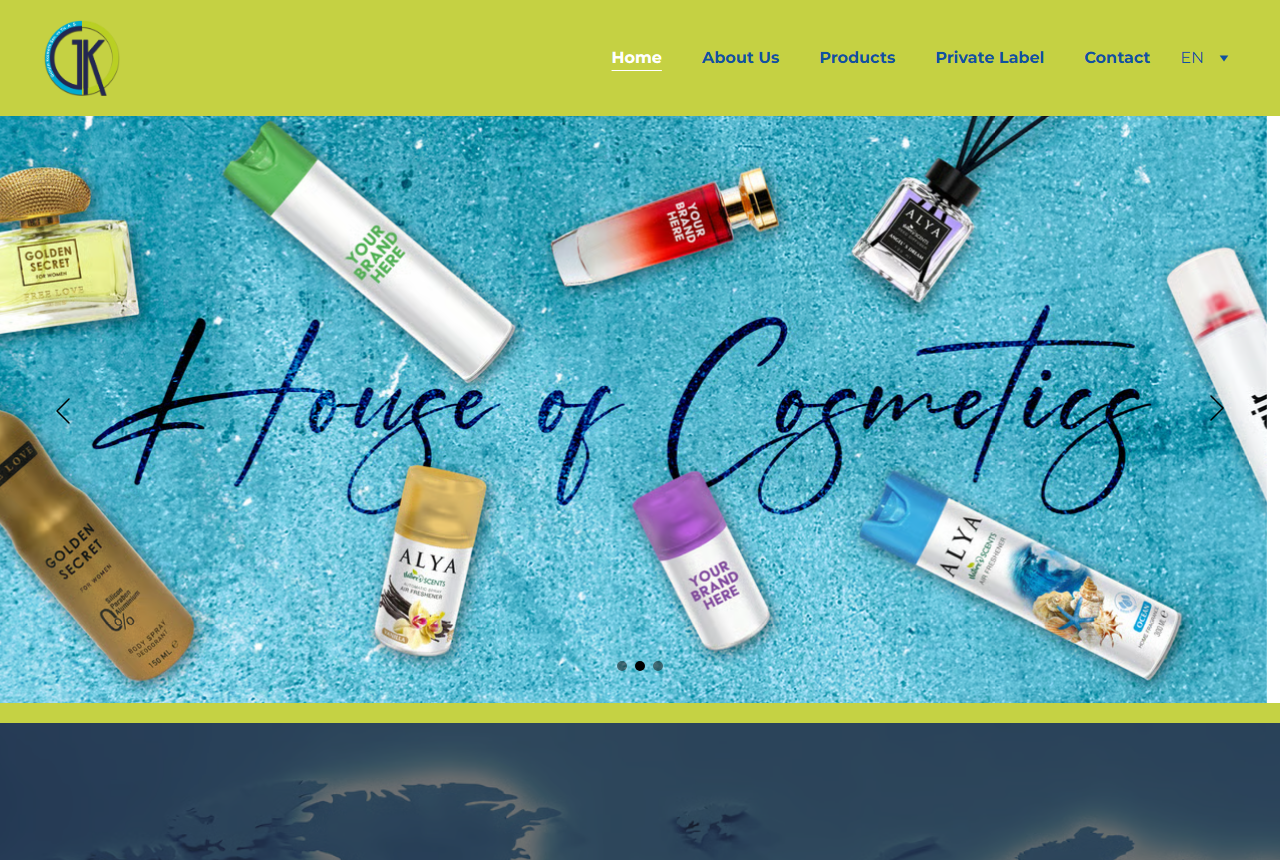
An Istanbul aerosol and fragrance specialist with more than 30 years of trading and a 12,000 square metre plant, quoting daily capacity of roughly 360,000 aerosol units and about 75,000 perfume or liquid units, exporting to over 50 countries under its own ALYA, CHEETAH and PROVA brands and for private-label clients. Website: gelisimkozmetik.com
Hunca Kozmetik
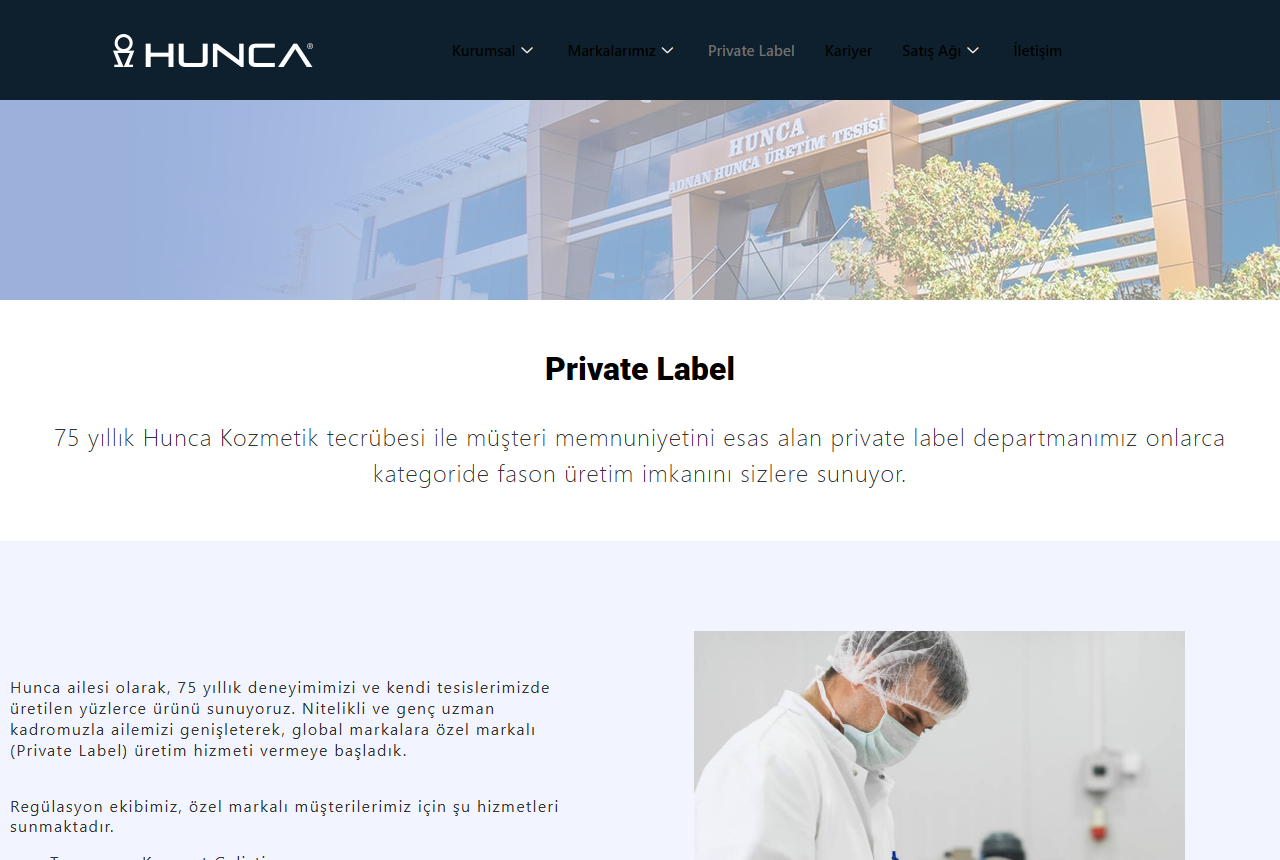
One of Turkey’s oldest cosmetics companies, founded in Istanbul by Adnan Hunca and now producing from a 22,000 square metre plant at Cerkezkoy in Tekirdag with more than 500 employees and exports to over 60 countries, operating private label as a dedicated department with its own regulatory team. Website: hunca.com
International Group Nacar (IGN)
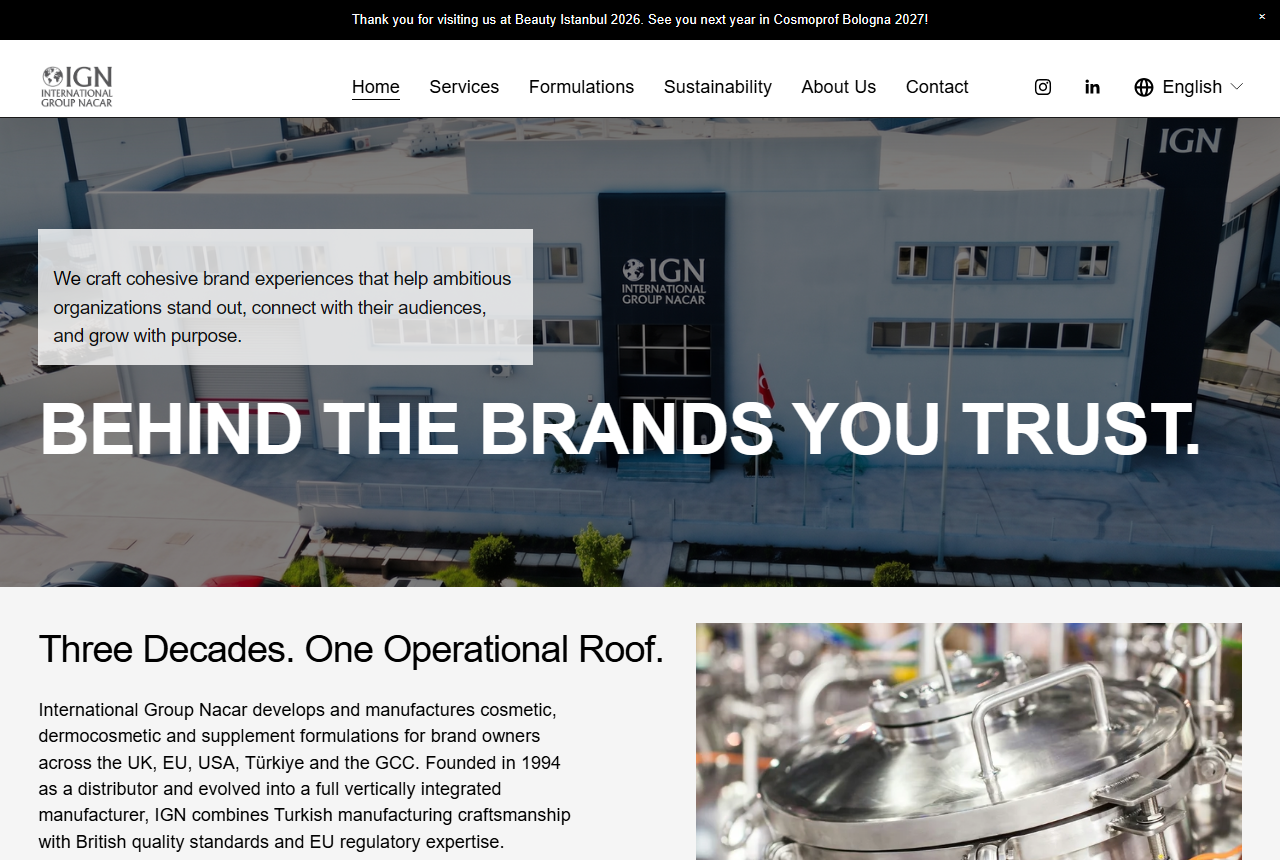
Operating since 1994 with two GMP-certified factories in Izmir and additional offices in London and Tallinn, IGN manufactures skincare, suncare, dermocosmetics, colour cosmetics, men’s and professional ranges plus supplements, stating capability from low-minimum runs through to commercial-scale batches. Website: ign.com.tr
MKN Group
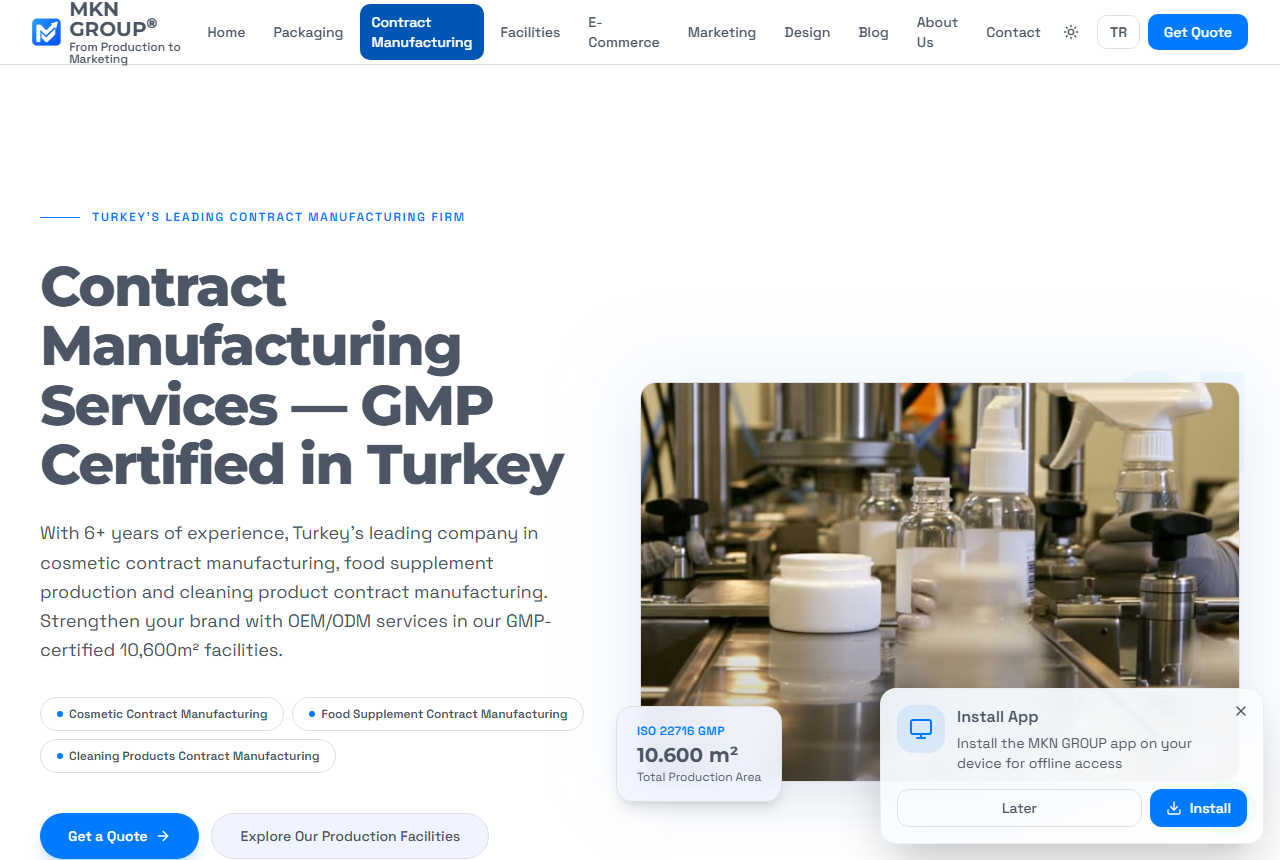
An Istanbul contract manufacturer publishing ISO 22716 cosmetic GMP certification, 10,600 square metres of production area, a 1,000-unit minimum order and a seven-day sample turnaround across cosmetics, food supplements and cleaning products, with packaging, design and e-commerce services offered alongside. Website: mkngroup.com.tr
Turunch Cosmetics
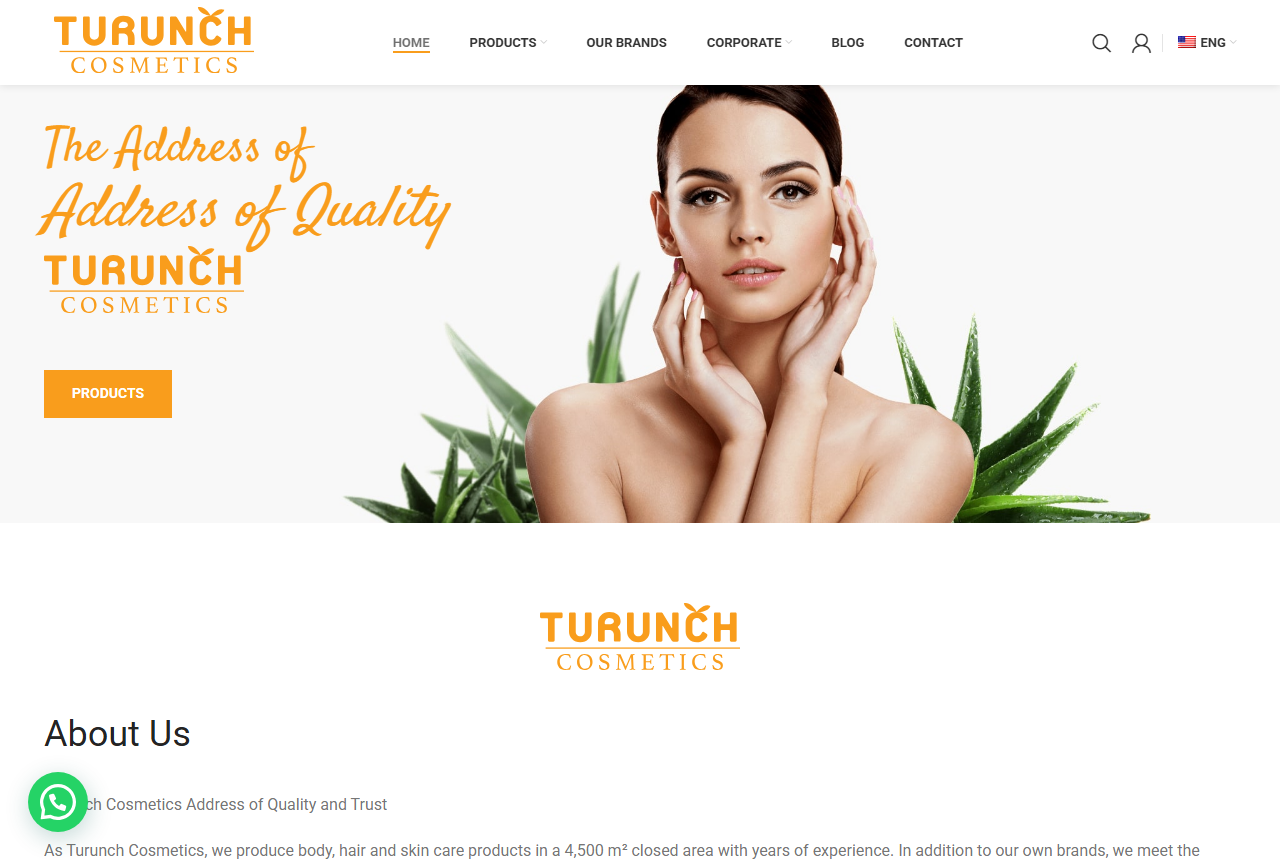
An Istanbul manufacturer-brand producing skin, body and hair care from a 4,500 square metre facility in Kagithane, running its own brand portfolio alongside private-label work and publishing ISO 9001:2015, ISO 14001, ISO 45001 and ISO 10002 certification. Website: turunch.net
What to compare when evaluating any manufacturer
A shortlist is only useful if every candidate is measured on the same dimensions. The table below is the comparison frame ORIZI Group uses internally when assessing manufacturing options, and it applies equally to a Turkish, Chinese or Malaysian supplier.
| Dimension | What to ask for | Why it decides the outcome |
|---|---|---|
| GMP certification | ISO 22716 certificate, scope and issuing body | Scope matters more than the logo — a certificate covering liquids may not cover the emulsion or aerosol you need |
| Minimum order quantity | Minimum in filled units of your chosen pack, with component minimums separated | Packaging minimums, not the factory, usually set the real first-order size |
| Formulation ownership | Written confirmation of who owns the formula and the dossier | Determines whether you can move production later without reformulating |
| Regulatory support | Which documents the factory issues, in which language, and who updates them | Your notification in your market depends on documents only the factory can produce |
| Lead time | Sampling time, production time and shipping time quoted separately | A single blended number hides where the delay will actually occur |
| Stability and compatibility testing | Protocol, duration and whether packaging compatibility is included | A formula stable in a beaker can fail in your chosen pack |
| Change control | How raw-material or supplier changes are notified to you | An unnotified ingredient substitution can invalidate a completed notification |
Two questions are worth adding for any overseas supplier specifically. Ask what happens when a batch fails your acceptance criteria after it has shipped, and ask whether a third-party pre-shipment inspection is permitted at the plant. A supplier comfortable with both answers is telling you something useful about how it runs.
The ORIZI Group perspective
Based on ORIZI Group’s own manufacturing experience in Malaysia, the factor brand owners most often underestimate on overseas sourcing is not price or quality — it is iteration speed. A first formulation rarely survives contact with the market unchanged. Shade, viscosity, fragrance load and preservative system commonly need adjustment after the first consumer feedback, and each adjustment is a new sample, a new approval and a new production slot. When the factory is a long shipment and several time zones away, each of those cycles stretches, and a product that could have been corrected in weeks takes a season.
Our practical view is that geography should follow product strategy. Where a format genuinely cannot be produced regionally — fine fragrance, pressurised aerosols, certain specialist dermocosmetic systems — sourcing from a country with that depth is a rational decision, and Turkey is a credible option in exactly those categories. Where the product is a skincare, personal-care or halal-positioned line that regional plants make well, the compounding cost of distance across sampling, freight, regulatory response and reformulation usually outweighs the unit-price gap. Many brands we work with end up running both: specialist formats sourced abroad, core lines produced close to their market.
Limitations of this guide
This is desk research, not an audit. ORIZI Group did not visit any Turkish facility, inspect any certificate, request a quotation, test a product or contact any company named here. Every capability, capacity, certification and minimum order quantity is reported as published on the company’s own website during July 2026, and website claims are marketing material until they are evidenced. Company details also change: plants are sold, certifications lapse and renew, and minimums move with capacity utilisation. Verify anything that will influence a purchasing decision directly with the manufacturer, in writing, before you commit funds.
Frequently asked questions
Is Turkey a good country to manufacture cosmetics in?
Turkey is a strong option for fragrance, aerosol and dermocosmetic formats, and for brands selling into the European Union, where the Turkey–EU customs union removes customs duty on finished cosmetics. Its manufacturers work to a regulatory framework harmonised with EU Regulation (EC) No 1223/2009, so documentation is already in a European format. It is a weaker option for brands needing frequent reformulation, small trial batches, or halal certification recognised in a specific market, where proximity matters more than capability.
What is ISO 22716 and why does it matter when choosing a factory?
ISO 22716 is the international standard for Good Manufacturing Practice in cosmetics, covering personnel, premises, equipment, raw materials, production, finished products, documentation and complaint handling. It is the certification most regulators and retail buyers expect a cosmetics manufacturer to hold. When assessing a factory, request the certificate itself rather than the claim, and check its scope: certification covering one production hall or product type does not automatically extend to the line that will make your product.
Does manufacturing in Turkey affect my NPRA notification in Malaysia?
It changes the paperwork, not the obligation. Any cosmetic sold in Malaysia must be notified to the National Pharmaceutical Regulatory Agency through the Quest3+ system by a Malaysian-incorporated holder, regardless of where it was made. From a Turkish supplier you will need the full ingredient listing in INCI order, a manufacturer’s declaration or certificate of free sale, and the safety and stability data behind the Product Information File — supplied in English, and reissued whenever the formula changes.
How do Turkish minimum order quantities compare with Malaysian ones?
They are broadly comparable at the low end: several Turkish contract houses publish minimums of 1,000 to 2,000 units per stock-keeping unit, which is a similar range to Malaysian OEM/ODM manufacturers including ORIZI Group. The difference is what surrounds the minimum. A 1,000-unit order produced regionally arrives in weeks with no import duty and allows a factory visit; the same order from Turkey carries international freight, customs clearance and a longer cash-conversion cycle, which changes the landed cost materially at small volumes.
Sources and references
- TITCK — Turkish Medicines and Medical Devices Agency, cosmetics (Turkish cosmetic regulation and notification framework)
- Regulation (EC) No 1223/2009 on cosmetic products (EUR-Lex)
- Turkish Ministry of Trade — cosmetic products sectoral guide
- Company websites of the ten manufacturers listed above, as published and captured in July 2026.
Looking Beyond Turkey for a Manufacturing Partner?
If the reason Turkey appeals is capability rather than location, it is worth checking what is available closer to your market before committing to an overseas shipment. ORIZI Group is a Malaysia-based OEM and ODM manufacturer of cosmetics, skincare and personal care products, operating to ISO 22716 cosmetic Good Manufacturing Practice and holding Halal certification — the latter recognised in the Malaysian market without the recognition questions that a foreign halal certificate can raise.
For brands that want a formulation developed rather than adapted from a catalogue, our private label and ODM development service takes a concept through formulation, stability testing, packaging selection and first production. Where the obstacle is documentation rather than production, our regulatory affairs consulting team works on product notification and dossier preparation, and our cosmetics OEM manufacturing pages set out the categories and formats we produce.
If you are weighing a Turkish quotation against a regional one and want a like-for-like comparison on landed cost, lead time and regulatory workload, contact our team with your product brief and we will give you an honest read — including the cases where sourcing abroad is genuinely the better decision.
Conclusion
Turkey earns its place on a serious sourcing shortlist for specific reasons: duty-free access to the European Union, regulatory alignment with the European cosmetics framework, unusual depth in fragrance and aerosol production, and a spread of manufacturers running from boutique laboratories to plants producing above one hundred million units a year. Those are real advantages, and for the right product they outweigh the distance.
They are not universal advantages. The decision that matters is not which country manufactures best in the abstract, but which supplier fits your format, your volume, your iteration speed and the regulator you actually answer to. Compare on those four dimensions, ask for evidence rather than claims, and the right answer — local or overseas — usually becomes obvious.
Update history: July 2026 — first publication. Ten Turkish manufacturers researched and profiled from published company sources.