Quick Answer
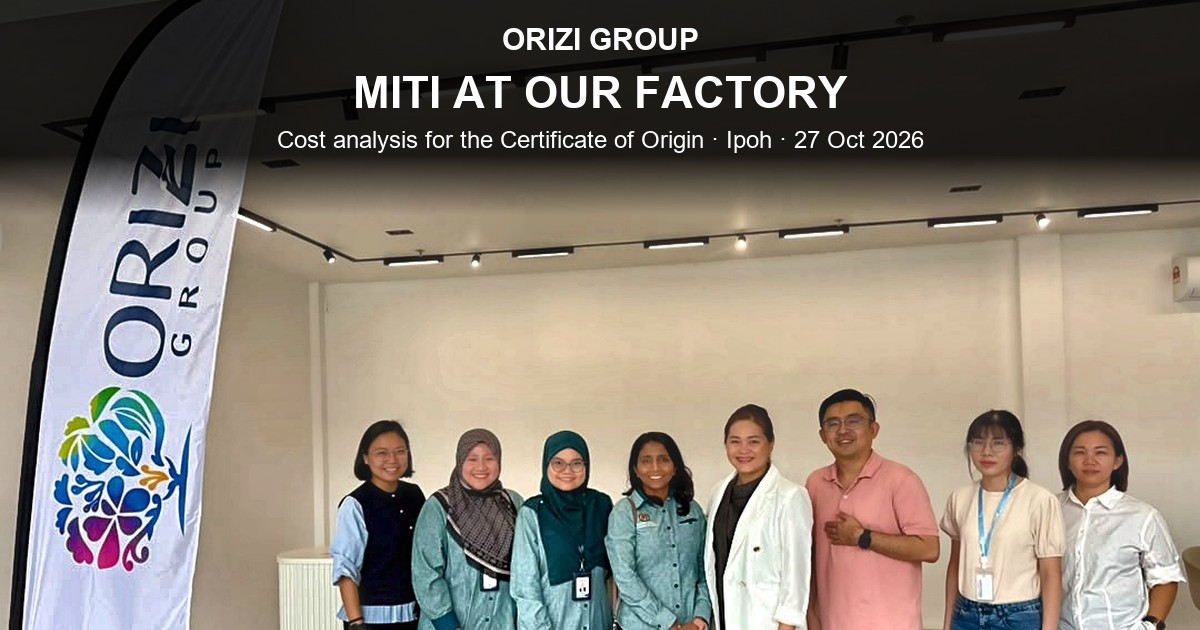
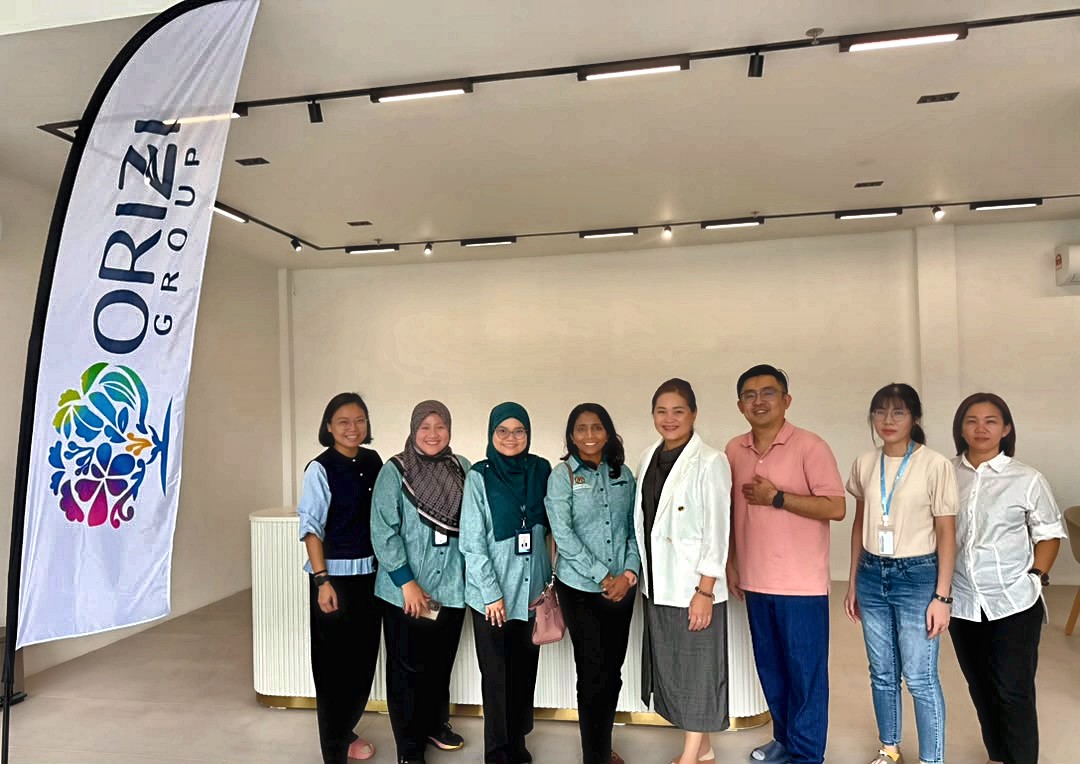
On 27 October 2026, officers from the Ministry of Investment, Trade and Industry (MITI) visited Dr Orizi’s manufacturing facility in Ipoh to carry out a cost analysis verification — the product-level step that sits behind every preferential Certificate of Origin (COO) Malaysia issues. The visit was part of the export documentation for a skincare product manufactured here for a brand owner. This article explains what MITI does for exporters, what a Certificate of Origin is, and why it decides how much duty a buyer pays on the other side.
Key Takeaways
- MITI is the sole issuing authority in Malaysia for preferential Certificates of Origin — the documents that let an importer claim reduced or zero tariffs under a free trade agreement.
- A preferential COO is approved per product, and the first step is a cost analysis: HS codes, raw material invoices, the manufacturing licence and the production flow are checked against the origin rules.
- For a brand owner, the COO is not paperwork — it is the difference between paying full import duty and paying little or none.
What Is MITI, and What Does It Do for a Manufacturer?
The Ministry of Investment, Trade and Industry (MITI) is the Malaysian ministry responsible for international trade, industrial development and the country’s free trade agreements. For a factory that exports, three of its functions matter most day to day:
- It negotiates and administers Malaysia’s free trade agreements — ATIGA within ASEAN, ASEAN–Japan, ASEAN–China, ASEAN–Korea, ASEAN–India, RCEP and others. Those agreements are what create preferential tariff rates in the first place.
- It is the issuing authority for preferential Certificates of Origin, through the online ePCO system. Applications are submitted electronically, and MITI approves the cost analysis before any COO form can be issued.
- It verifies that goods really are Malaysian — which is why officers come to the factory. Origin is not a label; it is a claim that has to hold up at the importing country’s customs.
What Is a Certificate of Origin?
A Certificate of Origin is an export document that states where goods were produced. Malaysia issues two kinds, and the difference is money:
| Type | What it does | Who issues it |
|---|---|---|
| Non-preferential COO | Proves the goods are of Malaysian origin. No tariff benefit — used for customs clearance, tenders, letters of credit and country-of-origin requirements. | Chambers of commerce and trade associations authorised by MITI (and MITI itself for shipments to the United States since 6 May 2025). |
| Preferential COO | Lets the importer claim reduced or zero import duty under a free trade agreement — Form D for ASEAN (ATIGA), Form AJ for ASEAN–Japan, Form AK, Form AI, and so on. | MITI, via ePCO. |
Why the Cost Analysis Comes First
A product does not qualify as Malaysian just because it was packed here. Under FTA rules of origin it has to meet a test — typically that it is wholly obtained in Malaysia, that the manufacturing changed its tariff classification, or that enough of its value was added locally. The cost analysis is where that is proven, product by product, with the HS code of the finished goods and of each raw material, supplier invoices, the manufacturing licence, the product catalogue and the production flow chart.
Because the approval is tied to a specific product and its bill of materials, a new export product means a new cost analysis — which is exactly what this MITI visit was about. It is a routine, product-level step in a process our export team runs regularly, not a new permission.
Why This Matters If You Are the Brand Owner
If you manufacture with us and sell abroad, the Certificate of Origin affects your landed cost directly:
- Duty saved is margin kept. A preferential COO can take an import tariff to a reduced rate or to zero in an FTA partner market. On a container of skincare, that is a real number.
- Customs move faster when origin is documented correctly from the start, instead of being queried after the goods have landed.
- Your distributor will ask for it. In most FTA markets the importer cannot claim the preferential rate without the correct form, issued before or at the time of shipment.
- “Made in Malaysia” travels well — halal credibility, GMP manufacturing and a trade-agreement network that reaches ASEAN, China, Japan, Korea, India, Australia and New Zealand.
Handling this is part of what an OEM partner is for. We have been exporting for brand owners for years — ORIZI Group has been a MATRADE member since 2014 and an FMM member — and the documentation chain sits with our export team rather than on your desk.
Related from ORIZI Group: read the Dr Orizi edition of this story, see our certifications, the products we manufacture and our OEM manufacturing services. Exporting soon? Talk to our team.
Sources & Further Reading
- Ministry of Investment, Trade and Industry (MITI) — official portal
- MITI — Non-Preferential Certificate of Origin (including US-bound NPCO issuance from 6 May 2025)
- MITI FTA portal — Malaysia’s free trade agreements and rules of origin
- MATRADE — Malaysia External Trade Development Corporation
Frequently Asked Questions
What is a Certificate of Origin (COO)?
A Certificate of Origin is an official document certifying the country in which goods were produced. A non-preferential COO proves origin for customs and commercial purposes; a preferential COO additionally allows the importer to claim reduced or zero import duty under a free trade agreement.
Who issues the Certificate of Origin in Malaysia?
MITI is the sole issuing authority for preferential Certificates of Origin, applied for through the ePCO online system. Non-preferential COs are issued by chambers of commerce and associations authorised by MITI, with MITI itself issuing non-preferential COs for shipments to the United States since 6 May 2025.
What is a MITI cost analysis?
It is the product-level assessment MITI carries out before a preferential Certificate of Origin can be issued. The exporter submits the HS codes of the finished product and raw materials, supplier invoices, the manufacturing licence, the product catalogue and the production flow chart, so that MITI can confirm the product meets the rules of origin of the relevant trade agreement.
Does ORIZI Group handle export documentation for its OEM clients?
Yes. Export documentation, including cost analysis submissions and Certificate of Origin applications for products manufactured at our facilities, is handled by our export team as part of the manufacturing relationship.