Why halal-certified K-beauty is almost impossible to import from Korea — and how Malaysian manufacturing closes the gap for brands serving Muslim consumers.
See ORIZI Group’s Halal-certified OEM manufacturing pathway — JAKIM-certified and MUI-supported for Indonesian export.
Written & researched by Lai Gek Yan, industry contributor · Technical input by ORIZI Group R&D Team · Fact-checked by Creaton Poh · Published by ORIZI Group · Last reviewed July 2026
Disclosure: This article is published by ORIZI Group and may refer to our own manufacturing experience, services and capabilities. External factual claims are supported by cited sources.
Quick Answer
Halal-certified K-beauty products are rare because most Korean cosmetic factories are not certified by halal bodies recognised in Malaysia, and retro-fitting certification onto an imported product is usually impractical. The practical route for a brand that wants Korean-style skincare with halal assurance is to manufacture the Korean-inspired formulation in Malaysia, where products can be produced halal-compliant in JAKIM halal-certified facilities and certification status is publicly verifiable.
Key Takeaways
- Searches like “halal cosmetic manufacturer in Korea” reflect a real gap: demand for halal K-beauty far exceeds certified supply.
- JAKIM (Malaysia’s Department of Islamic Development) certifies facilities and processes, not just ingredient lists — which is why certification is tied to where and how a product is made.
- Korean-style formulations are not inherently non-halal; the barrier is factory certification, not chemistry.
- Manufacturing Korean-inspired formulas in Malaysia lets a brand combine K-beauty positioning with halal assurance that imported products struggle to match.
- Halal status can be verified by anyone on the JAKIM MYeHALAL portal — a trust signal that matters to retailers and consumers alike.
Scope of this guide
This article covers halal considerations for cosmetics and skincare (not food, supplements or medical devices) in the Malaysian market context, referencing JAKIM halal certification under the Malaysian framework and NPRA cosmetic notification, as of July 2026. It is an industry explainer, not a religious ruling; brands should confirm specific requirements with JAKIM and their certification advisors.
Why is halal K-beauty so hard to find?
K-beauty dominates skincare conversation in Southeast Asia, and Malaysia and Indonesia are two of its most enthusiastic markets. Both are also majority-Muslim markets where halal assurance strongly influences purchase decisions in personal care. The result is a visible mismatch: consumers want Korean-style products, and many also want halal certainty — yet very few Korean-made products carry certification recognised in Malaysia.
The reason is structural. Halal certification recognised by Malaysian authorities attaches to the manufacturing facility and process — sourcing controls, segregation, cleaning validation, documentation — not merely to a finished product’s ingredient list. A Korean factory serving global markets has limited commercial incentive to certify an entire production line for one export region, so most never do.
What does halal certification actually cover in cosmetics?
Under the Malaysian framework administered by JAKIM (Department of Islamic Development Malaysia), halal certification for cosmetics assesses, among other things:
- Ingredient sources — no ingredients derived from prohibited sources; critical animal-derived materials (collagen, glycerin, fatty-acid derivatives) must be from permissible origins or substituted.
- Alcohol policy — restrictions on certain alcohols depending on source and function.
- Facility and process — segregation from non-halal materials, validated cleaning, and traceable documentation.
- Ongoing compliance — certification is maintained through audits, not granted once and forgotten.
This is why “is this ingredient halal?” is the wrong first question for a brand. The right question is “is the factory certified, and will my product be produced under that certified system?”
Are Korean-style formulations compatible with halal requirements?
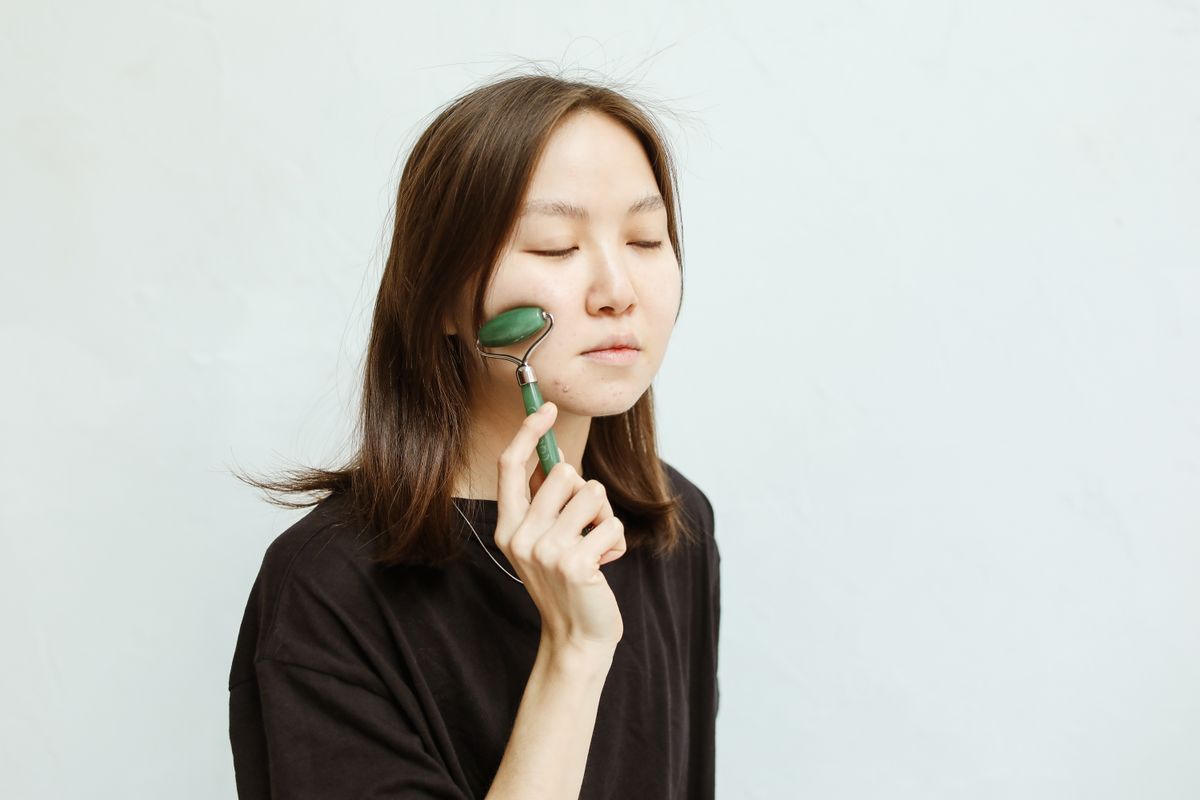
Generally yes. The actives and textures that define K-beauty — niacinamide, hyaluronic acid, centella asiatica, fermented botanical extracts, gel-cream and essence architectures — have no intrinsic conflict with halal requirements. Where a benchmark Korean formula uses a sensitive ingredient (an animal-derived collagen, certain alcohols, carmine colourant), a formulation laboratory substitutes a permissible alternative: plant-derived or synthetic equivalents exist for virtually every common case. In other words, the chemistry travels; it is the certification that does not.
How Malaysian OEMs fill the gap
The practical solution inverts the supply chain: instead of importing Korean products and hunting for halal assurance afterwards, brands develop Korean-inspired formulations in Malaysia under a certified system from day one. At ORIZI Group, cosmetic and skincare products are produced halal-compliant in JAKIM halal-certified facilities — the group routes each project to the entity holding the required credential — and Korean-style textures are among the most requested briefs in our formulation library. See the OEM skincare manufacturing page for formats, and Our Certifications for the group’s credential overview.
This route also solves the regulatory layer in the same step: cosmetics sold in Malaysia must be notified with the NPRA (National Pharmaceutical Regulatory Agency) before sale, and a local manufacturer supports notification as part of the OEM project. For trend-led launches, Korean-inspired products can move from brief to production-ready in as fast as one week on ORIZI’s A1 fast-track pathway.
What this means for your brand
A brand that combines Korean-style product identity with verifiable halal assurance occupies a position that imported K-beauty cannot easily reach. Retail buyers in Malaysia increasingly ask for halal documentation during listing; a certificate verifiable on the public MYeHALAL portal shortens that conversation. And for export to Indonesia — where halal assurance regulation has been tightening across consumer categories — starting from a certified Malaysian production base is a materially easier position than starting from an uncertified import.
ORIZI Group’s perspective
Based on ORIZI Group’s manufacturing experience, halal-related questions arrive in two forms. Retailer-driven: “the chain we’re pitching requires halal documentation — can you provide it?” And consumer-driven: founders who know their TikTok audience asks “is it halal?” in comments before asking about ingredients. What we have observed is that the question almost never comes with a willingness to give up the Korean-style product concept — founders want both. That is exactly the combination local manufacture makes possible, and it is why our R&D team maintains Korean-inspired textures inside a certified production system rather than treating “K-beauty” and “halal” as separate product lines.
Risks, limitations and common mistakes
- Confusing “halal-friendly” marketing with certification. Only a recognised certificate, verifiable on the official portal, is documentation a retailer can accept.
- Assuming an ingredient list proves halal status. Certification covers sourcing, process and facility — a clean-looking INCI list is not evidence.
- Implying Korean origin on a Malaysian-made product. “Korean-inspired” is honest positioning; a false “Made in Korea” claim is a labelling violation.
- Leaving certification to the end. Ingredient substitutions are cheap during development and expensive after packaging is printed. Raise halal requirements in the first briefing.
- Overstating claims. Halal certification is an assurance of permissibility, not a beauty claim; keep marketing language factual.
Frequently asked questions
Can K-beauty products be halal?
Yes. Korean-style formulations contain no inherently prohibited elements; sensitive ingredients can be substituted with permissible alternatives. The practical barrier is that few Korean factories hold certification recognised in Malaysia, which is why halal K-beauty is usually produced by certified manufacturers outside Korea.
Is there a halal cosmetic manufacturer in Korea?
A small number of Korean manufacturers have pursued halal certification from various bodies, but certified capacity is limited and recognition in Malaysia must be checked case by case. Most brands targeting Malaysian and Indonesian consumers find it more practical to manufacture Korean-style formulations in a JAKIM halal-certified facility in Malaysia.
How do I verify a manufacturer’s halal certificate in Malaysia?
Search the manufacturer or brand on the JAKIM MYeHALAL portal (myehalal.halal.gov.my), the official public verification database for Malaysian halal certification. A genuine certificate holder will appear there; treat any certificate that cannot be verified with caution.
Does halal certification replace NPRA notification?
No. They are separate requirements: NPRA cosmetic notification is the regulatory precondition for selling any cosmetic in Malaysia, while halal certification is a voluntary assurance scheme. A halal-positioned product needs both.
Can a halal Korean-style product still launch quickly?
Yes, when the formulation starts inside a certified system. At ORIZI Group, Korean-inspired ready formulas produced halal-compliant in JAKIM halal-certified facilities can reach production-ready in as fast as one week on the A1 fast-track pathway, with starter runs of 50 units available through Ready2Brand.
Sources & references
- JAKIM MYeHALAL — official halal verification portal (Malaysia)
- NPRA — Cosmetic regulatory information (Malaysia)
- MFDS — Ministry of Food and Drug Safety, Korea (Korean cosmetics regulator)
- ORIZI Group first-party manufacturing and enquiry observations (2026)
Update history
22 July 2026 — First published.
Building a halal K-beauty-inspired brand? Explore OEM skincare manufacturing formats or send your benchmark product for a feasibility review at [email protected].