Vietnam’s largest beauty exhibition booked a record 17,600 sqm this year. From our vantage point as a Malaysian OEM, the floor plan mattered more than the floor size — and it changes what we tell brand owners to prepare before they scope a project.
Written & researched by Fenny Yip, Business Operations & Contributing Writer, Dr Orizi (M) Sdn. Bhd. · Technical input by ORIZI Group R&D Team · Fact-checked by Creaton Poh · Published by ORIZI Group · Last reviewed August 2026
Disclosure: This article is published by ORIZI Group and may refer to our own manufacturing experience, services and capabilities. External factual claims are supported by cited sources.
Quick answer: what did Vietbeauty & Cosmobeauté Vietnam 2026 actually change?
Vietbeauty & Cosmobeauté Vietnam & Beautycare Plus 2026, held 23–25 July 2026 at the Saigon Exhibition & Convention Center in Ho Chi Minh City, moved the ASEAN beauty supply chain to the centre of the show: a dedicated Beautycare Plus zone for ingredients, packaging, OEM/ODM manufacturing and private label, a new livestream-commerce zone, and a main-stage session on cosmetic notification and intellectual property. For Malaysian brand owners, that means sourcing, content and compliance now have to be scoped together rather than in sequence.
Key takeaways for brand owners
- The show ran 23–25 July 2026 at SECC, Ho Chi Minh City, with 750+ exhibitors from 25 countries and 3,500+ brands across a record 17,600 sqm (organiser figures).
- Supply chain is no longer a side hall. Beautycare Plus put ingredients, packaging, OEM/ODM and private label in one dedicated zone.
- Livestream selling became official show infrastructure, not a marketing afterthought.
- Cosmetic notification and intellectual property got main-stage time — a sign that documentation readiness is now a commercial gate, not paperwork.
- For us, the practical consequence is simple: a brief that arrives with a complete dossier moves roughly one development cycle faster than one that does not.
Scope of this article
This is our reading of a regional trade show and what it implies for manufacturing briefs — not an audited market study and not a review of any exhibitor. The event figures quoted are the organiser’s own published numbers. Our commentary about development timelines and dossier readiness is first-party: it reflects how briefs behave when they reach our team at Dr Orizi (M) Sdn. Bhd., ORIZI Group’s cosmetics arm, and is not a claim about the industry as a whole. Definitions used below: OEM (Original Equipment Manufacturing) is production to the brand owner’s own formula; ODM (Original Design Manufacturing) is production using the manufacturer’s developed formula.
Signal 1: why does a bigger supply-chain zone matter to a Malaysian brand owner?
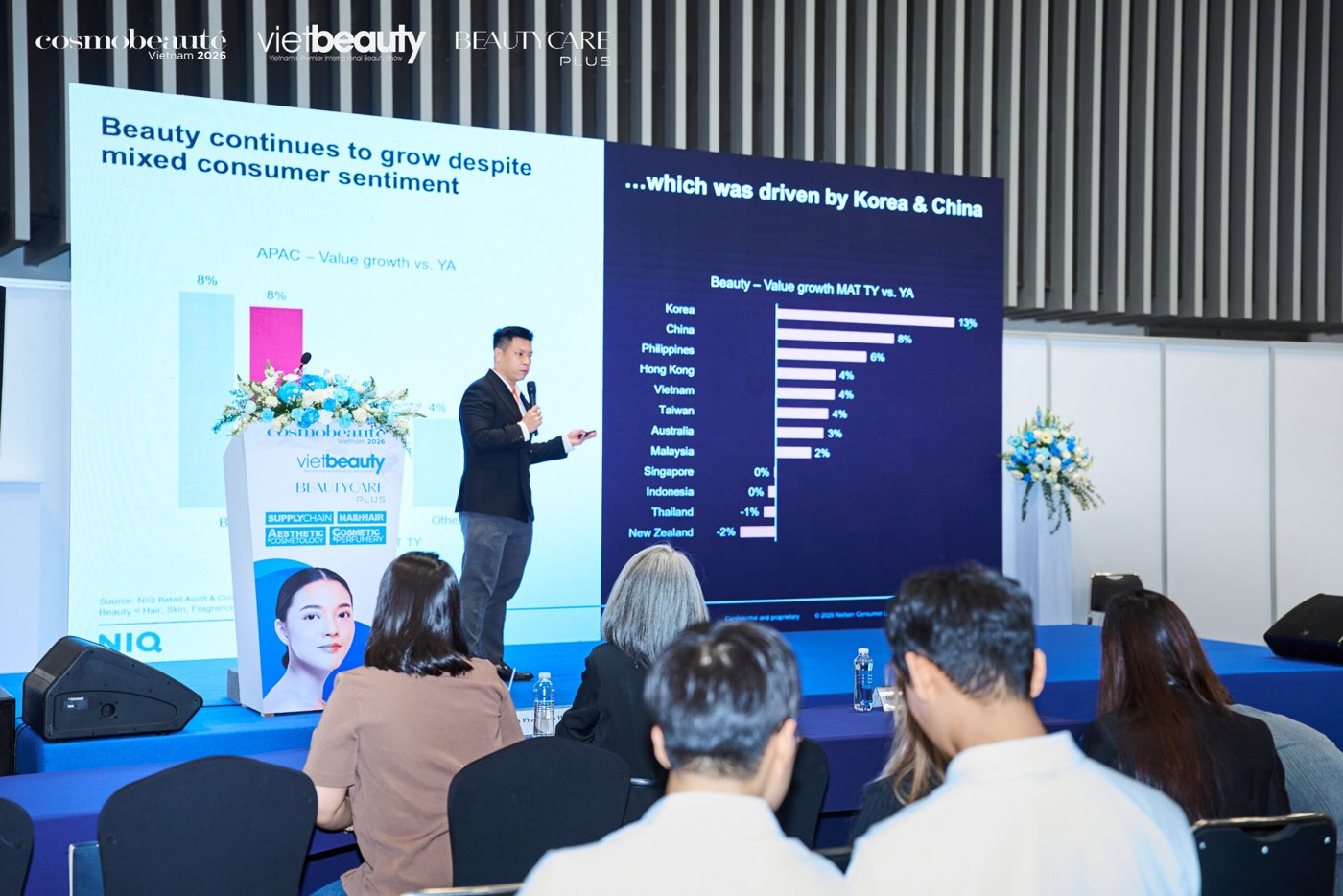
It matters because it changes who a brand owner meets first. Beautycare Plus ran as a dedicated beauty supply-chain zone at the 2026 edition, covering ingredients, packaging, OEM/ODM manufacturing and private label production and explicitly built to connect international suppliers with Vietnamese partners.
Historically, a Malaysian brand owner went to a regional show to find distributors and came home with a sales pipeline. Increasingly they come home with a sourcing question instead: should the next batch be made where it is sold? That is a legitimate question and we would rather brand owners ask it early than discover the cost gap after launch.
Our own answer is not “always Malaysia”. The honest framing is a trade-off table, and the deciding variable is usually regulatory reach rather than unit price:
| Decision factor | Manufacture in the market you sell in | Manufacture in one ASEAN base and export |
|---|---|---|
| Landed cost | Lower on freight and duty for that one market | Better unit economics once you supply three or more markets |
| Regulatory work | One notification route, repeated per market | One dossier prepared once, adapted per market |
| Halal scope | Depends on local certification availability | Malaysian JAKIM certification is recognised across several export markets |
| Change control | Harder — each site holds its own version | Easier — one master formula and one batch record |
| Best suited to | Single-market, high-volume, price-led lines | Multi-market brands and lines with claims to defend |
If your roadmap is one market, local manufacturing is often right. If it is three, an export-oriented OEM base in Malaysia usually costs less in total once regulatory duplication is counted — and for brands that need halal-certified cosmetics manufacturing, that calculation shifts further.
Signal 2: does livestream commerce change anything on the factory side?
Yes, and not in the way most brand owners expect. The 2026 edition introduced the Cosmobeauté Live Zone, a managed livestream commerce area run with Vietnamese e-commerce partner ZAFAGO, giving exhibitors access to beauty KOLs and KOCs and live selling during the show.
The manufacturing consequence is demand shape, not marketing. A livestream converts a month of demand into an afternoon. What breaks first is rarely the formula — it is packaging lead time, batch sizing and the ability to release stock quickly against quality control.
Three things we ask a brand owner to confirm before they build a launch around live selling:
- Packaging lead time. Custom components typically take longer than the fill itself. If the component is imported and single-sourced, a viral moment becomes a stockout.
- Batch sizing logic. A single large batch is cheaper per unit but slower to replenish. Two smaller staggered batches usually serve a live-selling launch better.
- Claims discipline under pressure. Whatever a host says on a livestream is a claim. It must match the substantiation on file, or the notification dossier and the sales script are describing two different products.
Signal 3: why was compliance given main-stage time?
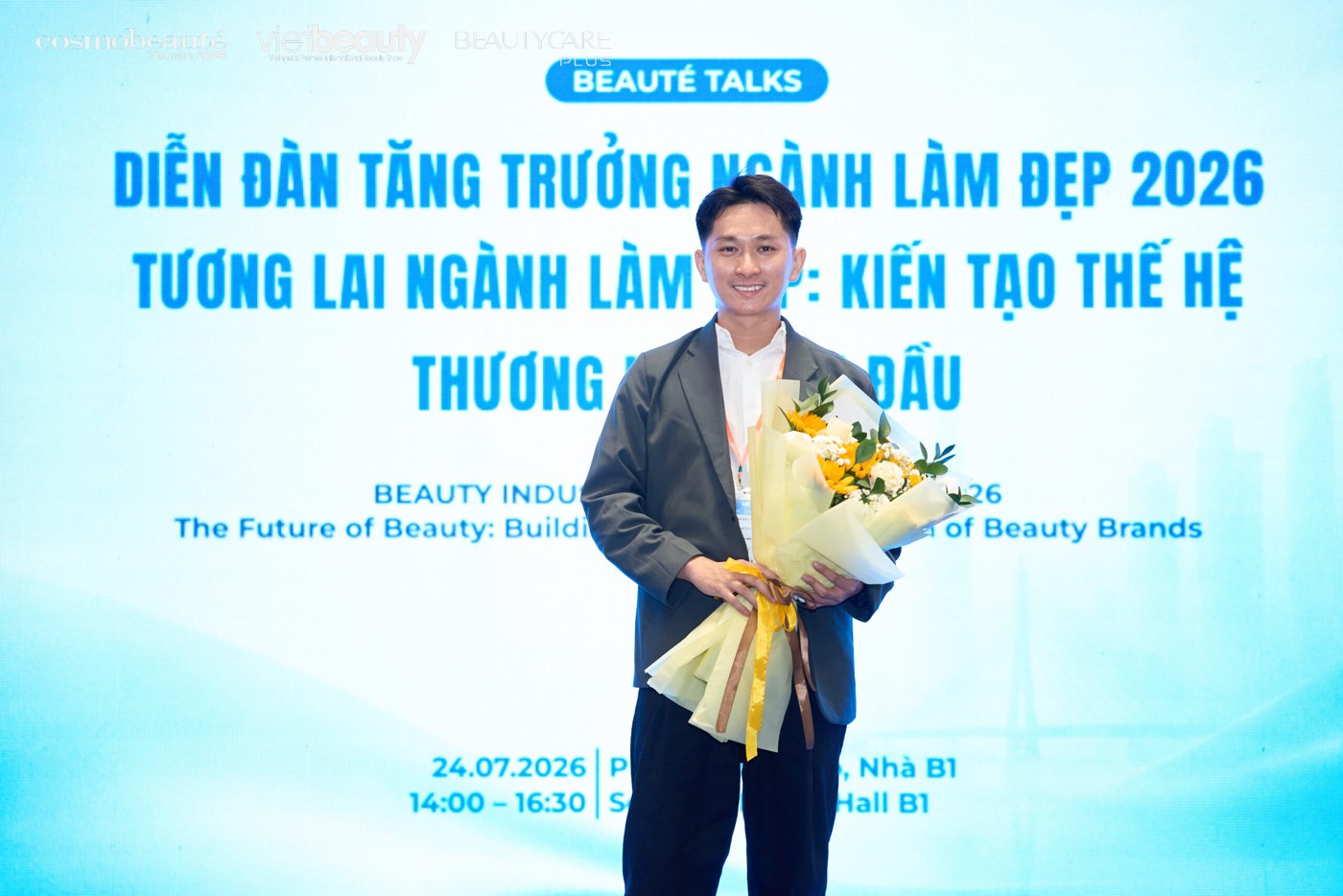
Because compliance has become a market-access asset rather than a cost. At Beauté Talks 2026, lawyer Do Van Luan of L&P Law Firm addressed intellectual property protection, ingredient information control and product notification procedures, and framed proactive compliance as the foundation for protecting IP, building trust and entering new markets.
That framing matches how ASEAN cosmetic regulation actually works. In Vietnam, cosmetic products are placed on the market through a notification route administered by the Drug Administration of Vietnam under the Ministry of Health, operating within the ASEAN Cosmetic Directive framework. Malaysia uses the same harmonised framework through the National Pharmaceutical Regulatory Agency (NPRA). The practical consequence for a brand owner is that the underlying dossier — full ingredient listing with INCI names, safety assessment, claims substantiation, manufacturer details and finished-product specification — is largely portable between ASEAN markets, even though each notification is filed separately.
Brands that treat that dossier as a launch chore rebuild it per market. Brands that treat it as an asset file it once and adapt it. The second group expands faster, and it is visible from where we sit.
The ORIZI perspective: what we would tell a brand owner to do this quarter
Based on our manufacturing experience at ORIZI Group, the briefs that stall are almost never the technically difficult ones. They stall on missing inputs. Across the cosmetics briefs our team handles, the recurring blockers are the same three: an incomplete ingredient and safety file, a packaging component chosen before the fill compatibility was checked, and a claim that marketing has already used publicly but no one has substantiated.
So our practical recommendation after this edition is unglamorous:
- Build the dossier before you shop. Assemble the full ingredient list, safety assessment and claims substantiation in ASEAN Cosmetic Directive format first. It is the single fastest way to shorten a development cycle, because it removes the back-and-forth that normally consumes the first month.
- Decide your market count before your manufacturing base. One market and three markets point to genuinely different answers. Decide the roadmap, then choose the base.
- Pressure-test packaging against your launch channel. If live selling or a marketplace campaign is in the plan, size batches and component orders for a spike, not an average.
If you want a second opinion on which of those three is your actual bottleneck, that is the kind of question our team answers in a short feasibility conversation — no formulation work required to have it.
Limitations and what we are not claiming
The exhibitor, brand and floor-area figures above are the organiser’s published numbers and have not been independently audited; the 15,000 trade-visitor figure was published as a pre-show projection and no audited attendance count had been released when this article was written. Our team follows this show through the organiser’s published record and our supplier network rather than reporting from a stand at this edition. Development timelines, batching guidance and regulatory routes vary by product format, market and claim type — nothing here should be treated as regulatory advice for a specific product. Confirm current Vietnamese notification requirements with the Drug Administration of Vietnam or a qualified local regulatory consultant before committing to a launch date.
Frequently asked questions
Should a Malaysian brand manufacture in Vietnam to sell in Vietnam?
Only if Vietnam is likely to stay your dominant market. Local manufacturing reduces freight and duty for that one market, but it duplicates regulatory and quality-system work each time you add another. If your roadmap covers three or more ASEAN markets, one export-oriented base with a single master formula and one adaptable dossier usually costs less in total.
How long does a cosmetics OEM project usually take?
It varies by format and claim complexity, but the controllable part is the start. Projects that arrive with a complete ingredient list, safety assessment and packaging decision move materially faster than those that assemble those inputs during development, because the first cycle is spent gathering information rather than formulating. Stability testing, custom packaging tooling and market-specific notification are the usual extenders.
Is a cosmetic dossier prepared for Malaysia usable in Vietnam?
Largely, yes. Both markets operate within the ASEAN Cosmetic Directive framework, so the core technical file — INCI ingredient listing, safety assessment, claims substantiation, manufacturer details and product specification — is broadly portable. The notification itself is still filed separately in each country, and local language, labelling and responsible-party requirements differ, so budget for adaptation rather than a straight copy.
Does a livestream launch need a different manufacturing plan?
It needs a different replenishment plan more than a different formula. Live selling compresses demand into a short window, so packaging lead time, component sourcing and batch sizing are the constraints that bite first. Staggered smaller batches and a second-sourced packaging component are usually more useful than a larger single production run.
Sources and further reading
- Official 2026 show announcement, Informa Markets Vietnam — exhibitor, brand, floor-area and market figures.
- Beauté Talks 2026 official report — speakers, quotes and session themes.
- Cosmobeauté Live Zone announcement — livestream commerce format and the ZAFAGO partnership.
- National Pharmaceutical Regulatory Agency (NPRA), Malaysia — Malaysian cosmetic notification requirements.
- Vietbeauty in the Cosmoprof ASEAN network.
- Further reading — a fuller third-party recap of the same edition: Vietbeauty & Cosmobeauté Vietnam 2026 on OEMHallmark.
- Related ORIZI reading: what Cosmoprof CBE ASEAN 2026 signals for Malaysian OEM manufacturers, Korean OEM versus Malaysian OEM for a K-beauty-inspired range, and how to start a private label skincare brand in Malaysia.
Update history
25 July 2026 — first published, covering the 23–25 July 2026 edition at SECC, Ho Chi Minh City. Last reviewed August 2026.