Poland has become one of the European Union’s largest cosmetics production bases, and a substantial part of that capacity is sold as contract manufacturing rather than under the factory’s own label. This guide maps that market for brand owners: who the working OEM and ODM suppliers are, what regulatory framework their output sits inside, and what to compare before committing a first order.
Written & researched by Edan Foo, ORIZI Group industry writer · Technical input by ORIZI Group R&D Team · Fact-checked by Creaton Poh · Published by ORIZI Group · Last reviewed July 2026
Disclosure: This article is published by ORIZI Group and may refer to our own manufacturing experience, services and capabilities. External factual claims are supported by cited sources, and no company named here has a commercial relationship with ORIZI Group.
Quick answer
Poland’s OEM and ODM cosmetics market divides into two groups: large FMCG manufacturers producing private label for European retail chains, and mid-sized laboratories developing custom formulations for independent brands. Suppliers including Passage Cosmetics Laboratory, NISHA Manufacturing, CosmoLabs, Clover Cosmetics and Your Private Label publish contract-manufacturing offers, work to ISO 22716 cosmetic Good Manufacturing Practice, and produce under Regulation (EC) No 1223/2009. Published bulk minimums at the smaller laboratories start around 25 to 60 kilograms, which is low by European standards.
Key takeaways
- Poland offers European Union manufacturing at a cost level below Germany, France or the Netherlands, which is why several European retailers source private label there.
- Two distinct supplier types exist, and choosing the wrong one wastes months: retail-scale FMCG groups versus boutique development laboratories.
- ISO 22716 is the common quality baseline, but certification claims should be verified against a named certifying body before you rely on them.
- An EU cosmetic notification does not transfer to other markets — selling the same formula in Malaysia, the Gulf or the United Kingdom requires a separate submission in each.
- Distance changes the project economics: longer replenishment cycles and more inventory in transit, which matters more than unit price for many brands.
Table of contents
- Why the Polish market matters to brand owners
- The regulatory framework behind Polish cosmetics manufacturing
- Ten OEM and ODM cosmetic suppliers in Poland
- What to compare when evaluating any manufacturer
- Frequently asked questions
- Looking beyond Poland for a manufacturing partner?
Why the Polish market matters to brand owners
Poland’s cosmetics industry grew by supplying European retail. Discount and drugstore chains needed dependable, competitively priced own-label skincare and personal care in volume, and Polish plants built the capacity, documentation systems and cost discipline to serve them. The result is a manufacturing culture unusually comfortable with contract work: formulating to someone else’s brief, meeting an external specification, and delivering a complete technical file at handover.
For a brand owner outside Europe, three consequences follow. A European Union origin claim carries commercial weight in several export markets, particularly across Asia and the Gulf. The regulatory baseline is high, because everything produced for the EU market must satisfy a framework that restricts ingredients more tightly than several regional regimes. And the price position sits meaningfully below western Europe while the quality systems remain equivalent, which is the specific arbitrage that makes Poland interesting rather than merely cheap.
The trade-off is scale mismatch. Poland’s largest manufacturers are built around retail-chain order sizes, while its most flexible laboratories are small enough that a large programme would strain them. Identifying which group a supplier belongs to before the first call saves a great deal of time.
The regulatory framework behind Polish cosmetics manufacturing
Cosmetics manufactured in Poland are governed by Regulation (EC) No 1223/2009, the European Union’s cosmetic products regulation. Before any product is placed on the EU market it requires a Product Information File, a Cosmetic Product Safety Report prepared by a qualified safety assessor, and notification through the European Commission’s Cosmetic Products Notification Portal. A Responsible Person established in the European Union must be named on the packaging and must hold the file.
Poland adds a national layer on top of the EU framework. Under the Act of 4 October 2018 on cosmetic products, manufacturers must register in the national Cosmetic Products Register, and market surveillance is conducted by the Chief Sanitary Inspectorate, known in Polish as Główny Inspektorat Sanitarny or GIS, working alongside the Trade Inspection. Cosmetic Good Manufacturing Practice is defined by ISO 22716, the international standard covering personnel, premises, documentation, production and quality control in cosmetics manufacturing.
Two practical points follow for a brand owner. First, if your company is not established in the EU, someone else must act as Responsible Person, and the contract should state clearly who owns the dossier if the relationship ends. Second, EU compliance is not global compliance: a product notified in Europe still requires separate notification in Malaysia, the United Kingdom, the Gulf states and elsewhere, each with its own ingredient restrictions and documentation format.
Ten OEM and ODM cosmetic suppliers in Poland
The suppliers below all manufacture in Poland and publicly offer contract manufacturing, private label or ODM services. Each website was opened and captured in July 2026. Listed alphabetically; this is a market map, not a ranking, and ORIZI Group has no commercial relationship with any company named.
Chantal
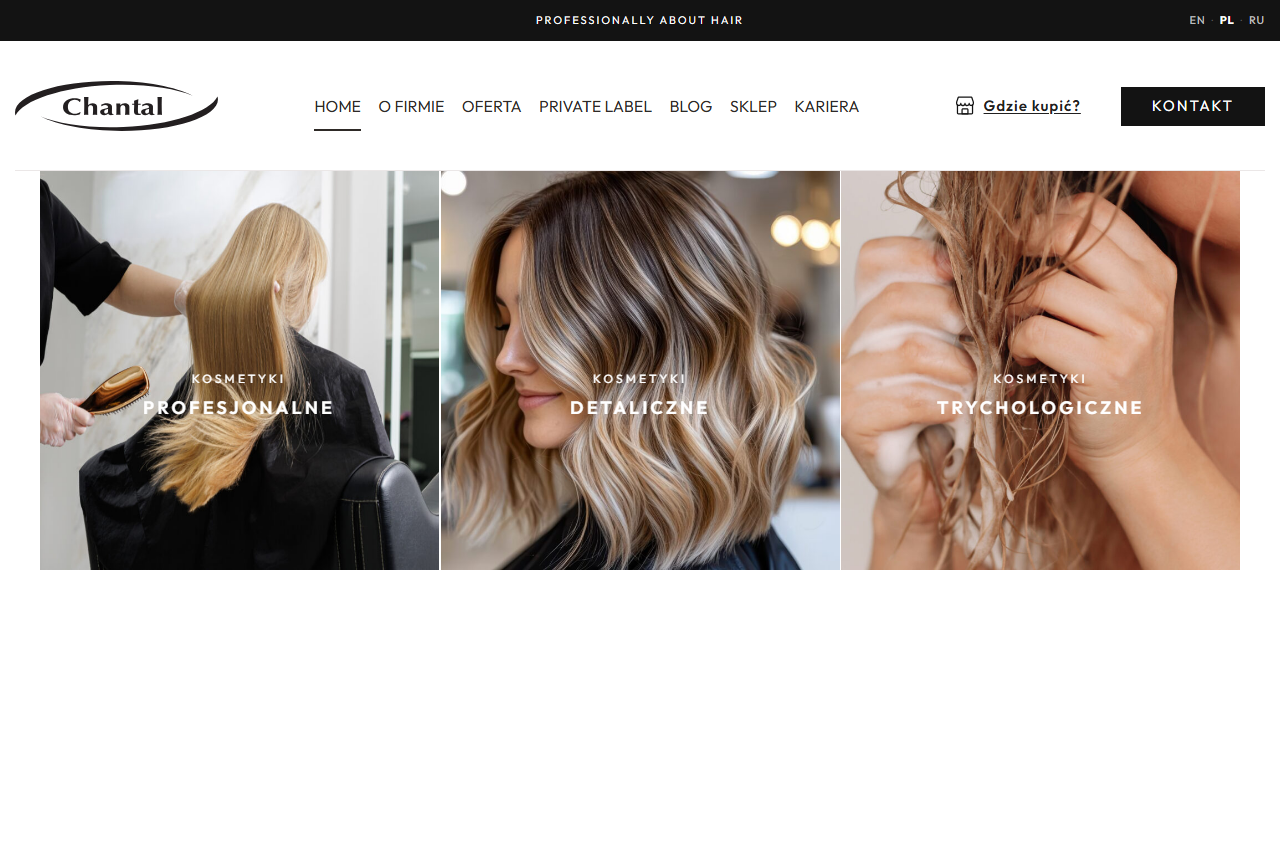
A hair-cosmetics manufacturer based at Wiązowna near Warsaw, operating since 1989 across five of its own salon and retail brands, with private label offered as a distinct service. Its category depth sits in colourants, bonding treatments and trichological scalp products.
Website: chantal.com.pl
Clover Cosmetics
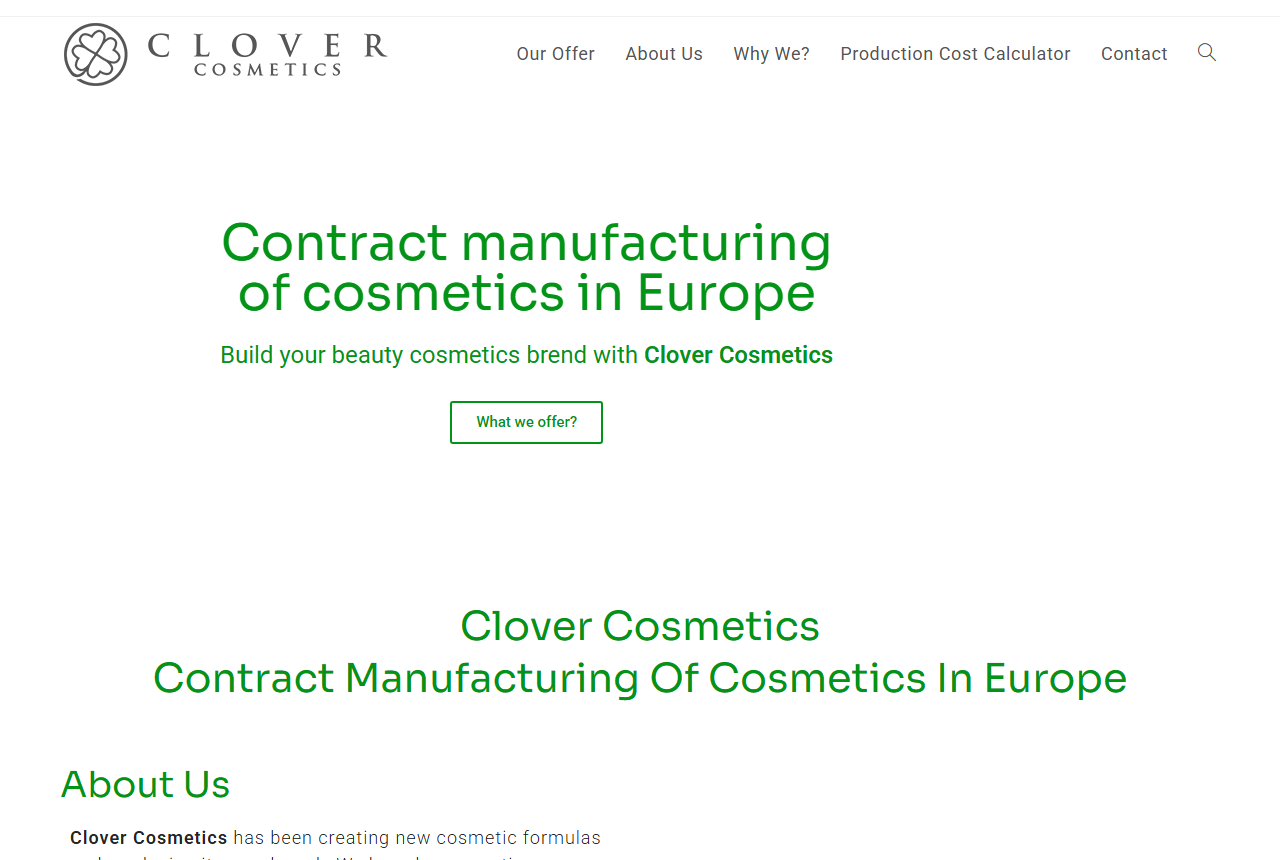
A Silesian contract manufacturer marketing internationally in English, publishing production from 25 kilograms of bulk and private-label runs from approximately 1,000 pieces across face, body, hair, men’s, baby and foot care.
Website: privatelabelscosmetics.com
CosmoLabs
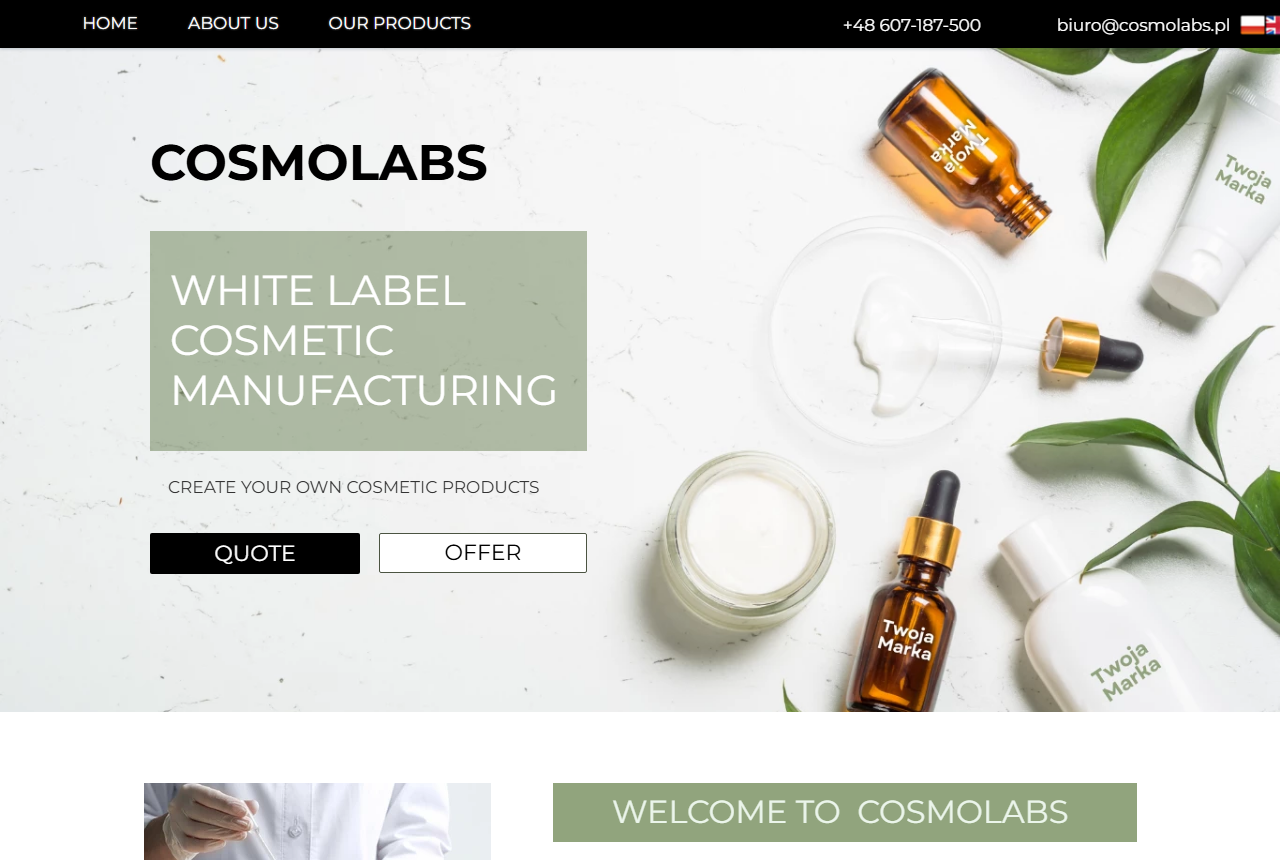
A white-label manufacturer in Toruń producing skincare, hair care and hygiene formats, stating ISO 22716 Good Manufacturing Practice certification issued by DEKRA and a willingness to run small batches.
Website: cosmolabs.pl
Cristal Cosmetics Laboratory
A family-owned Kraków laboratory offering contract manufacturing for both cosmetics and dietary supplements, together with formula development, product registration and safety testing.
Website: cristallaboratory.pl
Dr. Miele Cosmed Group
Formerly Global Cosmed and renamed following a 2024 merger, this Warsaw Stock Exchange-listed FMCG group runs plants at Radom, Jawor and Gniezno, producing private label for major European retailers alongside its own brands.
Website: dr-miele.eu
NAAN Laboratorium Biokosmetyki
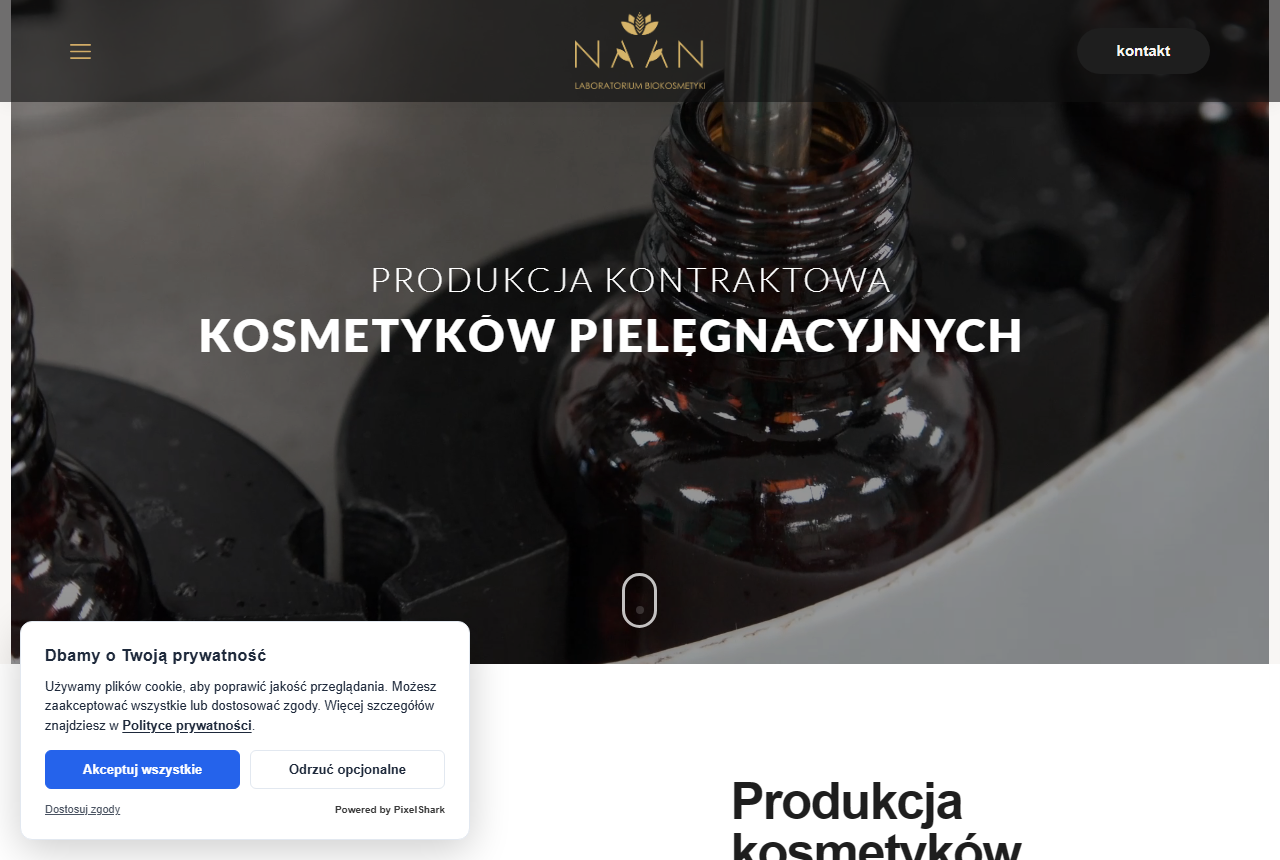
A Łódź-based contract laboratory covering formula development, testing, documentation, production and logistics, with production stated from 60 kilograms and no long-term commitment required.
Website: naanlab.pl
NISHA Manufacturing
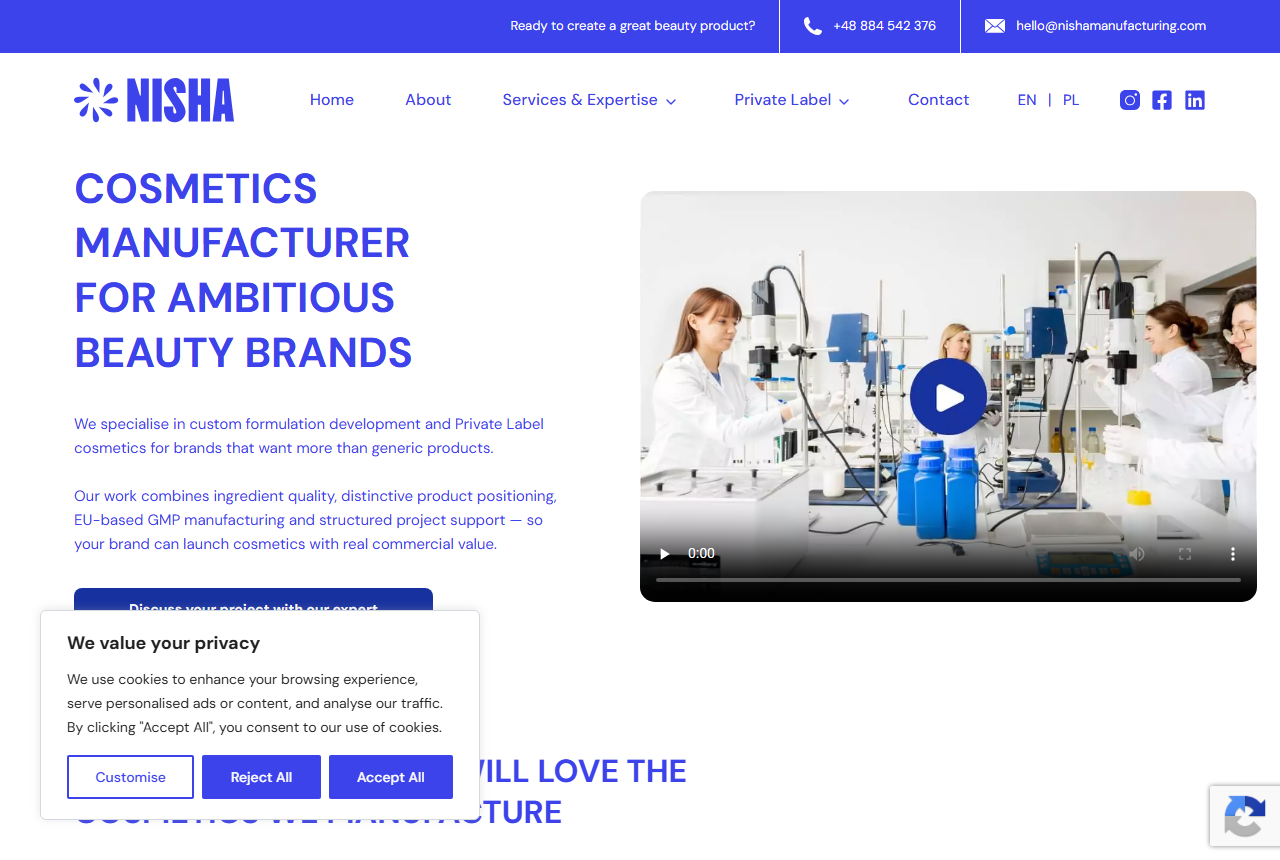
A custom-formulation and private-label manufacturer at Puszczykowo near Poznań, with an in-house research team, a stated library of over 10,000 tested ingredients and a facility audited annually against ISO 22716.
Website: nishamanufacturing.com
Passage Cosmetics Laboratory
Operating since 1988 near Łódź, Passage covers skincare, hair care, body care, colour cosmetics and vegan lines, and publishes ISO 9001, ISO 22716, ISO 14001, ISO 45001 and a 2025 Halal certificate.
Website: passage.pl
Popławska Group
A family group near Wrocław manufacturing professional and home-care cosmetics, liquid supplements, active raw materials, and treatment devices and disposables for beauty salons, with its own research laboratories.
Website: poplawskagroup.pl
Your Private Label
The private-label and OEM/ODM arm of ŚWIT Group, headquartered in Warsaw with plants at Halinów and Morąg, producing cosmetics, fragrance and household chemistry, and citing GMP, ISO 22716 and ISO 9001.
Website: yourprivatelabel.eu
What to compare when evaluating any manufacturer
Country of manufacture is one variable among many, and rarely the decisive one. The comparison below is the framework ORIZI Group applies when assessing whether a manufacturing partner fits a given project, and it works equally well for a Polish supplier, a Korean one or a Malaysian one.
| What to compare | What to ask for | Why it decides the project |
|---|---|---|
| Minimum order quantity | The minimum in filled units of your actual pack, not bulk kilograms | Packaging minimums, not bulk, usually set your real first order and cash requirement |
| Certification | Certificate number, issuing body and expiry date for each claim | An unattributed “GMP compliant” claim cannot be used in a regulatory submission |
| Formula ownership | Written agreement on who owns a jointly developed formula | If the factory owns it, you cannot move production without reformulating |
| Documentation scope | What the factory provides for a non-EU regulatory submission | An EU dossier needs reformatting for other markets; someone must do that work |
| Total lead time | Approved sample to goods received, including freight and clearance | Distance, not production speed, usually dominates the replenishment cycle |
| Stability and compatibility testing | Whether it is included, and at what temperature and duration | Skipped testing surfaces as failures after launch, at far higher cost |
| Landed cost | Cost per saleable unit delivered to your market, all inclusive | Ex-works price omits freight, duty, testing and notification, which can reverse a comparison |
Based on ORIZI Group’s manufacturing experience, the two items most often underestimated are packaging minimums and documentation scope. A founder plans around a laboratory’s low bulk minimum, then discovers that a custom bottle carries a minimum of several thousand units; or assumes the factory’s technical file can be submitted as-is to a regulator in another region, when in practice it must be rebuilt to that regulator’s format. Both are avoidable by asking the questions above before development begins rather than after.
Frequently asked questions
Is manufacturing cosmetics in Poland cheaper than in western Europe?
Generally yes on labour and overhead, which is why several western European brands and retailers run Polish contract production. The gap narrows on raw materials and packaging, which trade at similar prices across the single market, and it can disappear on complex formulations where laboratory capability rather than hourly cost decides the outcome. Compare landed cost per saleable unit on your actual specification rather than relying on country-level cost generalisations.
What is ISO 22716 and why does it matter for a cosmetics supplier?
ISO 22716 is the international standard for cosmetic Good Manufacturing Practice, covering personnel, premises, equipment, raw materials, production, documentation and quality control. It is the quality baseline regulators and retailers expect from a cosmetics manufacturer. When a supplier states ISO 22716 certification, ask for the certificate number, the issuing body and the expiry date, because an unverified claim cannot support a regulatory submission.
Does an EU cosmetic notification allow me to sell in Malaysia?
No. Notification through the European Union’s Cosmetic Products Notification Portal has no legal effect in Malaysia. A product must be notified separately with the National Pharmaceutical Regulatory Agency, known as NPRA, through its Quest3+ system before it can be supplied in Malaysia. The European technical file supplies most of the underlying data, but it must be reformatted and the formula checked against ASEAN Cosmetic Directive ingredient restrictions, which differ from EU restrictions in several categories.
How long does a first production project usually take with a European supplier?
Formulation and sampling typically run around eight to sixteen weeks, depending on complexity and how many revision rounds are needed, followed by stability testing, packaging procurement, production and shipping. For a brand importing from Europe into Southeast Asia, a realistic full cycle from brief to goods in warehouse is several months. Build launch plans around that cycle rather than around production time alone.
Looking beyond Poland for a manufacturing partner?
Poland is a strong option when European Union origin, EU documentation and access to European retail matter most. It is a weaker one when Halal certification recognised by JAKIM is essential, when you need to visit the plant and iterate quickly, or when your first order is genuinely small and the freight cycle would tie up working capital you cannot spare.
For brands selling into Southeast Asia and the Gulf, manufacturing closer to the market often resolves those constraints. ORIZI Group is a Malaysia-based OEM and ODM manufacturer operating under ISO 22716 cosmetic Good Manufacturing Practice with Halal certification, serving cosmetic, personal care, health, nutrition and medical-care formats through its relevant companies. Brands developing a new range from a concept brief can start with our private label and ODM development capability, where formulation, packaging selection and pilot batches are handled in one place.
Where the harder problem is documentation rather than production — ingredient restrictions, notification dossiers, or preparing a formula developed abroad for a Southeast Asian submission — our regulatory affairs consulting team works through those requirements before they become launch delays. If you are still comparing options, our roundup of OEM and ODM cosmetic suppliers in China covers the main Asian alternative to European sourcing. To discuss a specific project, feasibility or timeline, contact our team with your product brief.
Conclusion
Poland offers something few manufacturing bases do: European Union production standards and documentation at a cost structure that still works at mainstream retail price points. The ten suppliers profiled here span retail-scale private label through to laboratories that will develop a formula from a single-page brief, and the practical task for a brand owner is matching the supplier type to the project rather than chasing the lowest quoted price. Whichever region you choose, compare on landed cost, verified certification, documentation scope and formula ownership — those four items decide whether a manufacturing relationship survives its second order.
Sources: each company’s official website as reviewed in July 2026; Regulation (EC) No 1223/2009 (EUR-Lex); European Commission Cosmetic Products Notification Portal; the Polish Act of 4 October 2018 on cosmetic products; ISO 22716:2007. Limitations: no factory audits, certificate inspections, quotations or product testing were carried out for this article, and capability and certification claims are reported as published by each company. Verify all details directly with any manufacturer before entering an agreement.
Update history: 26 July 2026 — first publication.