China is the largest cosmetics manufacturing base in the world, and for many brand owners it is the first stop when they begin sourcing OEM or ODM production. This guide takes a market-landscape view: it explains why the Chinese manufacturing sector matters to brand owners, how cosmetics are regulated there, profiles eight export-ready suppliers, and sets out a practical way to compare any manufacturer — wherever it is based.
Written & researched by Edan Foo, Manufacturing & Product Development Writer · Technical input by ORIZI Group R&D Team · Fact-checked by Creaton Poh · Published by ORIZI Group · Last reviewed July 2026
Disclosure: This article is published by ORIZI Group and may refer to our own manufacturing experience, services and capabilities. External factual claims are supported by cited sources.
Quick answer
China is the world’s largest cosmetics OEM/ODM manufacturing base, concentrated in the Guangzhou and Guangdong region, offering contract manufacturing across skincare, colour cosmetics, hair and personal care. Brand owners can source finished products from established, export-oriented factories that publish GMPC and ISO 22716 credentials. Cosmetics made and sold in China fall under the National Medical Products Administration (NMPA) and its Cosmetic Supervision and Administration Regulation (CSAR); products made purely for export must meet the destination market’s rules instead. The eight suppliers below were verified with live website screenshots in July 2026.
Key takeaways
- China’s Guangzhou/Guangdong cluster is the deepest cosmetics manufacturing ecosystem in the world, with wide capacity across skincare, colour cosmetics, hair and personal care.
- Most export-oriented factories publish GMPC and/or ISO 22716 credentials, which are the baseline quality-system references a brand owner should look for.
- Domestic sale in China is governed by the NMPA under CSAR (in force since 2021); export production is governed by the destination market’s regulator instead.
- Cost and scale are China’s strengths; lead time, small-batch flexibility, Halal certification and proximity are where a Malaysia-based partner such as ORIZI Group can be the better fit.
- Evaluate any manufacturer on the same criteria — verified certifications, factory ownership, MOQ, lead time, R&D depth and regulatory support — rather than on marketing claims.
Table of contents
- Why China’s cosmetics manufacturing market matters to brand owners
- How cosmetics are regulated in China: NMPA and CSAR
- Eight notable OEM/ODM cosmetics suppliers in China
- What to compare when evaluating any cosmetics manufacturer
- Looking beyond China for a manufacturing partner
- Frequently asked questions
- Sources & references
Why China’s cosmetics manufacturing market matters to brand owners
The Guangdong province — and Guangzhou in particular — concentrates thousands of cosmetics manufacturers, ingredient suppliers and packaging component makers within a single industrial belt. For a brand owner, that density translates into three practical advantages: lower unit cost at volume, an enormous library of ready-to-customise stock formulas, and the ability to source several product formats from one supplier. Many of these factories are built specifically for export and maintain English-language sales teams and international compliance documentation.
The considerations are equally real. Sourcing across a border adds shipping time and cost, places the burden of destination-market registration on the brand owner, and makes hands-on quality oversight harder. Cosmetic GMP (ISO 22716) is the international standard governing personnel, premises, documentation, production and quality control in cosmetics manufacturing, and a factory holding it is a reasonable starting filter — but a certificate on a homepage is a claim to verify, not a guarantee.
How cosmetics are regulated in China: NMPA and CSAR
The National Medical Products Administration (NMPA) is China’s regulator for cosmetics, operating under the Cosmetic Supervision and Administration Regulation (CSAR), which took effect in 2021. CSAR divides products into two groups: “special” cosmetics — such as sunscreen, whitening, hair dye and hair perming products — which require NMPA registration before market entry, and “ordinary” cosmetics, which require notification. The framework also strengthened requirements around safety assessment, ingredient safety information and responsible-person accountability.
For a brand owner manufacturing in China purely for export, the destination market’s rules usually govern instead — for example EU Regulation 1223/2009 in Europe, the US FDA framework, or, for a Malaysian brand, notification with Malaysia’s NPRA. The key point is to establish early, in writing, who is responsible for which registration and documentation, because the answer differs depending on where the finished product will actually be sold.
Eight notable OEM/ODM cosmetics suppliers in China
The following manufacturers were identified through web research and verified with live homepage screenshots captured in July 2026. Descriptions are factual summaries of each company’s stated positioning; inclusion is not an endorsement, and all figures are as published by the companies themselves.
Ausmetics
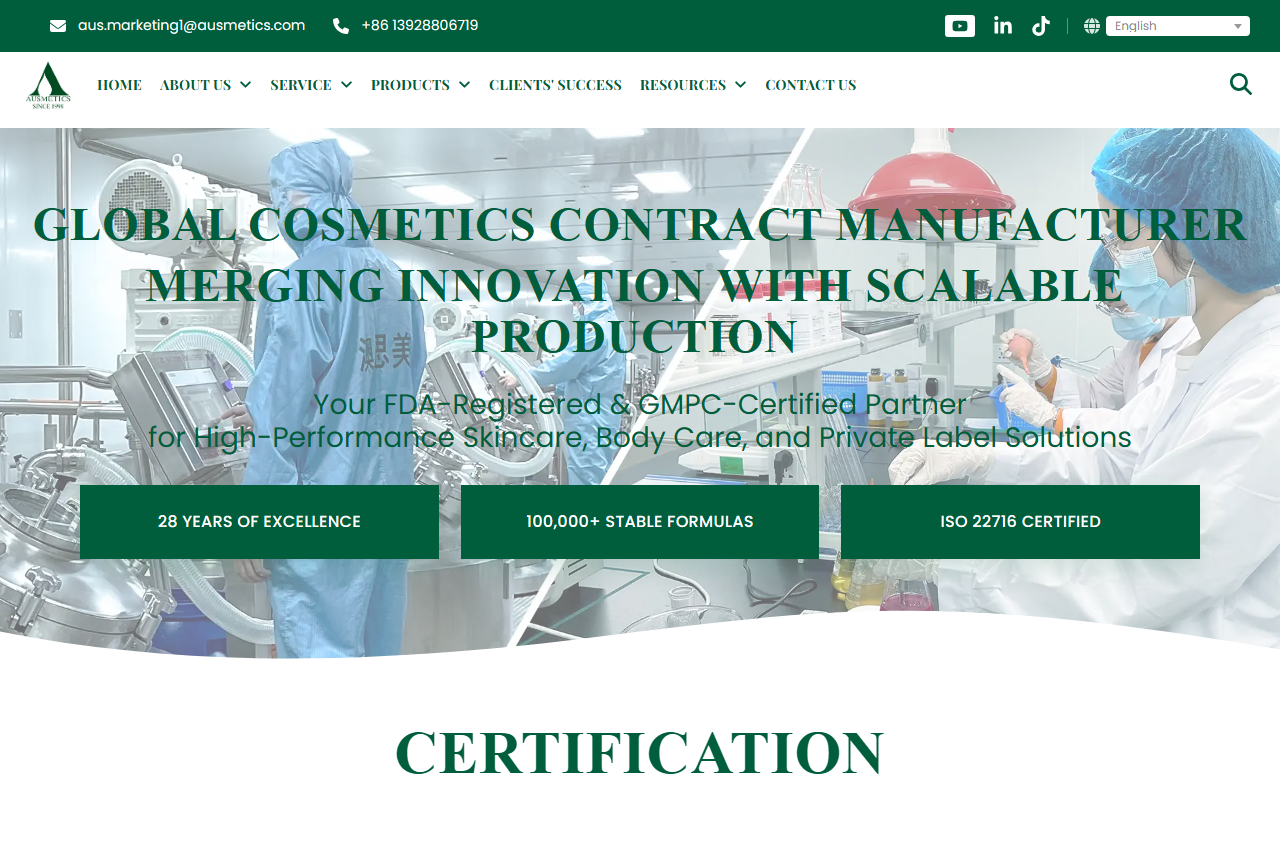
Founded in 1998, Ausmetics (Ausmetics Daily Chemicals (Guangzhou) Co., Ltd.) is a long-established Guangzhou contract manufacturer running several production bases across skin care, mom & baby and household lines, and references GMPC and ISO 22716 processes with an in-house R&D and analytical lab.
Website: https://www.ausmetics.com/
Cindi Cosmetics
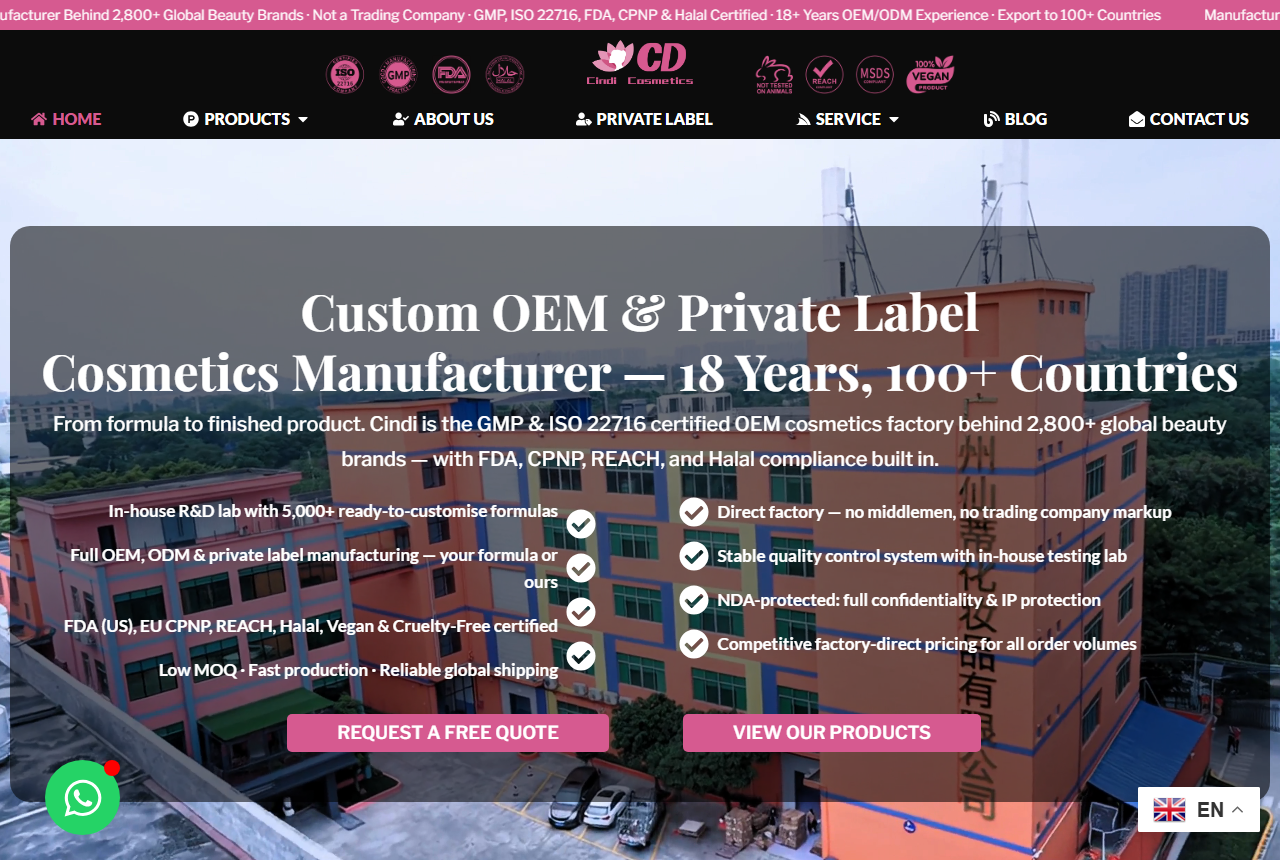
Guangzhou Cindi Cosmetics is a colour-cosmetics specialist covering face, lip and eye makeup, and lists a broad compliance stack including GMP, ISO 22716, US FDA registration, EU CPNP, REACH and Halal, positioning itself as a direct factory rather than a trading company.
Website: https://oemmakeup.com/
Guangdong Bawei Biotechnology
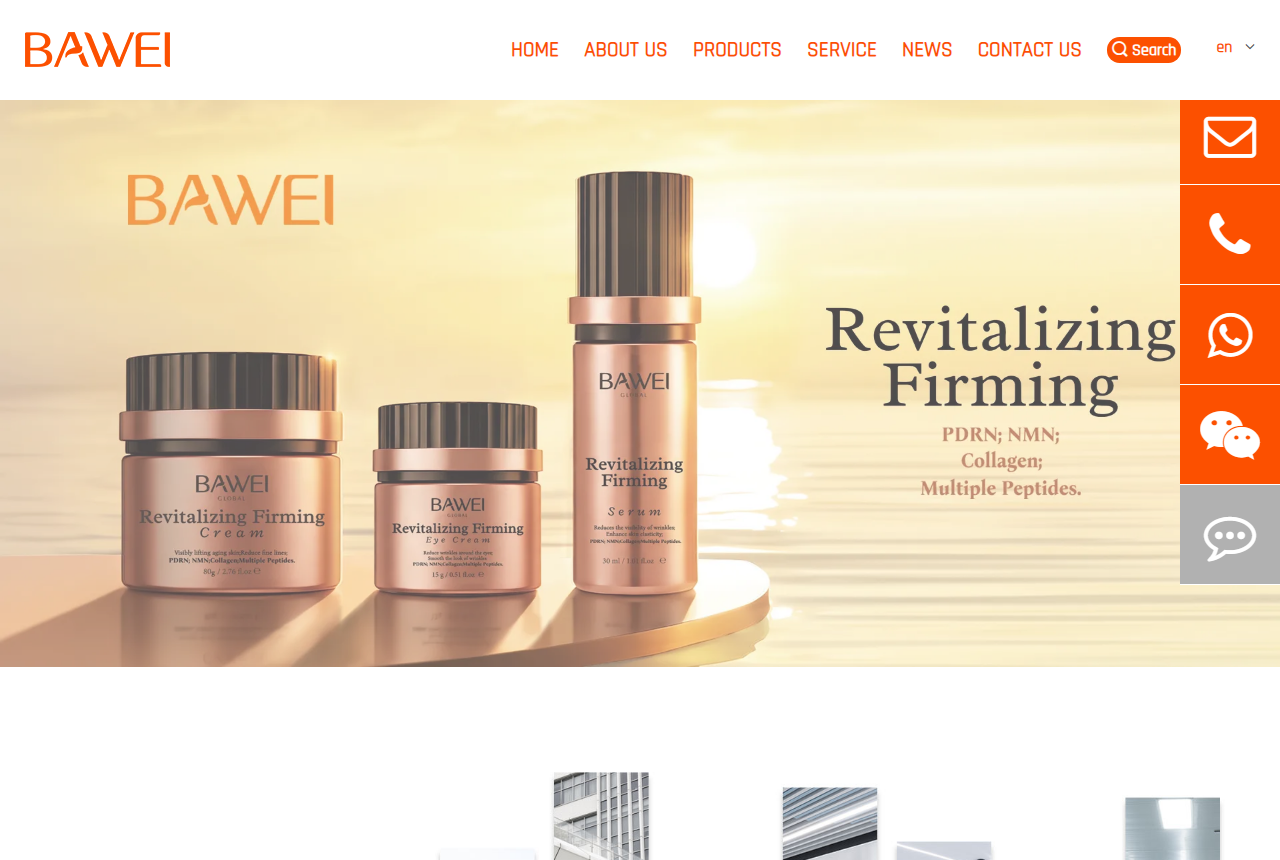
Established in 2006, Guangdong Bawei Biotechnology is an R&D-led ODM/OBM skincare manufacturer that markets a large patent portfolio and formula library, building active-driven ranges around ingredients such as peptides, collagen and PDRN, with ISO 9001, ISO 22716, GMPC and ISO 14001 references.
Website: https://www.baweicosmetic.com/
Guangzhou Qiaomei (QM Cosmetic Factory)
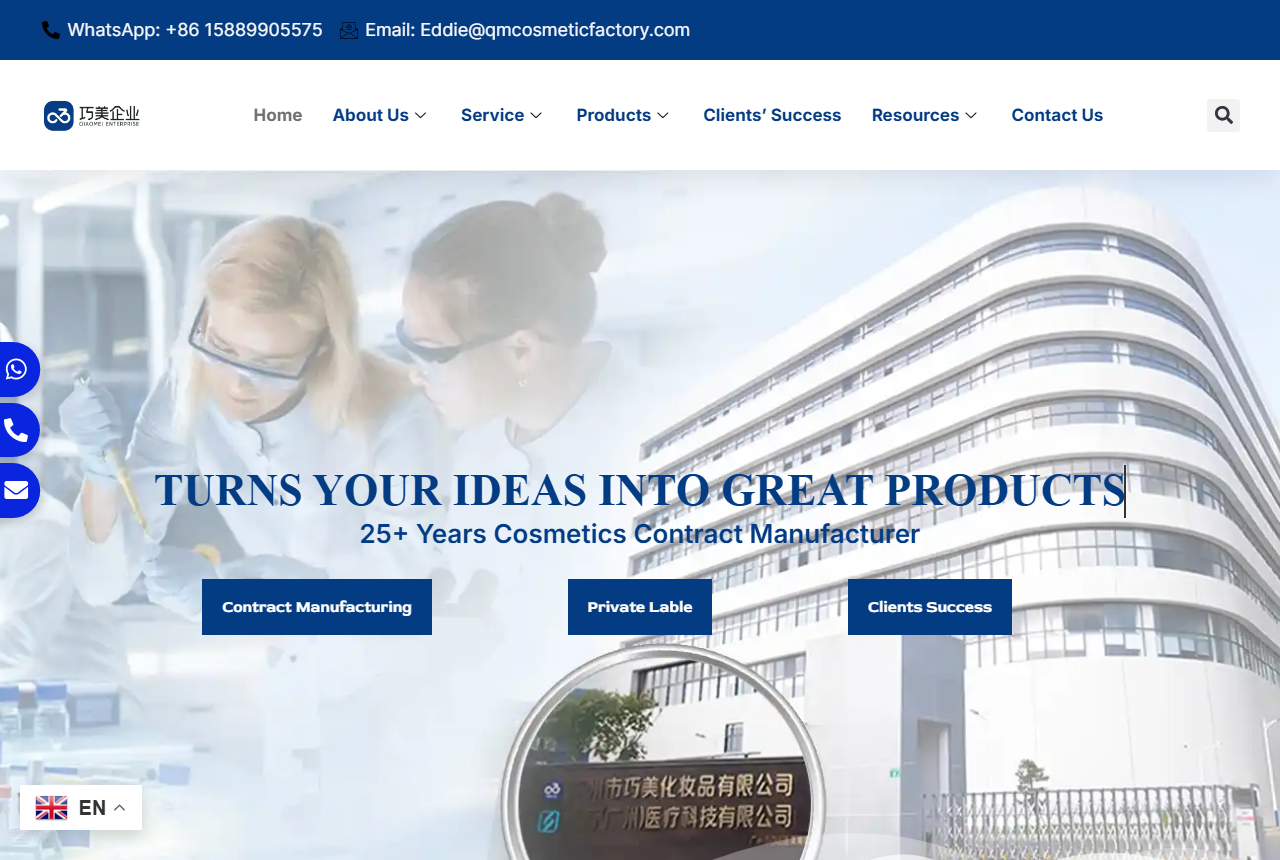
Trading as QM Cosmetic Factory, Guangzhou Qiaomei is a multi-category contract manufacturer covering hair, face, body, sun and mom & baby lines, and lists more than two decades of experience alongside ISO 22716, GMPC, FDA, Sedex and Halal credentials.
Website: https://www.qmcosmeticfactory.com/
Guangzhou Cosmetics Factory
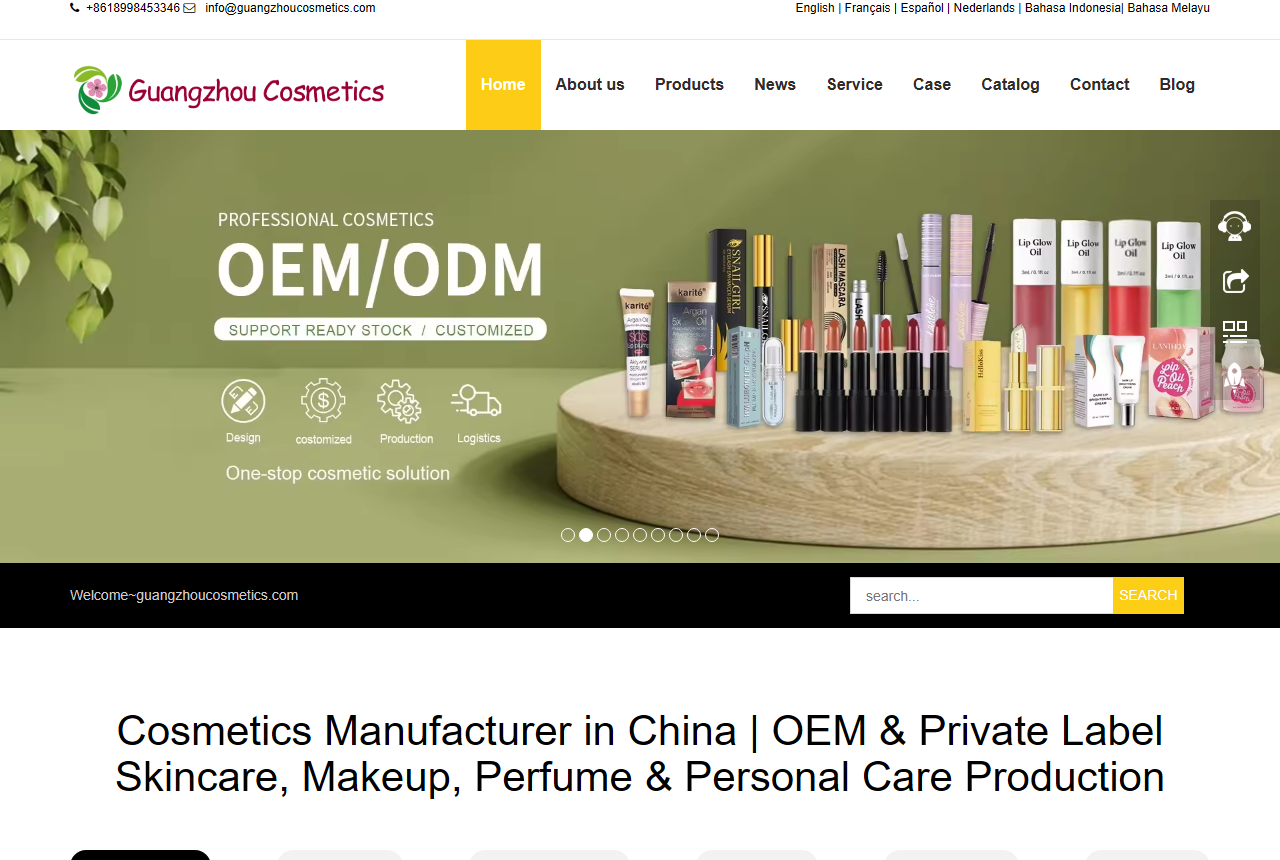
This full-service Baiyun manufacturer offers OEM, ODM and OBM production across skincare, colour cosmetics, hair, body, personal care and fragrance, and publishes GMP, ISO 22716, FDA and SGS-testing references with a stated 15,000 m² facility.
Website: https://guangzhoucosmetics.com/
Qianlan Cosmetics
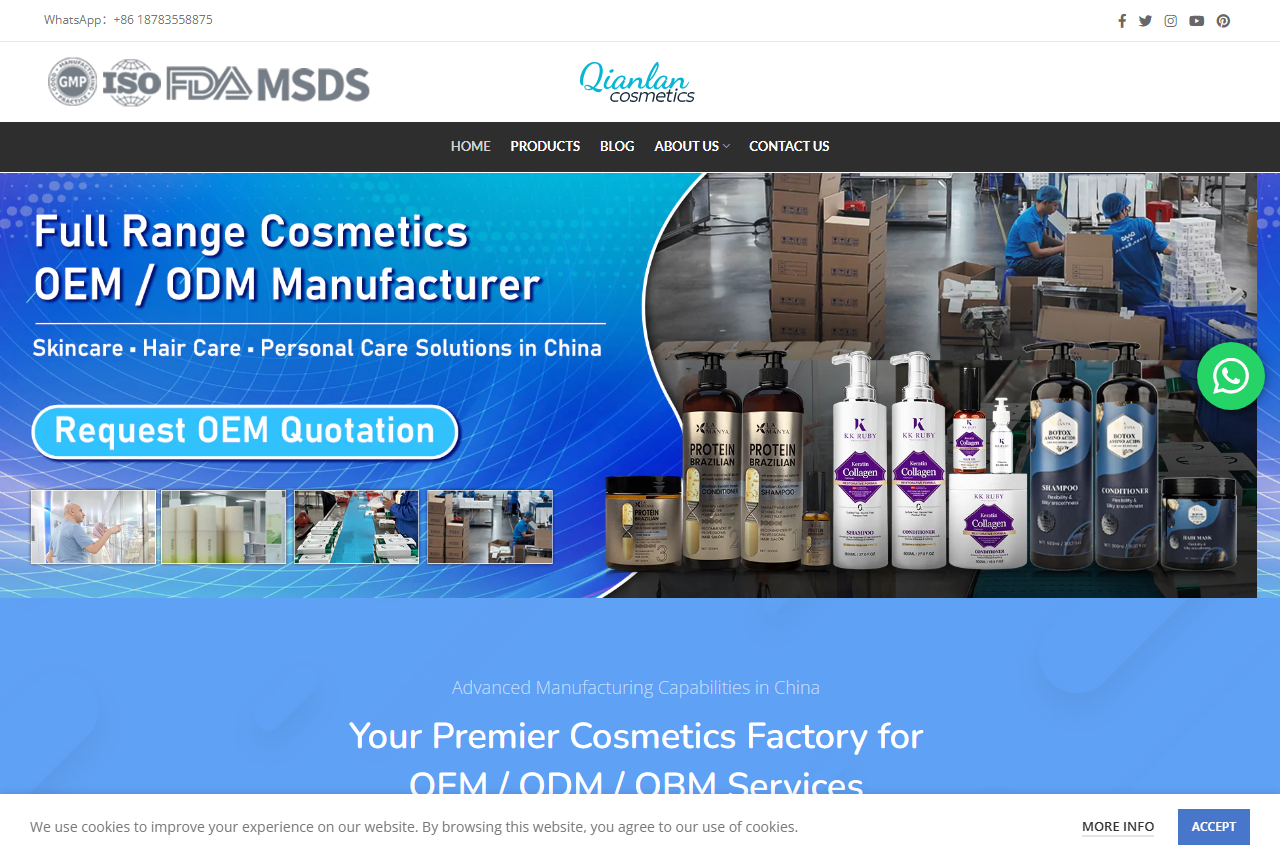
Qianlan Cosmetics presents as a full-range OEM/ODM manufacturer serving skincare, hair-care and personal-care brands, displaying GMP, ISO, FDA and MSDS references on a quotation-led, export-focused website.
Website: https://www.guangdongcosmetics.com/
Guangzhou Kangwei Cosmetics
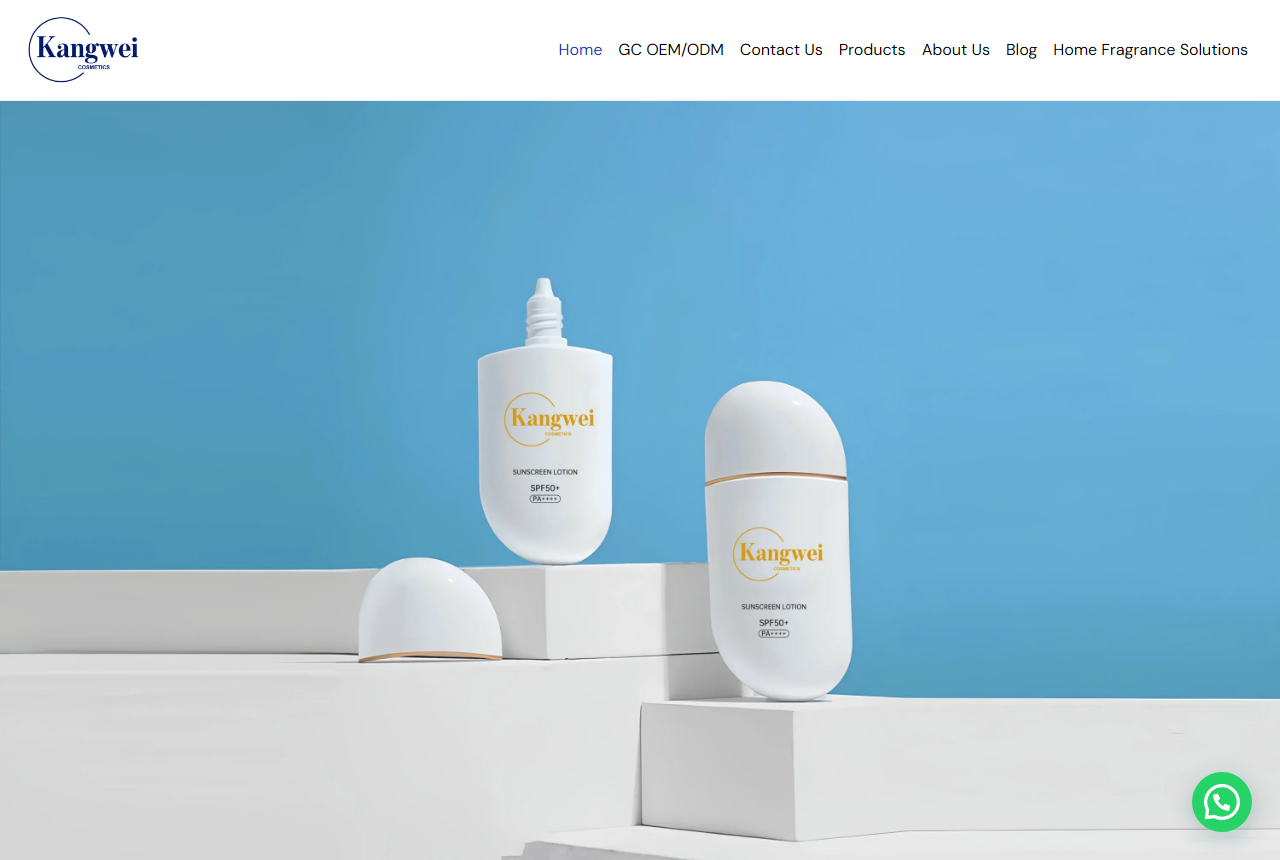
Guangzhou Kangwei Cosmetics Manufacturing pairs conventional skincare and colour-cosmetics OEM with a less common home-fragrance line, operating from a 100,000-class GMPC cleanroom and citing around 20 years of experience with ISO 22716, GMPC and FDA references.
Website: https://kangwei-cosmetics.com/
Metro Private Label
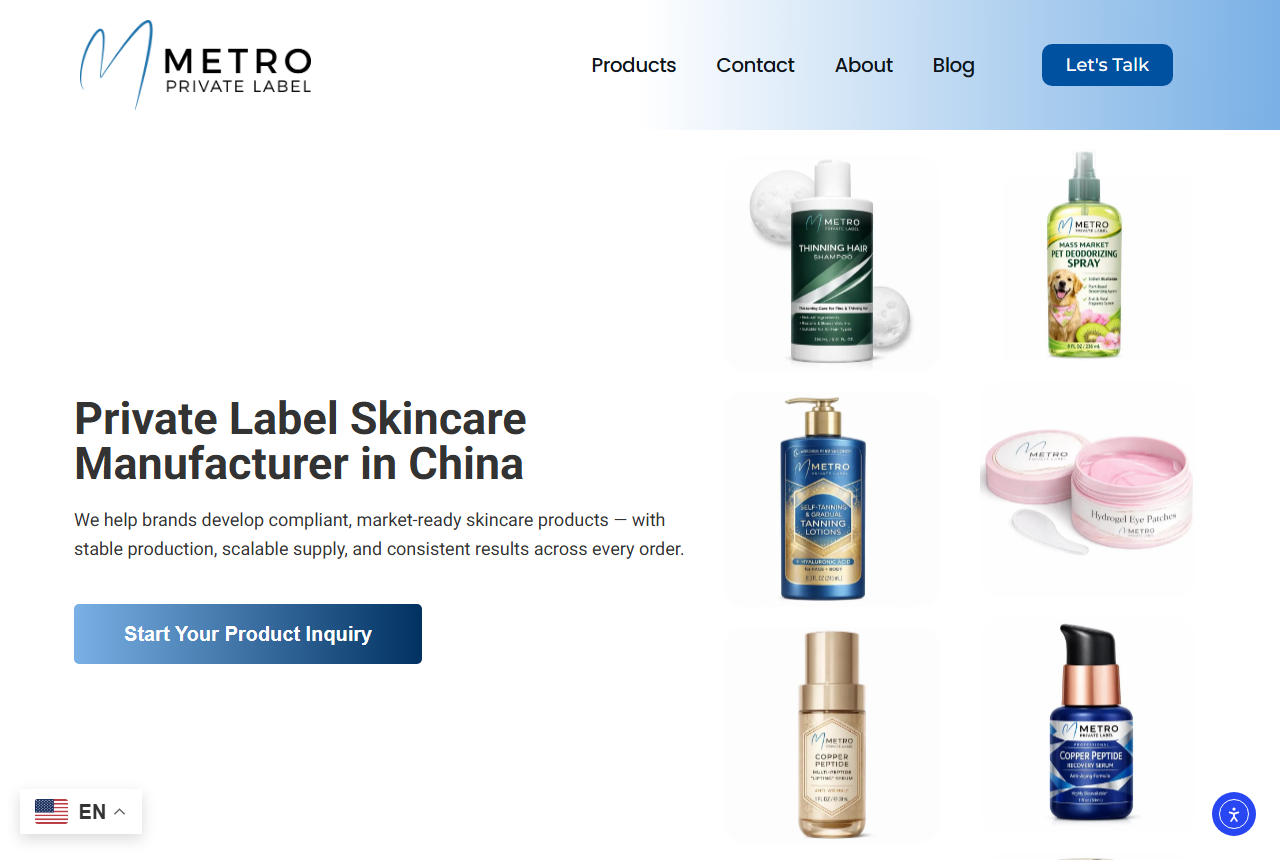
The international division of Guangzhou Baiyanhui Cosmetics, Metro Private Label focuses on GMPC-certified private-label skincare for clinics, boutique brands and startups, citing comparatively accessible custom-branding minimums of around 500 pieces.
Website: https://www.metroprivatelabel.com/
What to compare when evaluating any cosmetics manufacturer
Marketing pages tend to look similar; the useful comparison happens on the criteria below. Use the same checklist for a factory in China, Malaysia or anywhere else — it keeps the decision evidence-based.
| Criterion | What to ask for | Why it matters |
|---|---|---|
| Quality system | Current GMPC / ISO 22716 certificates and audit reports | Confirms a documented, inspectable quality process rather than a homepage badge |
| Factory vs trader | Business licence and proof it owns its production lines | Determines whether you are dealing with the actual maker or a middleman |
| MOQ & pricing | Written quote for your exact formula and packaging | Stock formulas allow lower MOQs than fully bespoke development |
| Lead time | Realistic timeline from formula sign-off to delivery | Cross-border production plus shipping adds weeks; delays reset the clock |
| R&D depth | Formula options, stability testing and reformulation support | Determines how much the product can be differentiated and improved |
| Regulatory support | Documentation for your destination market (NPRA, CPNP, FDA) | You, not the factory, are usually responsible for market registration |
Based on ORIZI Group’s own manufacturing experience in Malaysia, the two stages that most often extend a development timeline are packaging customisation, when bespoke components have long tooling or delivery windows, and stability or compatibility testing, which cannot safely be rushed. Building both into the schedule from the start — wherever the product is made — prevents the most common launch delays.
Looking beyond China for a manufacturing partner?
China is an excellent fit for large, planned, multi-SKU orders where unit cost and format choice dominate the decision. It is a weaker fit when you need short lead times, small first runs, Halal certification, or close hands-on collaboration — and those are often decisive for brands serving Malaysia and the wider ASEAN market. That is the gap a local partner fills.
ORIZI Group is a Malaysia-based OEM/ODM manufacturer of cosmetics, personal care, health, nutrition and medical-care formats, operating under ISO 22716 cosmetic GMP and with Halal certification. For brand owners weighing overseas sourcing against manufacturing closer to home, our private label & ODM service covers formulation, packaging and finished production, while our regulatory affairs consulting supports NPRA product notification and market entry. The appropriate approach depends on your product format, volume, timeline and certification needs — there is no single right answer, and a short feasibility conversation usually clarifies it faster than a spreadsheet. You can contact our team to talk through a specific project.
Limitations: This guide is a general market overview, not manufacturer-specific advice. Company certifications, factory sizes, MOQs and capacity figures are as published by each company and were not independently audited; requirements and figures change over time. Always verify current certificates and regulatory obligations directly before entering any manufacturing agreement.
Frequently asked questions
Is China a good country to manufacture cosmetics for a new brand?
For most brands, yes — China’s Guangzhou/Guangdong cluster offers the widest range of formats, formula libraries and price points anywhere, and many factories hold GMPC and ISO 22716 credentials plus export documentation. The trade-offs are longer shipping lead times, the need to verify certifications first-hand, and the brand owner’s responsibility for destination-market registration. For small first runs or fast, Halal-certified launches, a local manufacturer may be the better choice.
Which regulator oversees cosmetics manufactured in China?
The National Medical Products Administration (NMPA) regulates cosmetics made and sold in China under the Cosmetic Supervision and Administration Regulation (CSAR), in force since 2021. “Special” cosmetics such as sunscreen and whitening products require NMPA registration, while “ordinary” cosmetics require notification. Products made in China purely for export are instead governed by the destination market’s regulator, such as the EU under Regulation 1223/2009 or Malaysia under the NPRA.
What certifications should a Chinese cosmetics manufacturer have?
At minimum, look for Cosmetic GMP (ISO 22716) or GMPC, which govern the quality system, and ask for the current certificate plus a recent third-party audit report from a body such as SGS, Intertek or Bureau Veritas. Depending on your target market, additional documentation — US FDA registration, EU CPNP capability or Halal certification — may also be relevant. Treat any certificate shown on a website as a claim to verify rather than confirmed fact.
Should a Malaysian brand manufacture in China or in Malaysia?
It depends on volume, timeline and certification needs. China typically offers a lower unit price and wider format choice at scale, which suits large, planned orders. A Malaysia-based manufacturer such as ORIZI Group usually offers shorter lead times, easier small first runs, Halal certification and closer collaboration, which suits early-stage launches and brands prioritising the local market. Many brands prototype locally and move high-volume lines offshore once demand is proven.
Sources & references
- National Medical Products Administration (NMPA), China — regulatory framework: english.nmpa.gov.cn
- ISO 22716 (Cosmetics — Good Manufacturing Practices): iso.org
- Each manufacturer’s official website (linked in the profiles above), reviewed July 2026.
Update history: July 2026 — first published (eight manufacturers; homepages verified July 2026).
Conclusion
China remains the default answer to “where can I manufacture cosmetics at scale?” — and for high-volume, multi-format ranges it is hard to beat on cost and choice. But the right manufacturing partner is the one that matches your volume, timeline, certification needs and market, not simply the cheapest quote. Whether you source from one of the suppliers above or manufacture closer to home, apply the same evidence-based checklist — verified certifications, clear ownership, realistic lead times and proper regulatory support — and the decision will hold up long after launch.
Related ORIZI capability: Explore our OEM cosmetics manufacturing.